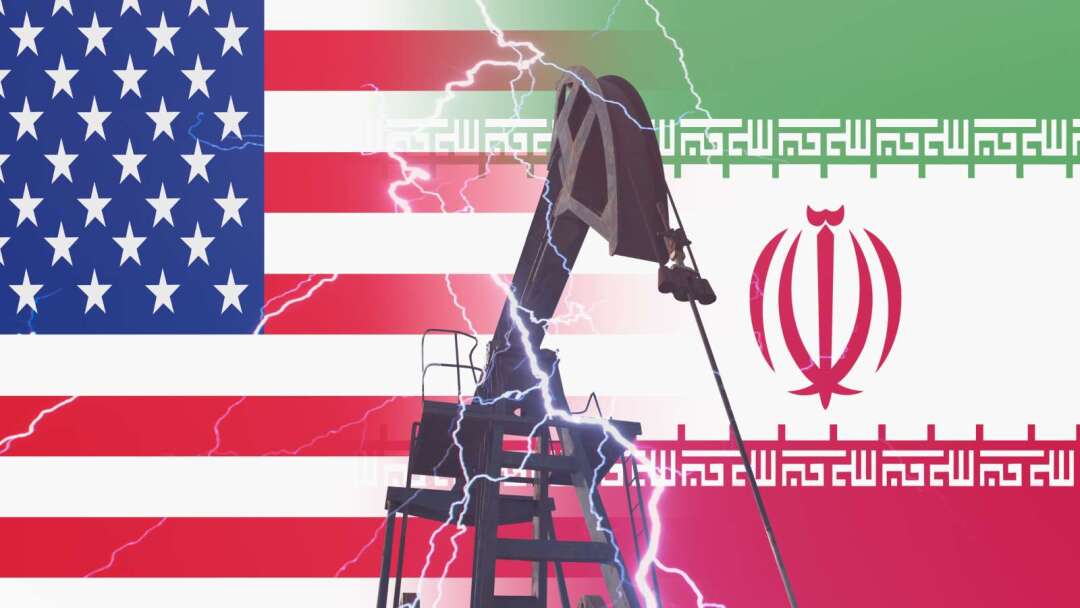
Tensions between the U.S. and Iran show no signs of easing, with the war entering its seventh month. According to recent foreign media reports, the conflict could continue until the end of Trump's presidency, contradicting the president's public assurances of a swift and decisive victory.
The Wall Street Journal reported that U.S. officials said discussions in the Oval Office and the White House Situation Room have included Vice President Vance, Secretary of State Rubio, and President Trump exploring a scenario in which Tehran continues to resist under pressure from blockades and other military measures, potentially prolonging the conflict beyond the January 2029 presidential inauguration.
These closed-door discussions come as Trump stated on Wednesday (the 9th) that the U.S.-Iran war would end "immediately" after the November midterm elections, claiming, "They can't hold on any longer."
However, according to the latest Bloomberg report, a senior Iranian official said Tehran is prepared for further escalation. If the U.S. continues attacking its territory and infrastructure, Iran will respond with stronger countermeasures. Tehran has no intention of backing down in the face of U.S. naval blockades and attacks on oil tankers. Despite mounting economic pressure, Iran's leadership views this conflict as an existential threat, believing they must continue fighting.
Military actions by both sides have again focused on maritime transport and energy infrastructure. On Wednesday, Trump downplayed market concerns over oil prices, asserting the war would end "immediately" after the elections: "They can't hold on any longer."
Iran has not ruled out negotiations. Some officials, including President Pezeshkian, advocate talks to ease economic pressure but demand the White House lift blockades first. Since the end of the war's most intense phase in April, Iran has been rebuilding its military capabilities. The official stated Iran now possesses sufficient missile stockpiles to sustain a prolonged conflict.
Iran's newly appointed security chief, Mohsen Rezaee, said earlier this week that Iran has adjusted its military posture toward U.S. warships and bases, adopting a more aggressive stance.
Mohammad Bagher Ghalibaf, Speaker of Iran's Parliament, warned: "The era of 'tit-for-tat' retaliation is over."
Iran also announced that after the U.S. sank five oil tankers, its forces attacked ten vessels near the Strait of Hormuz—the largest-scale maritime attack since the war began. The Revolutionary Guards warned of further escalation and said they would soon release an expanded maritime exclusion zone map extending to Chabahar near Pakistan.
These attacks have directly impacted energy transportation. Brent crude futures briefly surpassed $101 per barrel on Wednesday, the first time since July. New York's West Texas Intermediate (WTI) crude futures also rose above $96 during trading.
Claudio Galimberti, chief economist at Rystad Energy, said oil flow through the Strait of Hormuz has dropped to about 2 million barrels per day, down from 8 to 9 million barrels per day before the resumption of hostilities. The pressure on refined products is even more pronounced, with the average U.S. diesel retail price exceeding $5.94 per gallon, a record high.
The U.S. is avoiding a return to the full-scale intense fighting seen in March and early April, concerned both about rising fuel prices and the high cost of intercepting missiles. Instead, it is leaning toward using naval blockades to pressure Iran into reopening the Strait of Hormuz and resuming negotiations. Iran, however, insists it has the right to control the waterway and regularly attacks vessels passing without authorization.
The blockade has already severely impacted Iran's economy. Unable to export oil and struggling to import critical goods, inflation has surged to nearly 90%. The official acknowledged worsening conditions but said leadership believes they must fight until Washington is deterred from future military actions.
Rising energy prices are becoming a political burden for Trump. With less than two months until the November 3 midterm elections, Trump said on Wednesday that energy prices driven up by the war will not fall before the election, but "after the election, oil prices will drop significantly."
When asked to explain why oil prices have risen to their highest levels since the war began, Trump responded, "You just have to ask: Do you want Iran to have nuclear weapons? Gasoline prices will eventually fall below $2 per gallon, but not before the midterm elections." He later revised this, saying it might take "a bit longer than the midterms."
Patrick De Haan, fuel analyst at GasBuddy, expressed skepticism about this prediction: "I don't see any guarantee that this will definitely happen."
FACT BOX
- Source: PR Times
- Category: News
- Organizations: Rystad Energy / GasBuddy