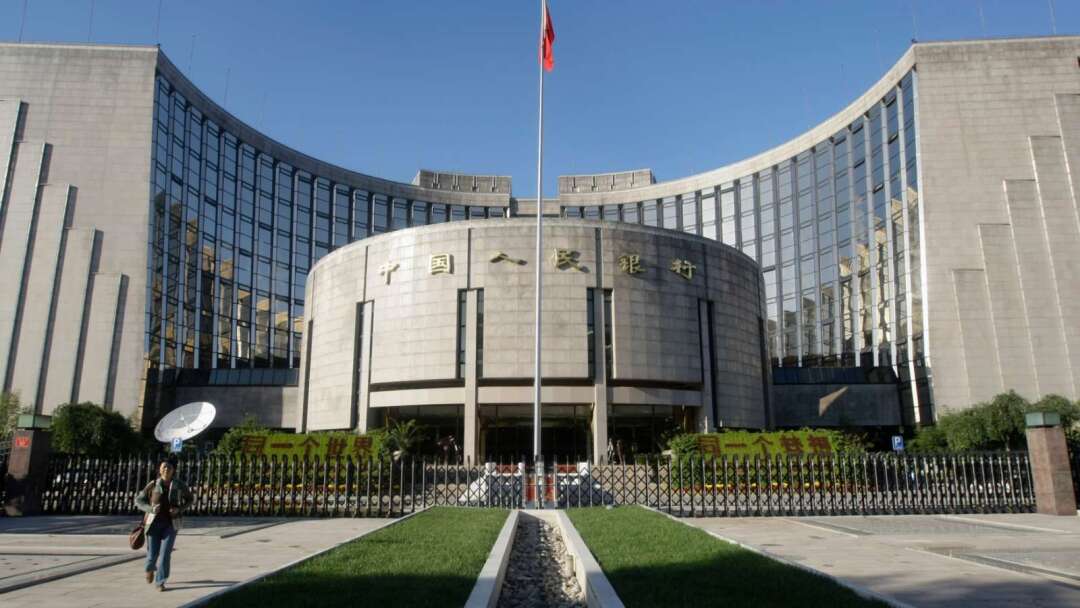
The People's Bank of China (PBOC) plans to add multiple new indicators to its Macro-Prudential Assessment (MPA) framework to restrict banks from excessively holding long-term bonds and funds, aiming to reduce investment risks that could arise if bond prices reverse.
Reuters reported on Monday (the 14th), citing informed sources, that the proposed new regulations will also include monitoring metrics such as the deviation between money market rates and bond yields. However, specific thresholds for these indicators are still under discussion with financial institutions and have not yet been finalized. The PBOC did not immediately respond to requests for comment.
China's bond market has continued to strengthen this year, contrasting with global bond sell-offs. Weak Chinese economic data have led markets to expect further policy support, driving capital into bonds and pushing down yields.
On Monday, China's 10-year government bond yield stood at 1.68%, hovering near lows not seen since July 2025. The 30-year government bond yield was reported at 2.17%. Bond prices move inversely to yields, so declining yields indicate rising bond prices.
However, heavy bank holdings of long-term bonds make them more sensitive to interest rate changes. If yields rebound, related bond prices could fall sharply, exposing banks to valuation losses. Market participants noted that some smaller banks' average bond duration and fund investment scale might exceed future limits set by the PBOC, thus facing pressure to adjust their bond portfolios.
The PBOC formally implemented the MPA in 2016, assessing financial institutions across dimensions such as capital and leverage, liquidity, asset quality, and credit policy implementation. It is a key component of China’s dual-pillar regulatory framework, integrating monetary policy with macro-prudential policy.
If the new indicators are officially introduced, it would signal that Chinese regulators are maintaining accommodative policies to support the economy while also guarding against interest rate and market risks accumulated by banks chasing bond rallies.
FACT BOX
- Source: PR Times
- Category: News