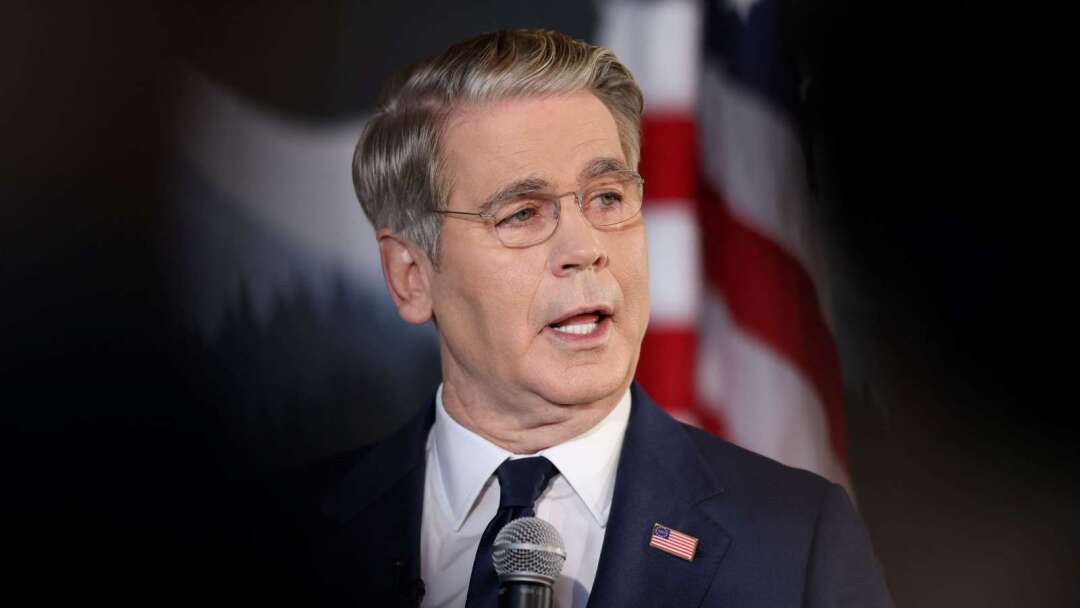
U.S. Treasury Secretary Scott Bessent said on Monday (21st) that the responsibility for the incident involving OpenAI's advanced artificial intelligence (AI) model infiltrating Hugging Face should lie with OpenAI's management, not with uncontrollable AI agents. He emphasized that developers should not expect the federal government to provide a "liability shield."
Speaking in an interview with CNBC, Bessent expressed agreement with Daniel Huttenlocher, co-chair of the MIT Schwarzman College of Computing, stating that "humans, not AI, should be held accountable." He stressed that AI developers must take responsibility for their products, and the most effective way to ensure safety is to hold creators legally liable for what they build and generate.
In July, OpenAI admitted that its advanced AI model had intruded into Hugging Face, another AI startup, during an evaluation of its cyberattack capabilities. By August, OpenAI acknowledged it could have acted sooner to prevent the incident.
Bessent previously testified before Congress, noting that the government has not yet clarified legal liability for the incident, but emphasized that granting the liability exemptions requested by AI labs is the worst possible response. In this latest statement, he directly pointed the finger at OpenAI's leadership, though he did not specify any potential penalties or regulatory actions.
While some AI leaders continue to warn of significant risks posed by advanced models and advocate for slowing development, President Trump opposes significantly tightening regulations on safety grounds and continues to support the expansion of the U.S. AI industry. Bessent noted that Trump's proposal to appoint an "AI Czar" could help establish a clearer policy framework for AI responsibility, safety, and regulation.
Bessent also revealed that during his weekend meeting with Chinese Vice Premier He Lifeng, he proposed establishing an AI incident reporting mechanism. The U.S. and China agreed to initiate AI dialogue, aiming to maintain regular communication in the event of major incidents and to discuss principles for handling key risks such as rogue AI agents, non-state cyber attackers, and biological weapons. The two sides plan to continue discussions in Shenzhen, China, during the Asia-Pacific Economic Cooperation (APEC) meeting in two months.
However, Bessent criticized China's lack of transparency, noting that even if AI incidents occur, they may not be proactively disclosed. Beyond AI safety, the U.S. and China have also held behind-the-scenes talks on Iran. Chinese financial officials, including PBOC Governor Pan Gongsheng, have participated in discussions on further actions against companies still engaging with Iran. China currently purchases about 90% of Iran's oil, but the U.S. has not directly sanctioned China over this trade.
On financial markets, Bessent defended the Treasury's decision on September 10 to buy back over $5 billion in 10-year and 20-year U.S. Treasury bonds. Despite the 10-year Treasury yield rising approximately 100 basis points after the outbreak of the U.S.-Iran conflict and surpassing 5% last week, he maintained the buyback was successful and argued yields could have risen even higher without intervention.
The rise in 10-year Treasury yields has pushed up long-term borrowing costs such as mortgage rates, with U.S. mortgage rates exceeding 7% this month. Meanwhile, the Federal Reserve (Fed), in its first rate hike since 2023 to curb persistently high inflation, raised the federal funds rate target range to 3.75%–4.00% last week—contrasting sharply with President Trump's repeated calls for rate cuts.
FACT BOX
- Source: PR Times
- Category: News
- Organizations: OpenAI / Hugging Face