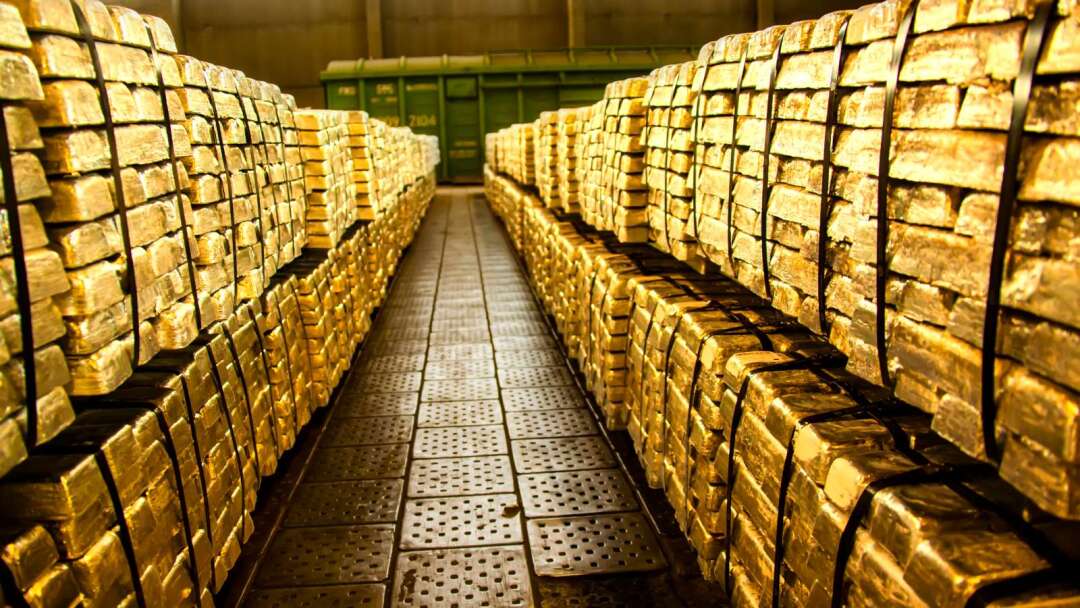
China's spending on gold purchases has hit a record high this year, importing over 1,000 tons as both the central bank and domestic investors shift funds into gold amid escalating geopolitical tensions overseas.
According to a report by the UK's Financial Times on the 22nd (Tuesday), the world's second-largest economy spent $158.8 billion on gold in the first eight months of this year. In comparison, China's total expenditure in 2025 was $96.5 billion, purchasing 886 tons of gold.
Gold prices experienced a sharp rally, surging from around $2,625 per troy ounce at the beginning of 2025 to a peak of $5,595 in January this year. During this period, China temporarily slowed its gold procurement. Now, gold import volumes have rebounded significantly.
Signs indicate that Chinese investors are increasing gold purchases as part of broader asset diversification. In July, China's holdings of U.S. Treasury bonds fell to $618 billion, the lowest level in 18 years.
Liu Sha, Managing Director at Gold Mountain Asset Management, a subsidiary of Zijin Mining, said, "Both the central bank and private investors are diversifying reserves and savings as part of a broader, long-term wealth preservation strategy."
Liu Sha added, "This is not a short-term trade, but a structural reallocation of household and official assets that will continue for years. The scale and persistence of China's gold buying are now a core driver of global gold prices, and we expect this trend to continue as long as economic growth and geopolitical uncertainty persist."
With government bonds no longer moving inversely to stock markets, gold is becoming an increasingly important tool for global investors seeking portfolio diversification.
Christopher Hamilton, Head of Client Solutions for Asia Pacific at Invesco in the U.S., noted that gold's price behavior has diverged from past periods of rising real yields, when higher real interest rates typically pressured gold prices. He said investors are now in an environment where there is a strong preference for holding physical assets.
Hamilton stated that institutional buying remains the most important driver of gold prices.
As China increases its gold holdings, countries are increasingly demanding that gold reserves be repatriated closer to their actual owners. Recently, the Dutch government transferred part of its gold reserves from New York to London.
FACT BOX
- Source: PR Times
- Category: News