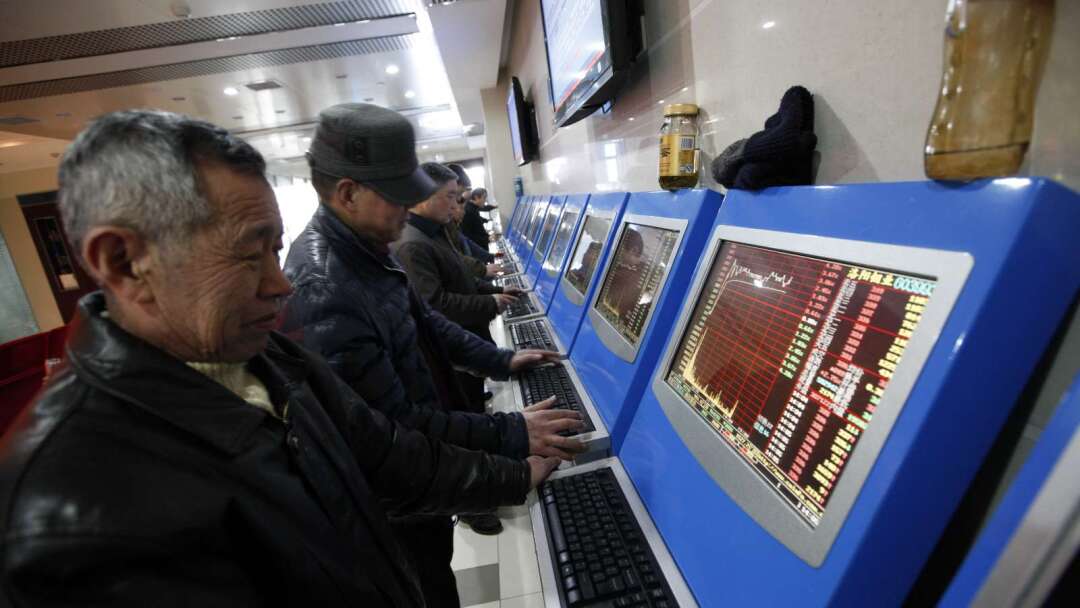
China's three major A-share indices closed lower on Thursday (24th), despite U.S. Treasury Secretary Besent announcing on Wednesday that the United States and China have agreed to extend their bilateral trade ceasefire agreement by two months. The market showed little enthusiasm.
The Shanghai Composite Index closed at 3,888.37 points, down 1.22%. The Shenzhen Component Index ended at 13,316.97 points, falling 2.34%. The ChiNext Index closed at 3,288.95 points, down 2.68%.
According to Xinhua News Agency, Chinese President Xi Jinping arrived in Washington by special plane on the afternoon of the 23rd at the invitation of U.S. President Trump for a state visit to the United States.
Upon arrival at Andrews Air Force Base in Washington, Xi Jinping and his wife Peng Liyuan were warmly welcomed by Trump and his wife Melania.
This marks the first time since 1962, when then-U.S. President Kennedy greeted British Prime Minister Macmillan at the same base, that a U.S. commander-in-chief has personally welcomed a foreign head of state at the air base.
Under U.S. diplomatic protocol, foreign leaders are typically greeted at airports by the Vice President, Secretary of State, or protocol officials, while the President hosts a formal welcoming ceremony on the South Lawn of the White House. A presidential airport greeting is extremely rare.
According to Xinhua, Trump said he was delighted to host President Xi Jinping and Madame Peng Liyuan in Washington, calling the visit one of global significance. He described Xi as a great leader and this moment as historic, expressing his anticipation for in-depth discussions to advance bilateral relations.
American children presented flowers to Xi and Peng, honor guards lined both sides of the red carpet in salute, a military band played the national anthems of both countries, a 21-gun salute was fired, and fighter jets flew overhead in tribute.
Earlier in Washington, Besent held an impromptu meeting with He Lifeng, Vice Premier of China's State Council. A few hours later, in an interview with Fox News, Besent said: "We will extend the 'Busan Agreement'—the originally scheduled November 10 end date for the bilateral economic de-escalation period—to January 10 next year."
Besent added: "Some of the commitments on the Chinese side are not perfectly fulfilled. Now that we have sat down and communicated our expectations to China, we want to see whether China can more comprehensively implement the agreement over the coming months."
The market's negative reaction suggests investors remain cautious about the durability of the truce and the pace of implementation. While the extension provides temporary relief, structural issues in the U.S.-China economic relationship remain unresolved. Analysts note that without concrete actions from China on intellectual property protection, market access, and trade imbalances, further volatility in Chinese equities is likely.
The visit by President Xi is seen as a symbolic gesture of diplomatic engagement, but its economic outcomes remain uncertain. Financial markets are now focusing on upcoming high-level talks and potential follow-up measures to assess whether the extended truce will lead to meaningful progress.
Investor sentiment in China's A-share market was further dampened by concerns over domestic liquidity, regulatory tightening in certain sectors, and mixed economic data. The technology-heavy ChiNext Index saw the sharpest decline, reflecting risk-off behavior among investors.
Despite the ceremonial warmth, underlying tensions persist. U.S. officials continue to emphasize the need for verifiable actions from China, while Beijing maintains its stance on mutual respect and win-win cooperation.
The extended trade truce offers a window for dialogue, but markets will likely remain skeptical until tangible results emerge. The January 10 deadline will serve as a key benchmark for assessing the health of U.S.-China economic relations in the near term.
FACT BOX
- Source: PR Times
- Category: News