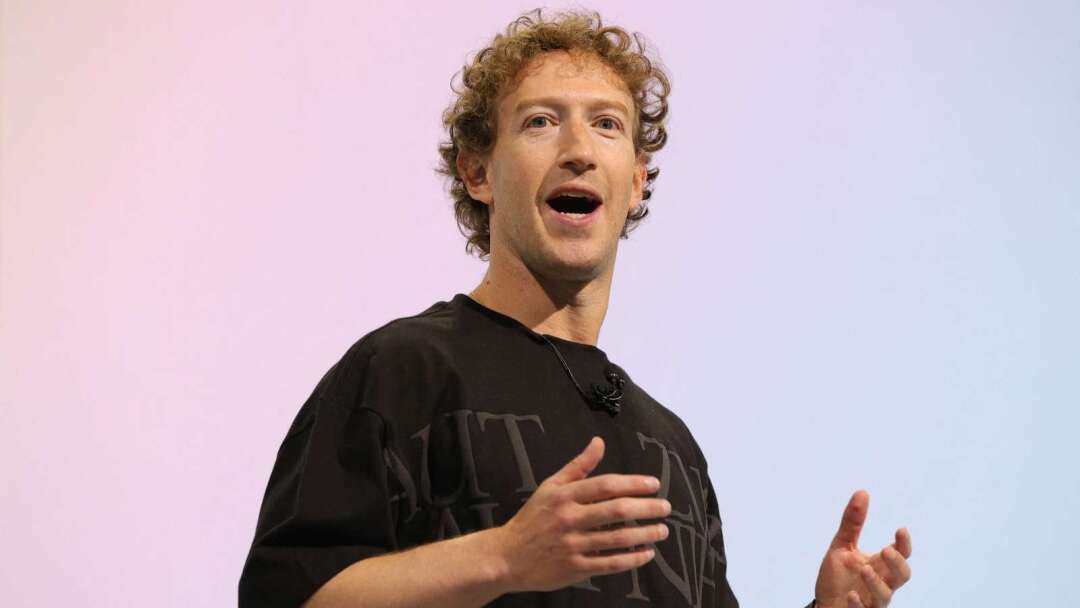
According to Benzinga, Mark Zuckerberg, CEO of Meta (META-US), said that AI companies can safely develop advanced AI systems without requiring full industry coordination. He believes individual AI labs are capable of handling associated risks independently, listing trust, privacy, and 'value alignment' as top priorities.
During an interview on Thursday, Zuckerberg was asked, "Will AI kill us?"
He responded that he feels "quite optimistic" about the future of AI, believing the technology will benefit humanity if developed and deployed responsibly by companies.
He pushed back against the rhetoric surrounding apocalyptic AI risks, stating that every AI lab should take responsibility for addressing the issues they encounter, rather than relying on the entire industry to coordinate.
Zuckerberg cited Meta's Muse AI system as an example of this approach. He said that several months ago, Meta already had a "pretty good" version, but the company chose to delay its launch to address privacy and security concerns during that time.
He believes that if users don't trust AI products, those products ultimately won't achieve widespread adoption. "If people don't trust it, they won't adopt it."
Zuckerberg said that instead of focusing solely on making AI models smarter, the next major challenge for the AI industry will be ensuring systems reliably understand and follow users' true needs.
He pointed out that internally at Meta, the focus is currently on instruction following, intent understanding, and 'value alignment.'
Zuckerberg believes AI may eventually reach a stage where incremental capability improvements in areas like mathematics become less important, and the key will instead be whether AI systems can accurately interpret user intent and act accordingly.
Finally, he said businesses have strong commercial incentives to get AI safety right. "I happen to think there's a very strong business incentive to get this right."
This debate comes as major AI companies like OpenAI and Anthropic raise concerns about potential AI risks and call for government-coordinated AI regulation.
Jensen Huang, CEO of Nvidia (NVDA-US), opposes calls to slow down AI development. In a CBS interview, he said companies should push AI advancement as quickly as possible while ensuring products are sufficiently safe before reaching users.
Former U.S. President Donald Trump, House Speaker Mike Johnson, and tech leaders are expected to meet on September 29 to discuss the same issue.
Trump downplayed concerns about AI safety, saying existing government authority is sufficient and warning that stricter regulations could cause the U.S. to fall behind China in the AI race.
FACT BOX
- Source: PR Times
- Category: News
- Organizations: Meta / OpenAI / Anthropic