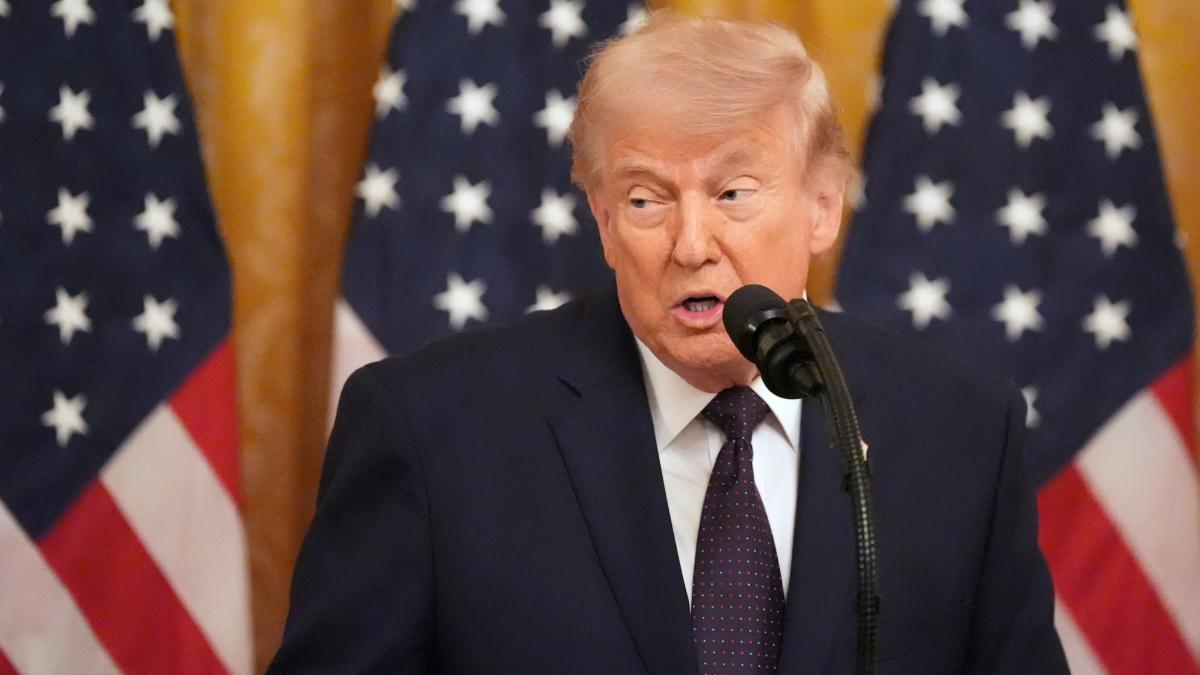
The U.S. government under President Donald Trump announced on July 7, Eastern Time, the formal reinstatement of economic sanctions on Iran's exports of oil and petrochemical products, citing Iran's suspected attack on three commercial vessels near the Strait of Hormuz, violating a previously agreed ceasefire Memorandum of Understanding (MOU). The U.S. stated that the partial lifting of sanctions was contingent upon Iran's compliance with the agreement, and thus decided to immediately restore sanctions following the incident.
According to new guidance issued by the U.S. Department of the Treasury, the government has revoked the sanctions exemption authorization granted on June 21. That exemption had allowed certain transactions involving Iranian crude oil, petroleum products, and petrochemicals to proceed temporarily, with an original expiration date of August 21. However, the U.S. has now decided to terminate this arrangement early, allowing only a brief transition period for authorized companies to wind down existing transactions.
The Trump administration has decided to reinstate comprehensive sanctions. The U.S. Treasury stated that, effective July 7, no new purchases, loading, or sales of Iranian crude oil, petroleum products, or petrochemicals are permitted. Transactions previously conducted under the exemption may complete necessary termination procedures by July 17 but may not initiate any new commercial activities. Additionally, transactions involving other U.S.-sanctioned countries or violating other sanctions regulations remain fully prohibited.
This exemption was part of a ceasefire MOU signed between the U.S. and Iran after months of conflict, aimed at de-escalating tensions. U.S. officials emphasized that Washington had clearly informed Tehran from the outset that the easing of sanctions was entirely dependent on Iran's adherence to the ceasefire commitment.
The official stated that the U.S. has determined Iran's recent attacks on commercial ships near the Strait of Hormuz constitute a significant violation of the ceasefire agreement, prompting the Trump administration to restore full sanctions in response to Iran's military actions.
However, U.S. officials also stressed that despite the reinstatement of economic sanctions, diplomatic negotiations toward a broader agreement have not ceased. Both sides continue to engage through diplomatic channels to seek solutions and aim to achieve longer-term arrangements on regional security and other contentious issues.
President Trump recently told media outlets that negotiations with Iran have made some progress but warned that if diplomacy fails, the U.S. military is prepared to take military action.
Trump stated that the U.S. ultimately has only two choices: "either make a deal, or accomplish the mission." He emphasized that if military action becomes necessary, the U.S. has the capability to swiftly achieve its military objectives.
Trump also expressed hope for a diplomatic resolution to the conflict, stating he does not wish to inflict further hardship on the Iranian people. He noted that he does not want to affect the lives of Iran's approximately 91 million citizens but warned that the U.S. military has the ability to destroy Iran's critical infrastructure and energy facilities in an extremely short time.
In response to the U.S. reinstatement of sanctions and subsequent military actions, the Iranian government issued a strong protest. Iran's Ministry of Foreign Affairs accused the U.S. of being the first to violate the ceasefire MOU and criticized Washington for escalating tensions by launching military strikes after reimposing sanctions.
Iran's Foreign Ministry stated in a declaration that Tehran will take "decisive measures" to protect its national interests, security, and sovereignty, and warned it will respond to U.S. actions, though it did not specify what those measures would be.
Meanwhile, the U.S. military confirmed earlier that it has launched a series of military strikes against Iranian targets. U.S. Central Command (CENTCOM) stated that Iran's suspected attack on three commercial vessels transiting the Strait of Hormuz violated the ceasefire agreement, and thus U.S. forces conducted "powerful strikes" against relevant targets in response to Iran's actions.
The Strait of Hormuz is one of the world's most critical energy transit corridors, through which vast quantities of Middle Eastern crude oil and liquefied natural gas are exported to Asia, Europe, and other markets. The renewed military and diplomatic conflict between the U.S. and Iran over the Strait of Hormuz has prompted global markets to closely monitor whether Middle Eastern tensions will escalate further and how energy supplies and international shipping security might be affected.
FACT BOX
- Source: PR Times
- Category: News