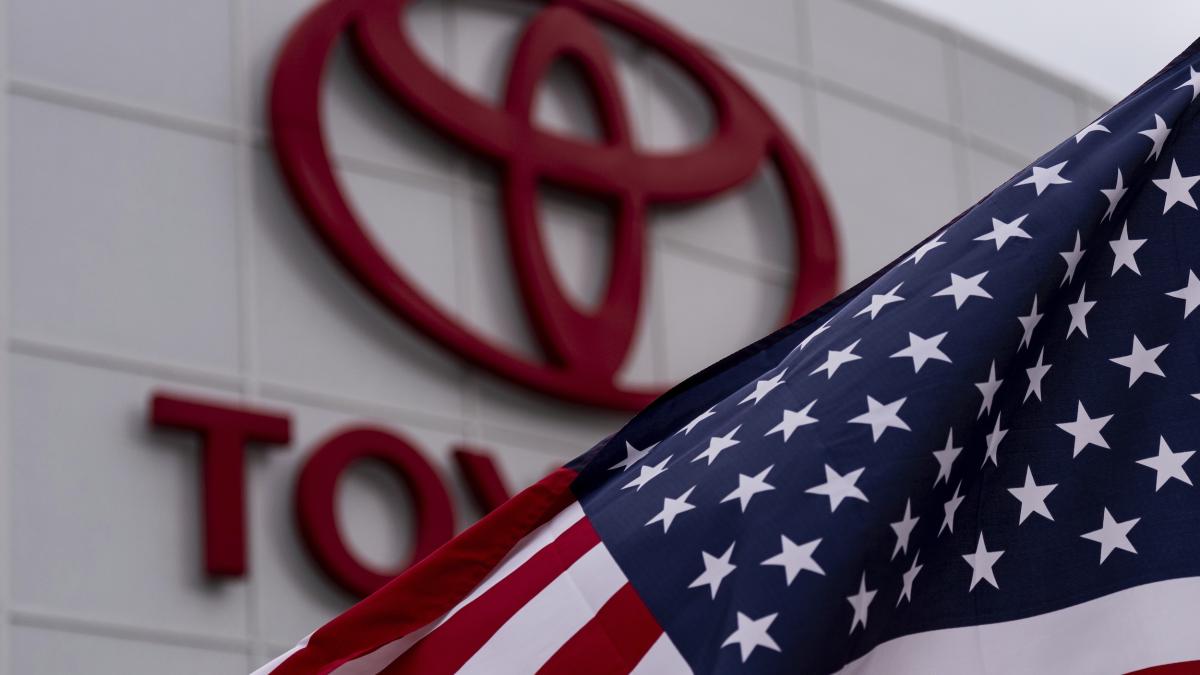
U.S. President Donald Trump recently made a high-profile announcement on the social media platform Truth Social, claiming that due to the effectiveness of the tariff policies implemented during his administration, Japanese automotive giant Toyota Motor Corporation has decided to relocate part of its manufacturing operations from Mexico back to the United States.
While attending the NATO summit in Turkey, Trump praised Toyota’s decision on July 7 to expand investment in its Texas plant. He stated that this significant industrial shift once again proves that current trade policies are successfully guiding overseas jobs and capital back to the U.S. In his post, Trump wrote: "Toyota is moving from Mexico to the United States (Texas!), this is a massive deal. Tariffs are working!"
$3.6 Billion Investment to Expand Plant, Expected to Create 2,000 Jobs
According to CNBC, Toyota officially announced on July 6 that it will invest $3.6 billion (approximately NT$116 billion) to significantly expand its manufacturing base in San Antonio, Texas. The core of this massive investment plan is to gradually relocate the majority of the assembly line for its popular midsize pickup truck, the Tacoma, from Toyota’s factory in Tijuana, Baja California, Mexico, to the Texas facility.
The Texas plant currently primarily produces the large pickup truck Tundra and the large SUV Sequoia. This expansion project is expected to create approximately 2,000 high-paying jobs in the U.S., add a second vehicle assembly line, and increase the plant’s annual production capacity from the current 200,000 units to 350,000 units by 2030.
Trump’s Hardline Tariff Pressure Shows Results in Manufacturing Reshoring?
The timing of this landmark investment is particularly delicate, coinciding with the Trump administration’s intensified push for "reshoring" manufacturing. The administration has frequently used tariffs as a negotiating tool to strongly pressure multinational corporations to establish factories within the U.S. rather than keeping supply chains overseas. Trump has long insisted that tariffs are a key instrument for protecting American workers, revitalizing domestic manufacturing, and reducing reliance on foreign production. Supporters of this policy argue that Toyota’s decision is the latest evidence that multinational corporations are being compelled to expand their U.S. footprint under the White House’s tough trade policies.
However, Toyota has made every effort in its statements to maintain balance, emphasizing that the company does not intend to completely sever ties with Mexico.
A Toyota spokesperson, speaking to CNBC, clarified that the company will continue normal operations at its Mexican plants. The spokesperson noted that while the Tacoma production line at the Tijuana plant will be gradually transferred to Texas over the next four years, another factory in Guanajuato, Mexico, will continue to maintain production capacity, complementing the overall network. The spokesperson stated: "This investment expands Toyota’s overall manufacturing capabilities and complements our existing North American production network."
Ted Ogawa, Executive Officer of Toyota Motor North America, emphasized in an official statement that the plant expansion demonstrates Toyota’s long-term commitment to U.S. manufacturing: "By expanding the San Antonio plant, we deepen our commitment to domestic manufacturing in the United States, creating meaningful and sustainable jobs, while advancing our corporate mission to continuously deliver high-quality vehicles that meet the diverse needs of today’s and tomorrow’s consumers."
Trade Negotiations Break Down, Supply Chain Outlook Remains Uncertain
Since building the plant in 2003, Toyota has invested over $8 billion in the San Antonio manufacturing campus and employs approximately 48,000 people across the United States. This new $3.6 billion expansion plan also aligns with Toyota’s previously announced strategy to invest an additional $10 billion in the U.S. by 2030.
However, observers have noted that less than a week before Toyota announced this news, the Trump administration had just declared it would not unconditionally renew the trilateral trade agreement between the U.S., Canada, and Mexico (the USMCA) under its current framework. Instead, the White House insisted on a hardline stance, adopting a "yearly review" dynamic reassessment mechanism. The administration’s goal is to gain more leverage to curb trade deficits and increase North American regional content requirements. Although the agreement has not been terminated, the annual review system undoubtedly introduces deeper operational risks and uncertainties for the automotive supply chain, which heavily relies on cross-border division of labor.
FACT BOX
- Source: PR Times
- Category: News
- Products / services: Toyota Tacoma / Tundra