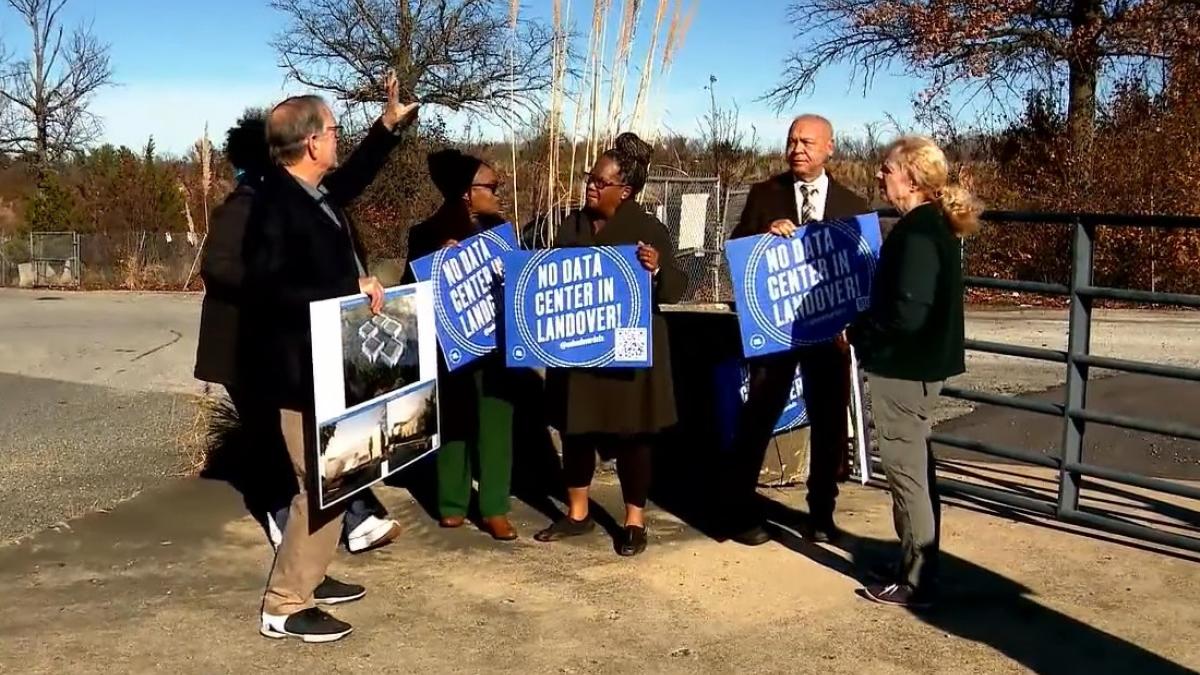
Prince George's County in Maryland has officially passed a two-year moratorium on new data center construction, setting a precedent as the strictest restriction on artificial intelligence (AI) data centers in the Mid-Atlantic region of the eastern United States. This decision highlights the intense challenges local governments face when balancing tech industry expansion against resident opposition and infrastructure strain.
According to NBC Washington, the Prince George's County Council voted to approve a comprehensive halt on data center development projects following a public hearing that brought together stakeholders and featured heated debates between proponents and opponents. The resolution marks a significant policy shift, as local officials must now confront the potential impacts of data centers on communities. The final ordinance includes a flexible clause: the moratorium can be lifted early if the county enacts a comprehensive regulatory framework for data center development.
The two-year construction ban has sparked strong backlash locally. Business groups led by the Prince George's Chamber of Commerce have strongly opposed the measure, advocating to shorten the two-year pause to just six months. Alexander Austin, a representative of the Chamber, stated, "While we support thoughtful planning and responsible development as top priorities, a two-year ban is simply too long."
In contrast, supporters of the ban emphasize the need for a thorough assessment of data centers' impacts on public health, the environment, and energy infrastructure before large-scale construction proceeds. Herbert Jones, a member of the left-leaning South County Environmental Justice Coalition, said, "The two-year pause gives us time to fully understand the big picture, as this is a deeply consequential decision. We must ensure that if we move forward, every step is taken correctly."
County Council Chair Krystal Oriadha acknowledged the intensity of community opposition after the vote: "I think residents have made it very clear—they simply do not want data centers in Prince George's County."
Nonetheless, opinions within the council remain deeply divided. Councilmember Eric Olson supported the development pause, arguing that the county needs to step back and hit pause to ensure sound policy. However, Councilmember Danielle Hunter expressed strong reservations, stating bluntly, "I feel this rushed decision-making is tantamount to political suicide for my role as a councilmember."
During deliberations, pro-development advocates attempted to delay the implementation of the moratorium, but the effort failed. However, the council later amended the resolution to include a repeal clause: the ban will automatically expire before the two-year period ends if an appropriate regulatory framework is enacted.
At the public hearing, a large group of data center supporters wearing fluorescent green shirts and hats labeled "face the future" showed up in force. While these "green army" members avoided disclosing their affiliations or whether they were organized by a central group, they strongly emphasized the economic benefits data centers could bring to the region. One supporter testified, "A tech park of this scale could generate tens of millions of dollars in tax revenue for Prince George's County."
In addition to the council's vote, County Executive Aisha Braveboy took executive action. Her office announced she signed an executive order immediately halting all data center permit applications, expected to last until September. This executive order will directly impact pending development projects, including a major data center planned for the former Landover Mall site.
This local dispute is not an isolated case. Breitbart News, citing a report from Data Center Watch obtained and revealed by NBC News, indicates that from January to March this year, anti-data center movements across the U.S. have successfully blocked or delayed at least 75 projects, involving up to $130 billion (approximately NT$4.2 trillion) in investment.
The report's authors emphasize that this wave of opposition against AI data centers marks the highest quarterly record since the organization began tracking the issue in 2023.
"The first quarter of this year reflects a structural shift, not a cyclical spike: communities across the U.S. have now internalized anti-data center strategies, and legislative sessions in various states have introduced regulatory uncertainty. In 49 U.S. states, the number of active opposition groups has more than doubled, reaching 833," the report states.
As the arms race in artificial intelligence intensifies, the siting and selection of AI data centers have become a primary battleground among technology, politics, and local environmental interests.
FACT BOX
- Source: PR Times
- Category: News