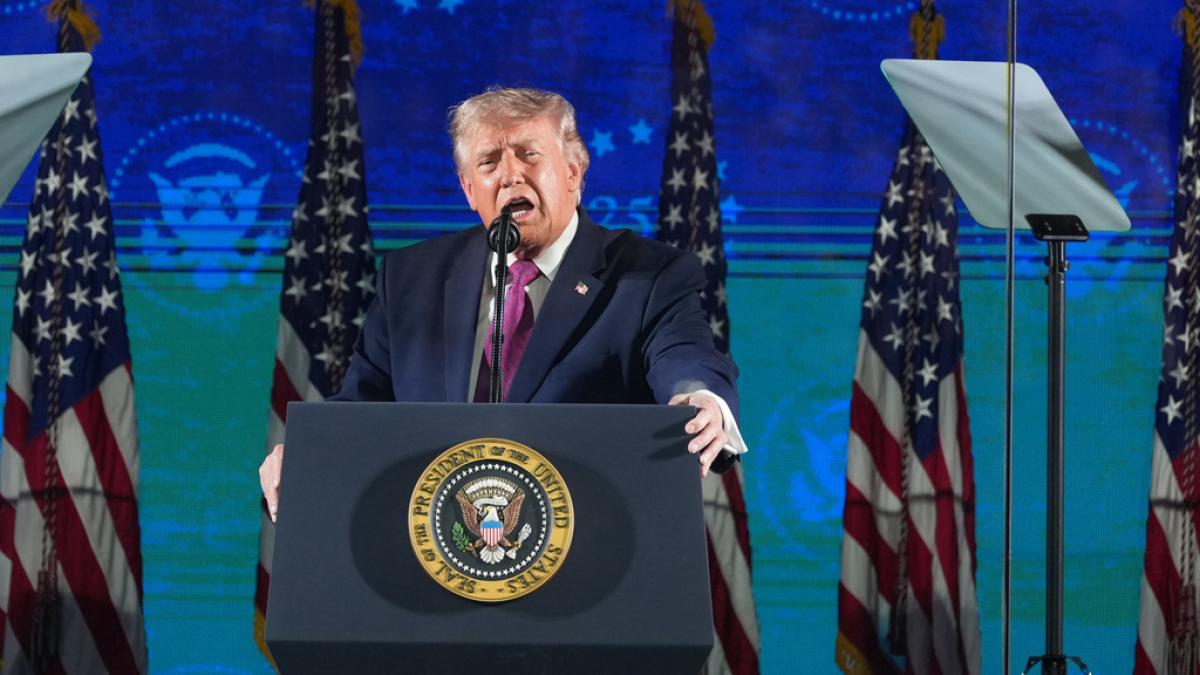
Geopolitical winds are unpredictable. In recent years, U.S. President Trump and American protectionist politicians have repeatedly claimed that 'Taiwan stole America’s semiconductor manufacturing and chip business.' This rhetoric distorts free-market choices into moral or legal accusations of theft. But if we extend our historical lens, can such commercial flows truly be defined as 'theft'? If so, then human industrial history is merely a chronicle of mutual theft—America once 'stole' textile manufacturing from Britain, Japan 'stole' the auto industry from the U.S., and China has recently 'stolen' the electric vehicle sector from America.
In reality, this is not theft, but a transitional process driven by market logic—the natural shift of 'supply chains' and 'value chains.'
Supply chains flow like water, and water naturally moves downhill. The essence of supply chains is minimizing cost and maximizing efficiency. Capital and factories naturally flow to regions with low labor and land costs, and strong 'cluster effects.' Taiwan has become a hub for semiconductor foundry manufacturing because, within a few hundred kilometers, it hosts an unparalleled ecosystem of engineering talent, packaging and testing facilities, and specialty chemical materials—an economic advantage of complete industrial clustering.
In contrast, value chains behave like cyclones, spiraling upward. The concept of value chain revolves around 'added value.' Just as in the beef industry, low-end products include beef offal soup, mid-tier includes beef noodles, and high-end features premium wagyu steak in French restaurants. Value chains, like typhoons, continuously spiral toward higher value-added activities. U.S. semiconductor giants like Apple, NVIDIA, and AMD outsourced high-capital, high-depreciation, low-margin manufacturing (foundry) precisely to focus resources on the top of the value chain: 'chip design' and 'intellectual property (IP).'
The U.S. has not lost control of semiconductors; it has captured the highest-value fruits (the cyclone’s peak), while Taiwan has taken the most technically advanced manufacturing segment (the lowland of the water flow). This is a perfect market-driven symbiosis.
However, current protectionism attempts to reverse this natural flow through political force—an economically costly 'counter-operation.' Politicians, concerned about national sovereignty and strategic goods, are trying to force water that has already flowed downhill to move uphill. This reversal requires enormous energy—like boiling water—to sustain.
When the U.S. forces tech giants to reshore production or imposes high tariffs, it triggers an unavoidable 'supply chain multiplier effect.' Cost transmission from raw materials to end consumers is not a simple 1:1 addition, but a multiplicative process. If U.S. policy increases the base cost of a chip or key component by $1, the cumulative profit margins across the supply chain can inflate that to a $3 burden for end users. If domestically produced chips in the U.S. cost over 50% more than those from Taiwan, this massive cost multiplier could directly destroy the global competitiveness of American tech products.
Protectionism leads to structural inflation. To suppress this inflation, the Federal Reserve (Fed) must maintain high interest rates. Prolonged high interest rates, in turn, raise financing costs for U.S. manufacturers and tech firms, making the already difficult 'return of manufacturing' even more challenging. While geopolitical whips may temporarily redirect the flow of water, political power cannot long resist the 'invisible hand' of the free market. When politicians forcibly distort supply chains, the 'boiling water project' meant to push water uphill will ultimately evaporate American companies’ global competitiveness and consumers’ wallets.
FACT BOX
- Source: PR Times
- Category: News
- Organizations: Apple / NVIDIA / AMD