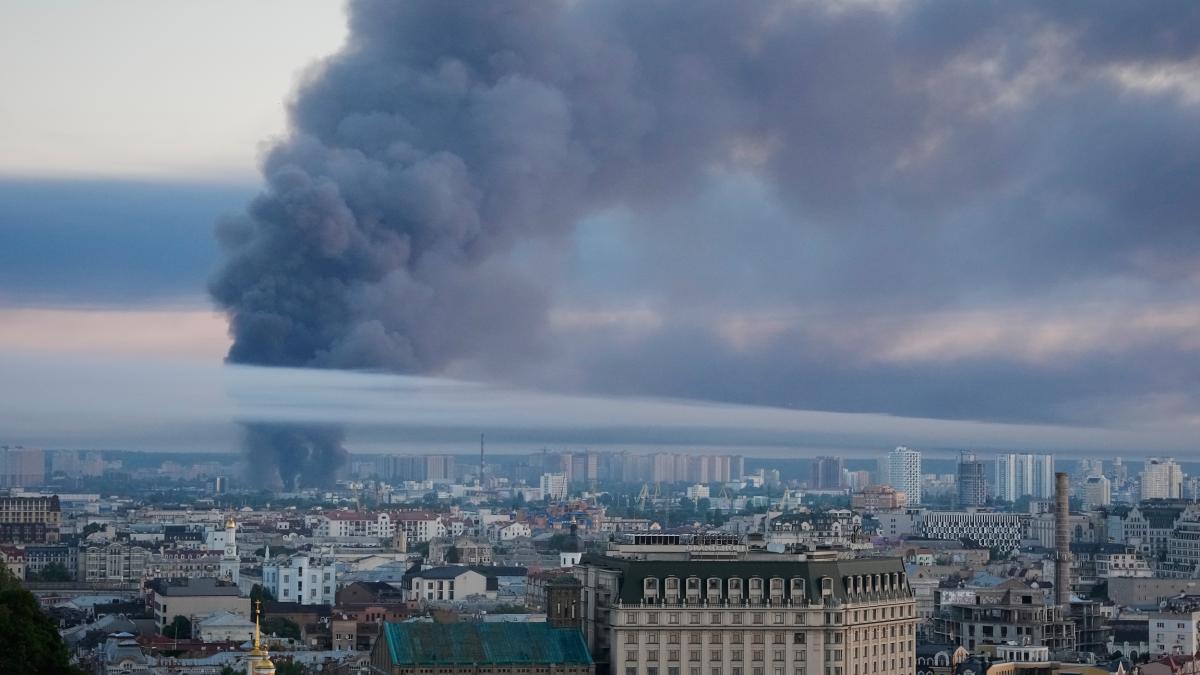
Recently, the most eye-catching images from the Ukraine war have almost all come from both sides using drones and various missiles to attack each other’s rear areas and cities. Ukraine’s several successful strikes against Russian energy facilities, oil refining systems, and deep strategic targets have indeed achieved remarkable results. As a result, online and in the media, there is a growing narrative that Russia is nearing collapse and that a fundamental reversal in the war may be underway.
However, a more sober assessment suggests this judgment may be premature, even missing the true focus of the conflict. The reason is simple: while drone and missile warfare are important, it is ultimately ground combat that decides the war’s outcome. Damage to rear areas, energy systems, and urban centers certainly affects a nation’s capacity to endure war and alters its rhythm. But as long as the front lines continue to advance, occupy, control, and wear down the enemy, the overall situation cannot be judged solely by a few spectacular long-range strikes.
This is precisely where many current analyses lose focus. Ukraine’s drone attacks on Russian rear areas have indeed been effective, with some results even astonishing. But this does not automatically mean Russian forces have collapsed on the front lines. On the contrary, when we return to the ground battlefield, Russia continues to exert steady pressure in the eastern direction of Ukraine. This advance may not be rapid, nor sufficient to immediately rewrite the entire war, but it does indicate one very real fact: Ukraine’s position in ground combat is actually far from optimistic.
In other words, the war is now exhibiting a dangerously dual-layered structure. On one hand, Ukraine uses drones and long-range strike capabilities to continuously undermine Russia’s rear security. On the other, Russia, with greater ground forces, stronger resilience in attrition warfare, and industrial support, continues to squeeze Ukrainian forces along the eastern front. This has created a very strange and deeply unsettling situation: rear areas grow increasingly active with attacks, yet the front lines do not reverse; deep targets keep exploding, but ground operations slowly advance in Russia’s favor.
The most dangerous aspect of this state is that it easily creates illusions. Observers see oil depots exploding one after another, waves of drones penetrating deep into Russian territory, and naturally assume Russia is on the verge of collapse. But in reality, the true foundation of war remains on the ground, and the frontline has not fundamentally reversed due to these rear attacks. As a result, rather than being quickly decided by new technologies, the war is being dragged into a longer, more dangerous trajectory by the interplay of advanced technology and traditional attrition warfare.
What we should truly be wary of today is not how spectacular a particular strike was, or whether Russia will immediately collapse after a refinery is bombed. Rather, it is that the war is moving toward a direction increasingly difficult to contain. Especially as both sides attack each other’s rear areas and cities, the risk of accidental escalation grows ever larger. While the use of missiles, drones, loitering munitions, and long-range firepower appears modern and precise on the surface, as attack ranges deepen and targets expand, the risks of miscalculation and loss of control rise in tandem.
Moreover, Russia has repeatedly issued deterrent signals indicating it would not hesitate to use tactical nuclear weapons. While we cannot conclude it will definitely cross the nuclear threshold simply because of repeated threats, we cannot deny that such nuclear deterrence language itself is part of the danger. The longer the war drags on, the greater the pressure on both sides, and the higher the domestic and international costs, making the risk of such rhetoric increasingly impossible to ignore.
What is truly unsettling is not necessarily whether a nuclear war will break out tomorrow, but that more and more actions are probing the boundaries of escalation.
Many argue Ukraine can still hold on because European nations continue to support it. This is true. One of the most important external conditions enabling Ukraine not to be completely overwhelmed is Europe’s continued escalation of military, financial, political, and technological support. This is also the main reason Ukraine can continue fighting. In other words, this war is no longer merely a conflict between Russia and Ukraine, but is increasingly tied to Europe’s overall security order.
And here lies another deeper danger: if the war continues along its current trajectory, the risk of direct friction between Europe and Russia will no longer be theoretical. This does not mean Europe will formally go to war with Russia tomorrow, nor that NATO will immediately intervene fully. But as the war becomes increasingly reliant on long-range strikes, penetrates deeper into enemy territory, and as European support for Ukraine takes on greater meaning in terms of defense industry integration and security community, the possibility of direct collision between Russia and Europe will inevitably rise.
Therefore, the two most common mistakes in observing the Ukraine war today are: first, seeing Ukraine’s drone successes and concluding Russia is nearly finished; second, seeing Russian advances on the ground and assuming Ukraine has no hope. Both views are overly simplistic. A more realistic assessment should be: Ukraine’s long-range strikes are indeed effective and have changed the logic of Russia’s rear security; but Russia still maintains pressure and advancement capability on the ground front, and Ukraine’s overall situation remains difficult. Thus, rather than quickly reaching a conclusion, the war, accelerated by new technologies, is being dragged toward a longer, riskier, and harder-to-resolve future.
Simply put, the most pessimistic aspect today is not that one side will fall tomorrow, but that both sides can still endure. Precisely because Russia has not yet reached its breaking point, Ukraine refuses to surrender, and Europe continues to support Ukraine, the entire war is being drawn into a state where risks grow ever higher, yet it becomes increasingly difficult to end.
This is the truly unsettling aspect of the Ukraine war today: not that one side is about to win immediately, but that the war may be dragged toward a more uncontrollable future precisely because neither side has fallen yet.
*The author is a university professor.
FACT BOX
- Source: PR Times
- Category: News