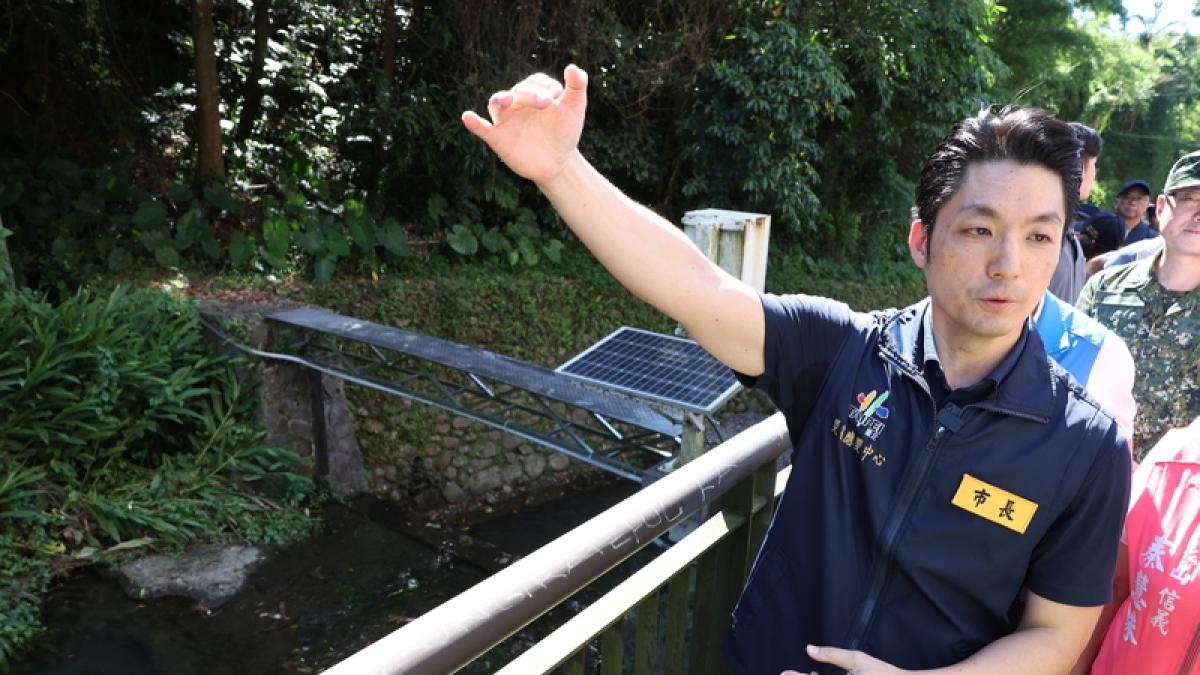
As Typhoon Bavi approaches Taiwan, announcements regarding work and class suspensions have already been issued across various counties and cities. Local leaders are once again facing the political test of 'typhoon politics,' which could even impact the 2026 local elections. On today's (9th) episode of the program 'POP Republic,' Professor Niu Ze-Xun from the Department of Advertising at Chinese Culture University stated that the decision to suspend work and classes places immense pressure on mayors. They are well aware that the impact of typhoons can be 'infinitely escalated' for political reasons.
Professor Niu emphasized that the biggest challenge in 'typhoon politics' for mayors is deciding on typhoon leave. If a city or county does not meet the suspension criteria but experiences strong winds and heavy rain, public dissatisfaction will inevitably arise. For example, during the 2016 Megi typhoon, then-Tainan Mayor Lai Qingde decided on only a half-day typhoon leave. On that day, while inspecting disaster areas, Lai encountered a young elementary school girl on the roadside. He approached her, offered comfort, and reminded her to go home quickly. This incident was later mocked by the public as 'Lai the God劝Child.'
Niu stressed that if a county mayor decides against suspending work and classes—or only allows a half-day leave—they face enormous pressure. On the other hand, adopting a 'better-safe-than-sorry' approach by suspending operations immediately may also invite criticism that the decision was politically motivated, thus questioning their professional judgment.
Niu pointed out that mayors' body language and attire during disaster inspections are also crucial elements of 'typhoon politics.' Wearing overly flashy or conspicuous clothing may lead disaster victims to believe the visit is merely for image-building. In late September 2025, during flooding in Guangfu Township, Hualien County, Taoyuan Mayor Chang Shan-cheng visited to console Taoyuan's rescue teams and volunteers, dressing in a low-key manner.
Niu further noted that the most important thing is for political figures to avoid being seen as causing disruption—either by disturbing residents or creating chaos at the scene due to their presence. Moreover, their body language must convey empathy and a genuine sense of sharing the people's suffering. Facial expressions should be solemn, and under no circumstances should any election-related messages be displayed.
FACT BOX
- Source: PR Times
- Category: News