Just one month after the United States and Iran signed a ceasefire memorandum, their fragile peace collapsed as new military clashes erupted, rapidly escalating tensions in the Middle East. On the 8th, the US military launched a second wave of retaliatory airstrikes along Iran's coastline, severely damaging approximately 90 military sites. In response, Iran's Revolutionary Guard launched counterattacks, launching missile and drone strikes for the second consecutive day against US military bases in Bahrain and Kuwait. According to Reuters, the current state of combat indicates that diplomatic efforts to de-escalate tensions between the US and Iran have failed, plunging both nations back into a volatile cycle with no clear exit strategy.
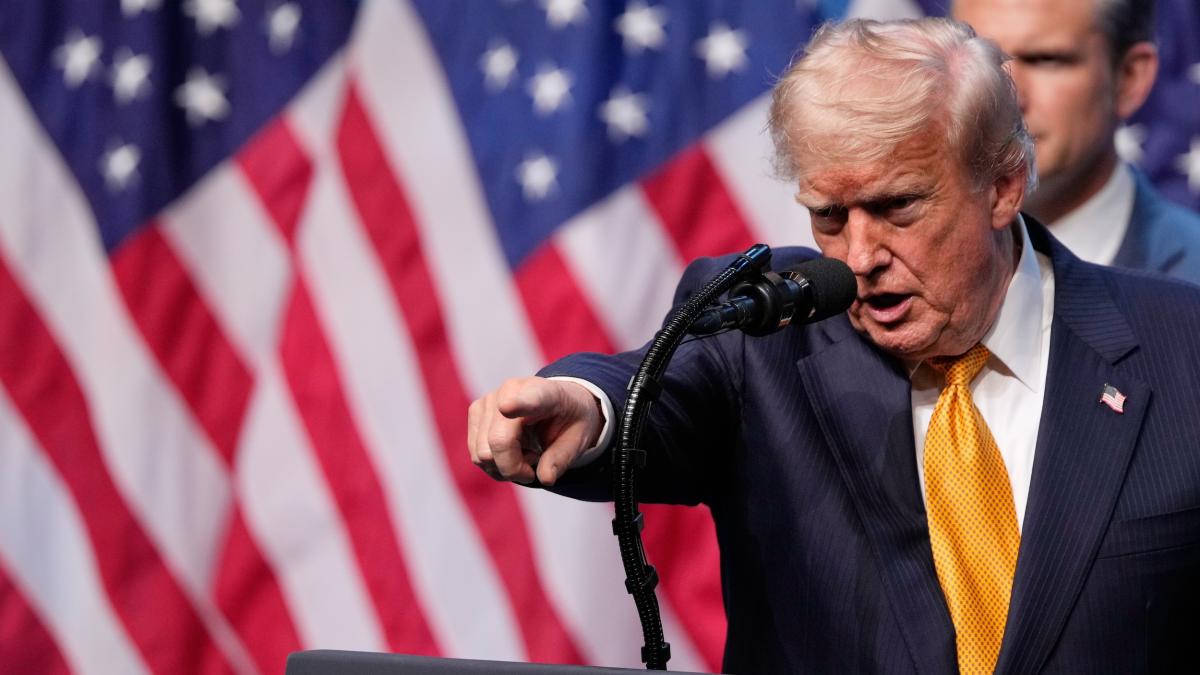
US President Donald Trump, returning home aboard Air Force One after attending the NATO summit in Turkey on the 8th, told accompanying journalists that he believed the preliminary US-Iran agreement was "over." He harshly criticized Iran as "very dishonest people" and stated that there was no short-term prospect of returning to negotiations. Trump later posted on his social media platform Truth Social: "This is retaliation for Iran's bombing of commercial ships yesterday. If it happens again, the consequences will be far worse!" He emphasized to the media that the US would respond to any attack with "20-fold retaliation."
Reuters noted that the collapse of this short-lived ceasefire immediately disrupted global energy supply chains. As the conflict directly impacted a critical waterway responsible for one-fifth of global crude oil transportation, international oil prices surged nearly 7% on panic buying when news of the US airstrikes and the ceasefire breakdown emerged. By the time Asian markets opened, sentiment had slightly stabilized, but prices remained elevated. Brent crude futures rose 1.1% (86 cents) to $78.88 per barrel, while US West Texas Intermediate (WTI) crude futures also increased by 1.2% to $74.37 per barrel. Analysts warn that if hostilities fully reignite, oil prices could again approach the April high of $120 per barrel.
Jon Alterman, a senior fellow at the Washington-based think tank Center for Strategic and International Studies (CSIS), pointed out that Tehran is using oil prices and inflation as strategic leverage. Alterman analyzed that Iran believes Trump cannot afford economic discontent caused by high oil prices ahead of the November midterm elections, so Tehran refuses to back down and aims to force US concessions by disrupting traffic through the Strait of Hormuz.
US Military Launches Massive Strikes, Tehran Threatens to Block Red Sea
According to the latest combat report from US Central Command (CENTCOM), on the night of the 8th, the US military launched a second wave of retaliatory airstrikes, targeting Iran's entire southern coastline from the Strait of Hormuz to the Gulf of Oman in the east. Around 90 targets were hit, including air defense systems, missile storage facilities, and naval bases of the Revolutionary Guard. Iran's largest port city, Bandar Abbas, suffered a major blackout, while coastal cities near the Pakistan border—Konarak and Chabahar—also endured heavy bombardment. The maritime traffic control tower in Chabahar was destroyed by US airstrikes. The fighting even spread inland and northward, with a nighttime raid outside Ahvaz in the northwest killing three and injuring several others.
This military escalation quickly triggered diplomatic retaliation. Iran's UN mission submitted a protest letter to the UN Security Council, condemning the US military's actions as a blatant violation of international law. Iranian Foreign Ministry spokesperson Esmaeil Baghaei denounced the US attacks as a clear breach of the memorandum. A spokesperson for Iran's parliamentary National Security Committee warned that Tehran is preparing strong countermeasures, including withdrawing from the Nuclear Non-Proliferation Treaty (NPT), revising its nuclear strategy, and possibly simultaneously cutting off the strategic Bab-el-Mandeb Strait in the Red Sea.
Nuclear Negotiations Indefinitely Suspended
Reuters reported that the key reason for the collapse of the US-Iran ceasefire agreement lies in the divergent interpretations of the memorandum signed on June 17. For example, the memorandum states that Iran "will make every effort to ensure commercial vessels can pass safely and free of charge within 60 days." Two Iranian officials told Reuters that Tehran interprets this as "de facto US recognition of Iran's authority over the waterway," viewing the two-month period as merely a temporary waiver of fees. The US and its Middle Eastern allies completely reject this interpretation.
Ali Ansari, a history professor at the University of St Andrews, analyzed that the cognitive gap between the two sides led to the worst possible outcome: "Both leaderships blindly believe they can win the strait blockade war, and this overconfidence leads both sides to try to exhaust the other's leverage through larger military actions before returning to negotiations."
Two high-level Iranian sources revealed that there is now internal consensus in Iran that this conflict highlights the strategic importance of the Strait of Hormuz, which now outweighs even the nuclear program. Tehran will not restart any nuclear-related negotiations until the US fully recognizes Iran's control over the Strait of Hormuz. Former US Middle East negotiator Aaron David Miller stated: "Trump has boxed himself into a corner. Whether through military or diplomatic means, he now appears unable to gain any advantage from Iran."
Although Trump claimed the conflict would "end very quickly," analysts believe he has few viable options, and whichever path he chooses, the outcome is unlikely to be favorable. Reuters noted that any attack beyond tit-for-tat retaliation risks plunging the region back into full-scale war, while refraining from retaliation could signal to Tehran that it indeed has the power to control passage through the Strait of Hormuz. According to a Reuters poll last month, Trump's approval rating has dropped to 34%, nearly the lowest of his second term, weakening Republicans' chances of maintaining a congressional majority in the upcoming midterm elections.
FACT BOX
- Source: PR Times
- Category: News