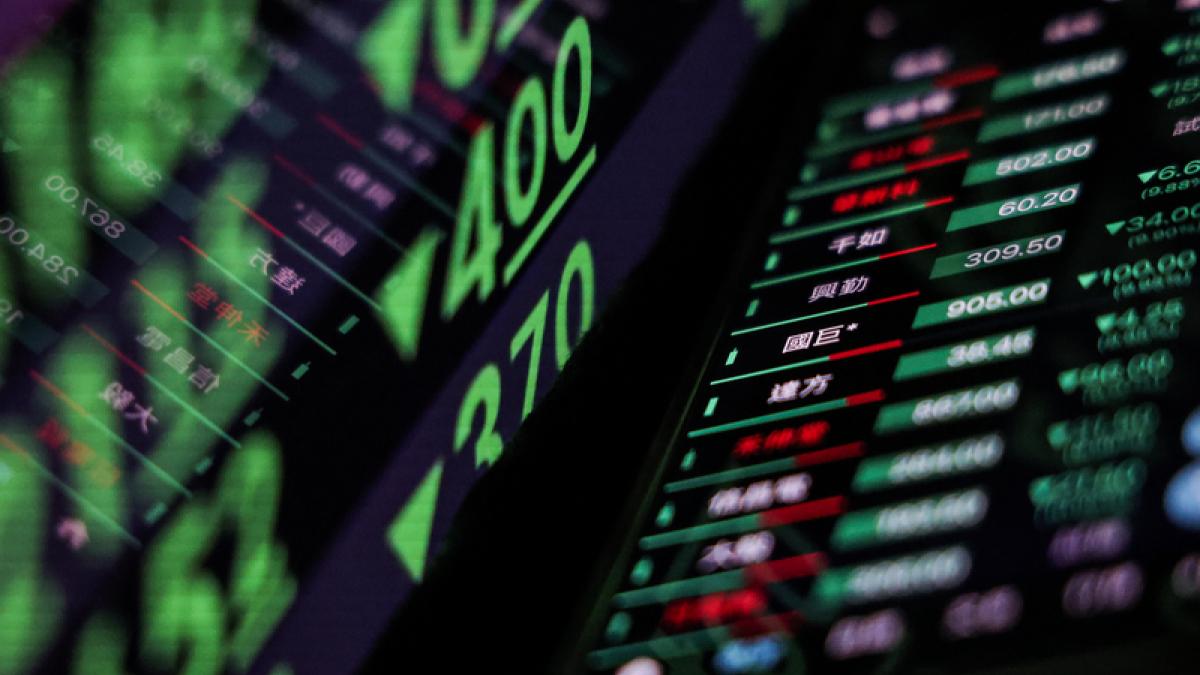
Taiwan's stock market has repeatedly hit new highs in the first half of this year, with many investors watching closely for when it might break the 50,000-point mark. Additionally, per capita GDP is projected to grow close to $45,000, painting a bright picture of economic data. However, recent figures released by the Directorate General of Budget, Accounting and Statistics show that Taiwan's June Consumer Price Index (CPI) rose to 2.6%, the highest in nearly 17 months, potentially breaching warning thresholds consecutively. In response, media commentator Tang Hsiang-lung stated on today's (10th) episode of the program 'Wind Direction Longfeng Pei' that this is a serious wealth illusion, and that Taiwan has fallen into an extremely distorted 'small K-shaped economy.' Tang went further, bluntly stating, 'Taiwan is sick.'
Why do people feel disconnected from economic growth despite soaring stock prices? Tang pointed out that over 1,000 listed companies have become low-liquidity 'zombie firms.' While Taiwan's stock market continues to set new records, Tang noted that daily trading volume exceeds TWD 1 trillion, generating US$100 million in securities transaction tax revenue for the government each day. TSMC alone accounts for 43.79% of total market capitalization, and the top five heavyweight stocks—TSMC, Delta Electronics, MediaTek, Hon Hai (Foxconn), and ASE—collectively exceed 55.66% of total market value. This extreme concentration means 20% of investors are capturing 80% of the wealth.
Tang further explained that when the Taiwan stock index recently broke the 40,000-point mark, nearly two-thirds of listed and OTC stocks failed to even surpass their annual moving averages. Many small and mid-cap investors have been losing money over the past year, and over 1,000 listed companies have become 'zombie firms' with extremely low trading volumes. As a result, nearly 90% of the population cannot directly feel the economic prosperity. Tang emphasized that Taiwan's economy cannot be described simply as imbalanced—it is not just a lack of sensation, but one that brings absolute deprivation to the people.
Are wages barely rising—or even declining? The bottom 50% share only 12% of total income. Tang also highlighted that beyond the stock market, the 'hot exports, cold domestic demand' imbalance is a major issue. Last year, 70% of GDP growth was driven by exports, while private domestic consumption unrelated to exports grew only slightly by 1.4%. Moreover, non-electronics manufacturing sectors such as steel, chemicals, and textiles have seen their total revenue shrink by TWD 1.25 trillion over the past five years.
Tang added that wage data shows only 8% of people enjoy salary and bonus increases. Wages in non-electronics manufacturing rose only 1.7%, and overall service sector wages increased by just 1.1%—even less than the 4% raise expected for military, civil servants, and teachers this year. Real wages in the tourism, dining, and hotel industries even declined by 0.5%. In other words, the wealthiest 10% in Taiwan capture 48% of total income, while the bottom 50% of the population share only 12%.
The 'small K' economy makes life harder. Tang Hsiang-lung: 'Taiwan has a serious illness.' Tang described Taiwan's economy as 'small K-shaped,' meaning the path to prosperity is very short for a few industries and people, while the path of stagnation or decline is very long for the majority at the bottom. He stressed that these figures show life is becoming harder for lower-income groups under high inflation. 'If this continues, Taiwan will face serious problems,' he warned. 'For some people, money may be flooding up to their ankles—or even their chests—but it has nothing to do with you. Can you change it?' Tang bluntly stated that Taiwan has a serious illness, and if this gap isn't addressed, it could trigger severe social problems, accumulate conflict energy, and even lead to rising crime rates.
FACT BOX
- Source: PR Times
- Category: News