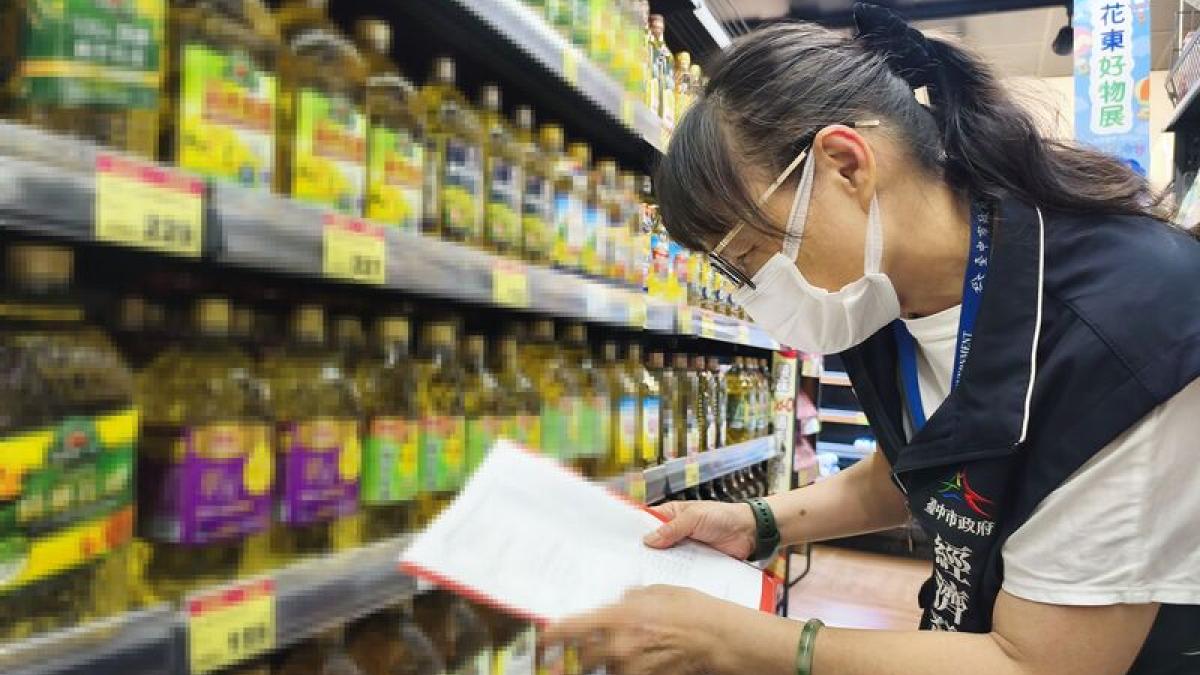
Walking into a convenience store, the most eye-catching position on the newsstand has a headline with five blood-red large characters: 'Damn it, the whole of Taiwan has swallowed cancer oil!' Accompanied by a simulated image: a hideous fat tycoon is pouring black poisonous oil into the mouth of a thin civilian, while a government official in a suit uses a briefcase to cover his face, pretending to see nothing. If 《Apple Daily》 still existed today, Taiwan's convenience stores would probably be flooded with this headline; TV stations would abandon various messy dashcam and surveillance camera news, dispatch all their personnel to the streets and alleys in front of hot pot restaurants and convenience stores, interviewing shop owners, street vendors, housewives, and students about their deep hatred and pain for the rampant cancer oil. This shocking food safety crisis, triggered by the detection of the carcinogen 'benzo[a]pyrene (BaP)' exceeding the standard by four times in salad oil, swept through Taishan, Fushou, Bufeng, Lianhua, and even iconic large factories such as Ding Tai Fung, Domino's Pizza, and Love & Love in just over ten days. However, in this disaster of national health, we see no decisive action from public authority, no stern criticism from the media, but only the absurdity of government action, the shamelessness of officials, and the collective decline of the media in the current era of 'discarding the bell and making noise with pots and pans.' The initial response of the Democratic Progressive Party government to the incident can only be described as 'cover-up and lax enforcement.' While thousands to tens of thousands of tons of toxic oil from Chunglien Oil & Fat flowed across Taiwan, the response of the Food and Drug Administration was merely to order the withdrawal of the first layer of oil products. However, for countless processed foods that had already been made into cookies, lunch boxes, and convenience store rice balls, they merely glossed over it with 'manufacturers are also victims.' This bureaucratic logic, which places corporate interests above national health, would have been thoroughly criticized for a week with headlines like 'Bureaucrats Killing People' and 'Food Safety Breach' in the era of 《Apple》. In the face of external questioning about its lax enforcement of toxic oil, the heads of departments, when facing questioning in the legislature, either shrugged their shoulders and shifted the blame to 'the gap between international standards and self-inspection,' or adopted a high-and-mighty expert attitude, using cold professional terms to dismiss the public's fear. Chunglien General Manager Yu Ling-chung, knowing that the raw materials were poisonous, was suspected of covering up the truth. After being detained by prosecutors, the court once ruled that he could be released on bail of 20 million yuan. In the face of this heavy blow to social justice, the officials in charge of food safety not only showed no anger or condemnation but, like a bystander, made a cold remark of 'respecting the court's decision.' This 'officialdom exposed' with no sense of responsibility and treating people's lives as grass, if there were 《Apple》's paparazzi and in-depth investigative reports closely following, how could these high-ranking officials so elegantly shift the blame to local governments without changing their expressions in front of the camera? The most heartbreaking thing is the collective incompetence of the fourth estate today. Although 《Apple Daily》 was controversial for its sensationalism, its 'unbiased, only asking right or wrong' ruthlessness was the most feared 'dog-headed cleaver' by the political and business circles in supervising the privileged and exposing the dark secrets. Now, facing such a huge cancer oil storm, the mainstream media are as tame as sheep, making people shiver. In the era of click-through rate supremacy and fragmentation, most media have abandoned the time-consuming and labor-intensive in-depth tracking and benefit chain excavation, leaving only the clamor of copying online public trials and reprinting business statements. In political talk shows, famous hosts are busy with political attacks and verbal sparring, reducing the food safety crisis to a chip in party infighting. The harm of poisonous oil is buried in the bottom layer of entertainment gossip and net red disputes on news websites. No one asks where the huge profits from replacing Brazilian beans with American beans flow to? No one exposes whether there is official-business collusion behind the 'technical watering down' of the Food and Drug Administration? No one raises angry cries for the grassroots workers who swallow poisonous lunch boxes every day. The media is no longer the bell supervising the government but has become a megaphone for helping the privileged to apply makeup and divert attention. If 《Apple Daily》 still existed, all politicians and businessmen in Taiwan would not be able to sleep peacefully. That most primitive, most brutal, but also most real anger from the public could be directly thrown at the faces of government leaders through 《Apple》. The cancer oil case exposed the thousand wounds and sores of Taiwan's food safety system, exposed the cold-bloodedness of high-ranking officials and tycoons, but more importantly, it exposed the sad reality that after losing 'dissent and determination,' the media ecology of Taiwan only left a mess of feathers.
FACT BOX
- Source: PR Times
- Category: 调查