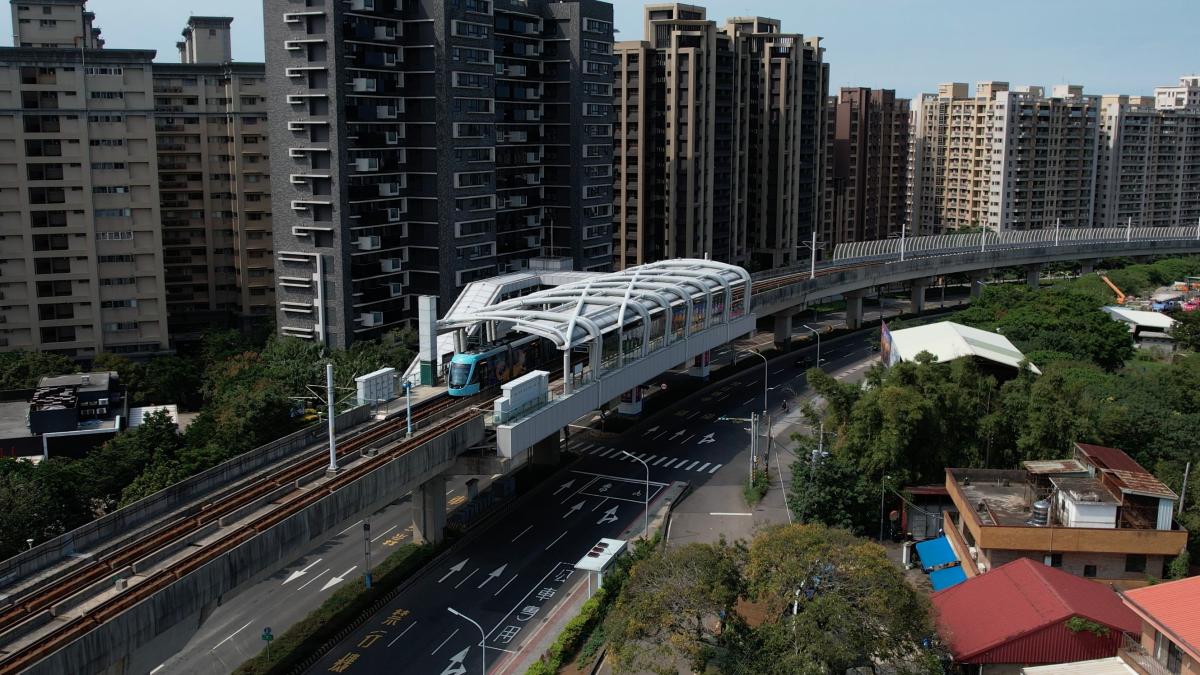
On July 16, the Executive Yuan officially approved the 'Qing'an 3.0' plan. Looking back over the past three years, the New Qing'an has evolved from 1.0 and 2.0 to the current 3.0. Housing loans have been criticized by public opinion and scholars for 'aiding in housing price increases and becoming a tool for speculation.' The 3.0 revision presented by the Lai government this time raises the banner of 'returning to youth and precise anti-corruption,' adding three major thresholds: age, income, and total housing price. However, when we examine this policy in the context of the overall economic background of 'tightening the housing market' and 'soaring inflation,' we will find that this policy not only fails to solve the housing market deadlock but also once again blatantly exposes the systemic contradictions in the Lai government's housing and financial policies: one foot on the brake, the other on the accelerator. More ironically, while subsidizing home purchases, the Lai government's pre-election promise to 'directly build 130,000 units of social housing' has been significantly reduced by the Ministry of the Interior to just 40,000 units. Is this 'Qing'an 3.0' a 'pain reliever' that eases the pain of first-time homebuyers with genuine needs, or a 'stimulant' that further heats up the housing price bubble? The Tragic Song of Youth Seeking Housing: Viewing the 'Fall of the Shell Area' from Danshui's Hillside To understand the real impact of this policy's contradictions on young people, perhaps we don't need profound economic theories, just a Danshui Line MRT ticket. The other day, I visited a friend at Hongshulin MRT Station and was shocked to see that the hillside in the Danshui area was densely covered with houses. High-rise buildings rose one after another along the steep hillside, creating a great visual impact. Upon closer inspection, these new developments were uniformly designed with small units of around 20 to 30 ping, clearly targeting young people who have just started a family and want to settle down in the Taipei metropolitan area. My friend said that in the past year and a half, housing prices in this area have soared from over NT$350,000 per ping to NT$450,000. The catalyst behind this was the distant Beitou Shilin Science Park (Beishih Science Park) - because NVIDIA is expected to set up its headquarters there, funds and expectations have spread along the MRT red line to Danshui. Danshui has long been considered the 'last shell area' of the Taipei metropolitan area. If a young person chooses to live in Danshui and work in the center of Taipei, they would have to spend 3 hours a day just commuting. However, now even this high-cost commuting area, which is rainy and humid in winter, costs NT$450,000 per ping. This blatantly proves that Taiwan's housing prices have not only not fallen in recent years but are silently soaring in places unseen by the public. That day, as I walked down the slope, which was not very steep, and looked back at the newly built houses standing in groups on the hillside, sweating profusely under the scorching sun, I suddenly felt a deep sense of sadness. Must Taiwan's youth now have to exile themselves to a hillside with a three- to four-hour commute every day in order to have a place to live, at the cost of 30 or 40 years of their youth? And the government's answer to this is to give them more loans (up to NT$15 million) to buy these 'narrow hillside doors' that have been inflated to NT$450,000 per ping? Contradiction 1: The Central Bank cannot let go, while the Cabinet provides 'ammunition' from behind Before the 3.0 plan was approved, Taiwan's housing market had entered an 'industrial ice age' due to the sharp decline in building permits, occupancy permits, and construction volume. According to financial circles, the Central Bank was under great 'lobbying' pressure from real estate developers and the government before the second quarter board of directors meeting. The industry was once optimistic that credit controls would be relaxed. However, President Yang Jinlong and the Central Bank directors ultimately chose to 'grit their teeth and hold on, not letting go,' with the key being an insurmountable hard injury - 'housing prices have not come down.' Amid high construction costs and the support of the wealth effect of the soaring stock market, the housing market is in a stalemate of 'quantity shrinking but prices not falling.' The Central Bank has barely built a defensive line with credit controls, trying to suppress market expectations. At this time, the Executive Yuan presented 'Qing'an 3.0,' raising the loan limits for newlyweds and families with children to NT$12 million and NT$15 million respectively. This, in economic terms, is equivalent to sending a strong signal to the market: 'Don't worry, the government will continue to prop up housing prices with a budget of several hundred billion!' When developers and homeowners expect that the 'pockets' of buyers have been inflated by 300 to 500 million by the government, what reason do they have to lower prices for sale? The Central Bank is working hard to control the concentration of credit in the front, while the Executive Yuan is installing a 'booster' for homebuyers with public funds in the back. This is the most typical policy split. Contradiction 2: Direct construction of social housing reduced by 70%, 'purchasing' housing justice With the large interest subsidies of Qing'an 3.0 compared, the real backend of Lai's housing policy has already collapsed. Lai Qingde President shouted before the election '8 years to directly build 130,000 units of social housing,' but after taking office, no substantial implementation plan has been determined, and the National Land Administration and the Ministry of the Interior have recently quietly reduced the target to about 40,000 units, reduced by 70%. The Ministry of the Interior even used reasons such as 'no land in the city, building will increase carbon emissions, high vacancy rate' to defend, claiming that future policies will shift to 'rental subsidies' and 'rental management,' and forcibly packaged the two as 'movable social housing.' This policy shift exposes the government's laziness and shirking of responsibility in housing justice, because rental management is not social housing. Ours and other civic groups pointed out that rental management is essentially 'private rental housing subsidized by the government.' Landlords can withdraw from renting or refuse the underprivileged at any time, and will also adjust rents upwards with the market situation, with no public protection. In addition, 'no land' is just an excuse. There are many policy tools in urban planning, such as volume rewards, TOD, and redevelopment feedback. The government is unwilling to reform the mechanism to retain land for public use, but rather spreads its hands, handing over housing justice to the unstable rental market. When 'direct construction of social housing,' a tangible asset that can bring 50 years of long-term public benefits, is reduced, the government throws money at 'rental subsidies' and 'Qing'an interest subsidies.' This is essentially 'purchasing' and 'short-term' housing justice. Subsidies are like fireworks, once they are over, they are gone, leaving only rents and housing prices inflated by funds. Contradiction 3: Fake wealth, true anchoring, the sugar-coated poison of 'stimulants' The Ministry of Finance claims that 3.0 has added restrictions, including age under 50, personal annual income under NT$2 million, and a total housing price ceiling (NT$35 million in Taipei City, NT$25 million in New Taipei City and Hsinchu, and NT$20 million elsewhere). However, Professor Zhang Dingxuan of Jingwen University of Science and Technology's blunt criticism has pierced this anti-corruption bubble: 1. 'Fake wealth' loophole: Restricting 'individual' rather than 'household' annual income of NT$2 million is undoubtedly a design of one eye open and one eye closed. High-income spouses can use financial allocation to register the house in the name of the other half, who is below the threshold, to easily obtain national resources. This is not precise subsidy, but 'using the taxes of low-income renters to subsidize the middle class who can afford houses worth two or three million,' destroying vertical fairness. 2. 'Housing price ceiling' becomes an anchoring price: Setting a total price ceiling of NT$20 million to NT$35 million for each county and city may, in market psychology, directly become the 'steel bottom' of developers' pricing. When planning pre-sale houses, developers will precisely adjust the total price to the upper limit, and even the originally possible correction of housing prices in central and southern Taiwan will be firmly propped up by the 'NT$20 million Qing'an line.' Pain reliever or stimulant? For those newlywed and child-rearing families who have been waiting in vain for general commercial bank loans under the shadow of the loan restriction order, Qing'an 3.0 may be a short-term 'pain reliever.' It ensures a green channel for those with rigid needs to barely get on the end of the MRT line in the era of high housing prices and seek a little shelter in the shell area. However, from the perspective of the overall economy and housing market structure, it is more like a long-term 'stimulant.' On the one hand, the government has reduced the promise of directly building social housing by nearly 70%; on the other hand, it continues to inject hundreds of billions of interest subsidies into the 'housing loan' market. This contradictory practice of 'left foot brake, right foot accelerator' results in the cancellation of policy effects, and the cost is borne by all taxpayers. The benefits of subsidies are ultimately transferred and absorbed 100% through price increases in the inflexible metropolitan land market by developers and homeowners. The interest subsidy of New Qing'an 3.0 has added a '3+3 year' phased exit mechanism, which actually foreshadows the danger of this stimulant: In the first three years, under the anesthesia of low interest and grace period, young people buy houses that they cannot afford; from the fourth year, subsidies begin to exit, and the Central Bank, unable to loosen controls because housing prices do not fall, may even be forced to raise interest rates. At that time, young families facing the peak of child-rearing expenses and rising mortgage interest rates will find that the 'pain reliever' fed to them has long turned into a poison that undermines financial health. If the Lai government is truly committed to solving housing justice, it should not, on the one hand, allow public housing promises to default, and on the other hand, use financial subsidies in the name of 'fake welfare' to protect the housing market. The only solution is to restart the construction of social housing and completely decouple social welfare from home purchase loans.
FACT BOX
- Source: PR Times
- Category: 政策