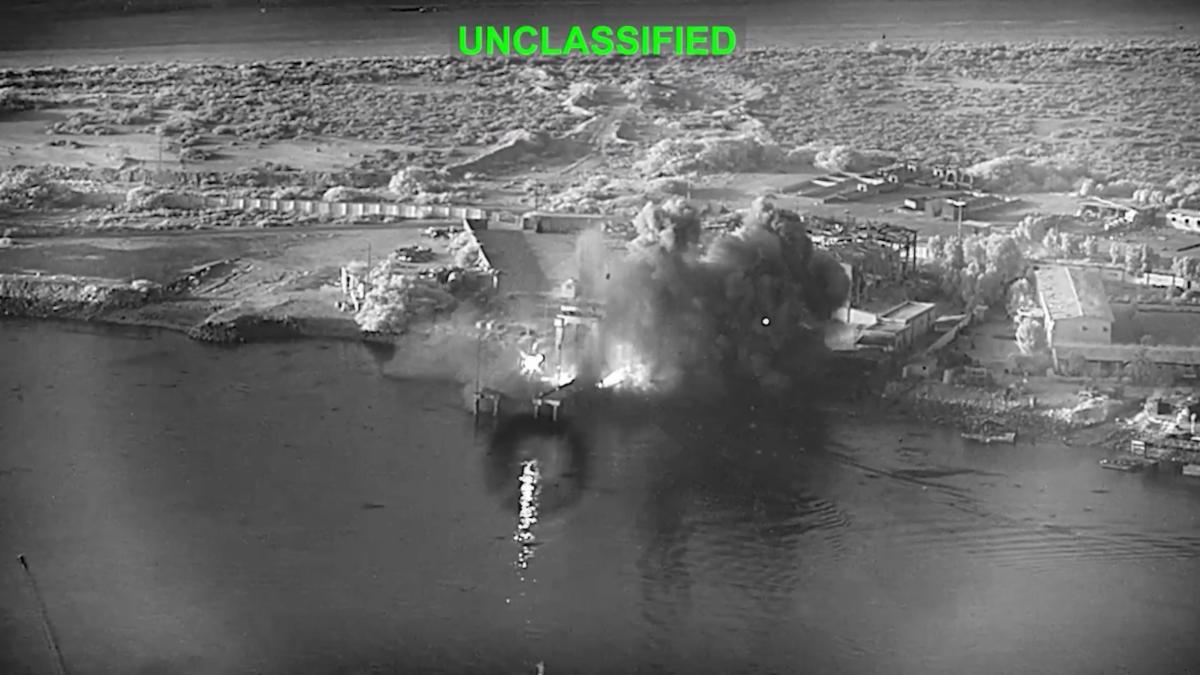
Recently, tensions between the US and Iran have escalated again, with both sides accusing each other of violating the ceasefire memorandum signed in mid-June. The US military has conducted continuous airstrikes on Iran and resumed the blockade of maritime traffic to and from Iranian ports. Trump has also sent a letter to Congress restarting the war with Iran and announced that it will collect a 20% security fee on the value of goods from foreign ships passing through the Strait of Hormuz. Tehran has responded strongly with missile and drone attacks on US bases, Gulf countries, and commercial ships, continuing to hold the Strait of Hormuz hostage.
From the current situation, it can be observed that Trump's increased military pressure has not resulted in Iran's unilateral surrender and compromise, but has instead led to a near 10% surge in Brent crude oil prices, the largest single-day increase since 2020. Global stock markets have also experienced severe volatility. The Trump administration wants to completely destroy Iran's nuclear capabilities and weaken its missile and drone capabilities, while also forcing Tehran to compromise, maintain the smooth passage of the Strait of Hormuz, and keep oil prices low, all while avoiding prolonged warfare.
These goals are complex and highly interdependent, requiring extremely delicate overall strategic planning and military and diplomatic deployments. However, Trump has not prioritized targets based on the importance of US strategic interests and has made misjudgments during the operation against Iran, resulting in various strategic operations canceling each other out.
Trump has underestimated Iran's three capabilities. The first misjudgment is underestimating the resilience of the Iranian regime and military. Although the US military's airstrikes have decapitated Tehran's top leadership, the regime has not collapsed and currently appears to be maintaining stable surface operations. In addition, despite the US military's continuous heavy blows to Iran's military and civilian facilities and attempts to force Iran to compromise through a maritime blockade, Iran still maintains its military counterattack capabilities such as missiles and drones. This allows it to continuously increase the risk and cost of Washington's involvement in the war. In other words, Trump's originally envisioned 'quick victory' has been completely shattered by Iran's resolute resistance of 'survival is victory'.
The second misjudgment is underestimating Iran's possession of conditions for developing nuclear weapons and its further determination to possess them. Although strong US military strikes can destroy related hardware facilities, they cannot eliminate the nuclear technology that Iran has already mastered. Moreover, the outside world cannot fully confirm the quantity, location, and actual state of Iran's remaining highly enriched uranium, and the extent of damage to underground nuclear facilities is also unclear. In addition, CNN quoted satellite imagery to reveal that Iran seems to be rebuilding nuclear facilities, all indicating that the promise not to develop nuclear weapons in exchange for the lifting of US sanctions may only be Tehran's stalling tactic, and its ultimate goal is still to possess nuclear weapons to enhance its own weight.
The third misjudgment is underestimating Iran's influence on the Strait of Hormuz. Although Iran may not be able to completely block the strait or fully obstruct the passage of commercial ships, as long as it uses low-cost equipment such as shore-based missiles, mines, fast boats, and drones to carry out sudden and random attacks on ships passing through the strait, it is enough to increase maritime insurance, energy prices, and global supply chain costs, thereby putting pressure on the Trump administration. This shows that tightly grasping the global energy throat and increasing the cost of free navigation in the Strait of Hormuz is currently Iran's most effective and highest cost-benefit countermeasure. Therefore, it will not easily compromise.
Rash agreement lays the groundwork for a new round of conflict In order to stop the bleeding urgently, the Trump administration signed a ceasefire memorandum with Iran in mid-June that both sides could claim victory. However, regarding the most critical issue of the Strait of Hormuz, it was deliberately kept vague, creating more controversy. The fifth clause of the memorandum only requires Iran to 'make every effort' to arrange for the safe passage of commercial ships and discuss the future management of the strait with Oman. Tehran then claimed that the United States had indirectly recognized Iran's sovereignty over the strait. Since the ceasefire memorandum did not define management rights, collection rights, enforcement scope, breach of contract responsibilities, and supervision mechanisms, it was equivalent to pre-burying the fuse for the next round of conflict.
More ironically, Trump announced that he would collect a 20% 'protection fee' from ships passing through the strait, but the White House has not yet explained how the fee will be calculated and executed, including: whether ships must pay before entering the strait? Is it tied to US military escort? What consequences will there be for refusing to pay? Everything is a mystery. Any fee system involving strait passage must be coordinated with shipping, insurance, banking, and port authorities and cannot be immediately operational after the US's verbal announcement.
In addition, for a super-large oil tanker carrying 2 million barrels of oil at $80 per barrel, the passage fee can reach $32 million per trip. The cost will ultimately be passed on to refiners and consumers and may have an inflationary effect similar to that caused by the blockade of the strait. The United States originally opposed Iran's collection of service fees on the grounds of maintaining free navigation, but now it is also collecting fees for the same reason. This position is not only contradictory but also weakens the United States' legitimacy in maintaining public waterways and its global leadership.
The war is now backfiring on the United States itself. The US-Iran war has also become a domestic political crisis for Trump, especially as the Republican Party holds a majority in Congress, the US Senate passed a resolution in June in an attempt to block Trump's military actions against Iran without congressional authorization, showing that congressional backlash has crossed party lines. As Trump restarts the war with Iran, it will continue to push up the cost of living for Americans, further impacting the midterm election situation in November, and it is expected that more Republican lawmakers may choose to distance themselves from the White House to retain their seats. As for Trump's expectation of a Federal Reserve rate cut, it is unrealistic. Military action against Iran will push up oil prices, and rising oil prices will exacerbate inflation, squeezing the space for rate cuts. If economic pressure affects the midterm election situation, Republican lawmakers will be more inclined to limit the war, highlighting that Trump's mistake is not only failing to achieve the war's goals against Iran but also ignoring the interconnected costs of various policies.
From the perspective of strategic consistency, the Trump administration currently has few viable options. One is to 'carry out military strikes to the end', completely destroying Iran's nuclear facilities, missile and drone systems, and strait blockade capabilities. However, this goal is difficult to achieve within a few months, and the cost will be sustained high energy prices, worsening inflation, large-scale consumption of military supplies, and involvement in the midterm elections. Another is to 'seek a quick ceasefire and minimize losses', accepting Iran as a coastal state participating in the Strait of Hormuz security arrangements, and then using negotiations to obtain stable shipping. However, this is equivalent to the United States admitting that it has not achieved its original goal of going to war with Iran, not only damaging its own prestige and international status but also weakening its bargaining chips for future denuclearization negotiations, and Iran is more likely to normalize provocation.
For US interests, the worst thing is that Trump is currently taking the third path: 'not willing to bear the cost of victory, nor willing to admit that military pressure has reached its limit; on the one hand, bombing, on the other hand, negotiating; on the one hand, advocating free navigation, on the other hand, collecting high security fees; on the one hand, asking allies for support, on the other hand, publicly humiliating allies.' The contradictory stance is confusing. If we further look at the larger strategic context of US-China competition, China only needs to watch from the sidelines as the United States consumes its missiles, fleets, military supplies, diplomatic attention, and political capital in the Middle East, which can gain a continuously expanding strategic opportunity to influence the Indo-Pacific region.
In short, Trump seems to be losing economic stability, domestic support, ally trust, and Indo-Pacific deployment, and is trapped in a situation of losing the big picture for a small gain and being unable to get off the tiger. To put it more bluntly, if you want to fight, bear the cost of fighting to the end; if you want to talk, clarify the responsibilities and the final outcome of the talks. Otherwise, the United States may lose the global big picture for a short-term victory that it cannot afford to lose.
* The author is the chief editor of Global Insights NOW and a freelance writer on international affairs.
FACT BOX
- Source: PR Times
- Category: News