The AI wave is driving global stock markets into a frenzy, but extreme volatility is beginning to expose underlying risks. On July 17, Taiwan's stock market opened lower and plunged 2,953 points—the largest single-day drop in its history—closing at 42,671 on the weighted index.
Former Vice Premier of Taiwan, Shih Jun-ji, in an exclusive interview with "After Work International Line," pointed out that IBM's stock price plummeted 25% overnight. Meanwhile, SK Hynix surged 13% on its U.S. debut, dropped 15% the next day in Korea, and then soared 27.7% on its U.S. ADR on the third day. This, Shih said, indicates that AI-related assets have entered a phase of highly emotional trading.
Shih explained that IBM is fundamentally a software and enterprise services company, yet the market may have inflated its valuation based on AI hype. If earnings, orders, or outlooks fail to meet expectations, prices built on speculation can collapse rapidly. A 25% one-day drop is not just a single company's issue—it reflects declining investor tolerance for AI-themed stocks.
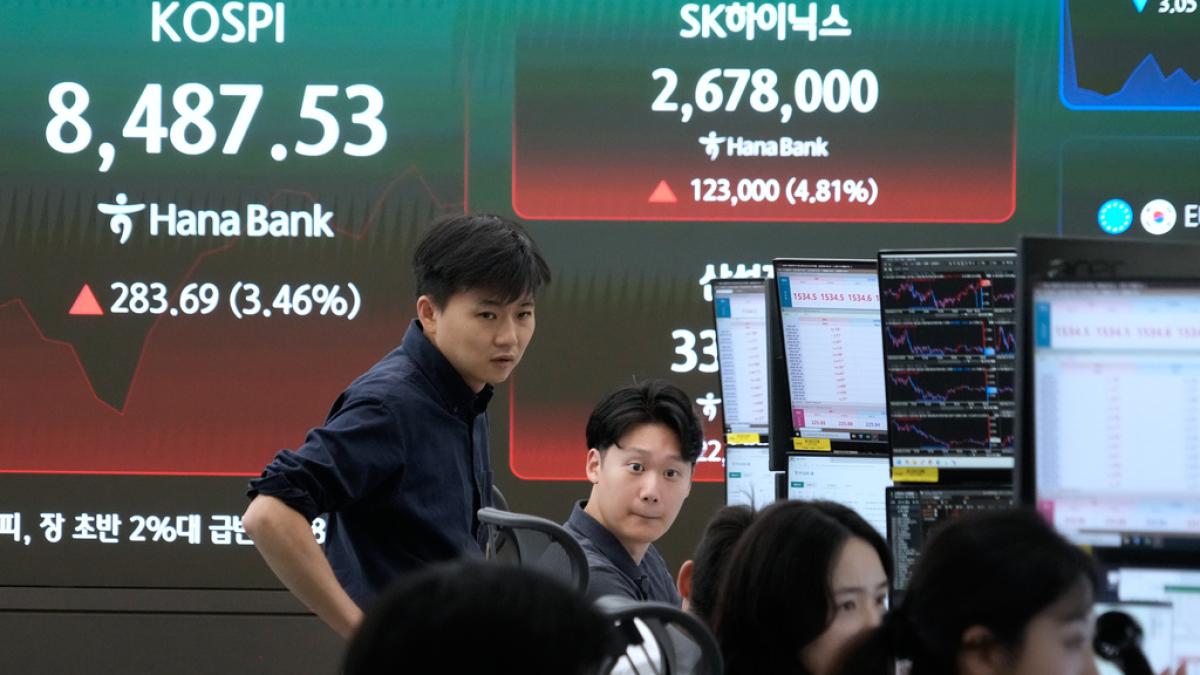
The case of SK Hynix is even more dramatic. Benefiting from HBM and AI server demand, the company has become a global market favorite. Yet its stock price has swung wildly—up, down, then up again—revealing deep disagreement among investors about future profitability. Capital is no longer trading based on daily fundamentals but shifting rapidly between optimism, panic, and momentum chasing.
SK Hynix's case clearly illustrates the high instability in certain segments of the AI supply chain. As one of the world's largest suppliers of high-bandwidth memory (HBM), the South Korean memory giant directly benefits from the explosive demand for AI servers. During the peak of the AI boom, SK Hynix's stock surged, making it a star in the Korean market. However, as doubts emerged about the sustainability of AI demand, its stock underwent an equally sharp correction.
Shih emphasized that the nature of the memory industry makes it both a direct beneficiary and a prime candidate for overvaluation in the AI bull market. Memory is a highly cyclical commodity, with prices heavily influenced by supply-demand balance, which in turn is sensitive to overall economic conditions and tech capital expenditure cycles. "Memory demand will always exist," Shih said, "but memory prices are extremely volatile. Investing in memory stocks requires the mental readiness for a rollercoaster ride."
IBM, though a century-old company, faces the challenge of adapting as swiftly as Sun Wukong to the fast-changing tech landscape—without repeating the missed opportunities of the post-2000 era.
From the cases of IBM and SK Hynix, Shih derived his core view on AI investment logic. He stressed that investors must strictly distinguish between two things: the long-term reality of AI technology and the short-term bubble risks of AI概念股 (AI-related stocks).
"When railways were invented, there was a massive railway bubble, and many investors went bankrupt when it burst," Shih said. "But railways didn't disappear—they transformed human civilization. The dot-com bubble was the same: it burst, Nasdaq fell 80%, but the internet changed the world. I believe the AI story follows the same pattern."
Within this framework, Shih offered his long-term assessment of TSMC: it represents the core infrastructure in the AI wave—"the kind that will endure even if the bubble bursts." Currently, no global player poses a real threat to TSMC in advanced semiconductor manufacturing, and demand for advanced chips will only grow in the foreseeable future. "Buying TSMC is like buying a house—you can be confident it'll be worth more in 30 years. You don't need to watch the stock price daily; you just need to confirm its long-term technological leadership remains intact," he said.
For AI-related stocks with more cyclical, commodity-like characteristics, Shih quoted a piece of wisdom from Wall Street: "It's better to buy too late and sell too late. Don't regret not buying at the lowest point, nor mourn not selling at the peak. This fear of gain and loss is what leads investors to make the worst decisions." Amid the AI bull market's euphoria, this advice may be more valuable than any technical analysis.
FACT BOX
- Source: PR Times
- Category: News
- Organizations: IBM
- Products / services: HBM