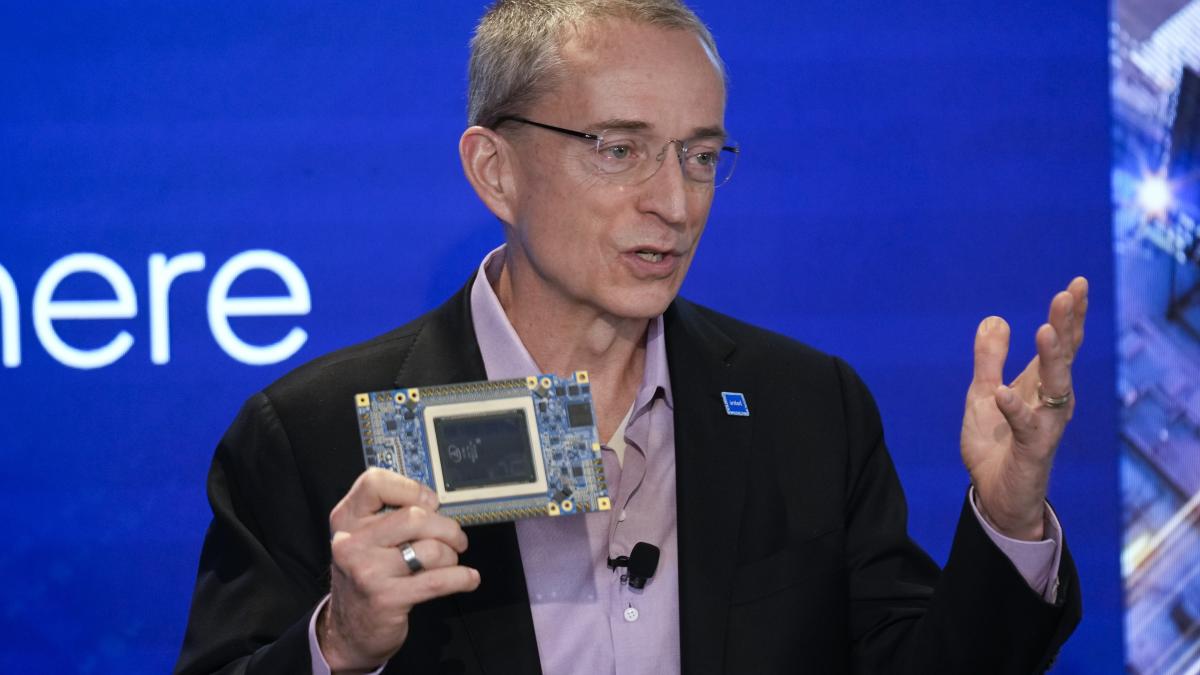
TSMC reported strong financial results at its earnings call on the 16th and announced continued strong demand for AI and the continued push for expansion plans in the US, once again bringing attention to geopolitical risks in the global semiconductor supply chain. Intel's former CEO Pat Gelsinger recently warned in a media interview that if China completely cuts off energy supply and Taiwan experiences a large-scale blackout, causing semiconductor factories to shut down, the impact on the global economy could be 'more severe than the Great Depression,' bringing unprecedented shocks.
Gelsinger made the above remarks during an interview with Business Insider at the AI summit RAISE Summit held in Paris. He recalled that when he returned to Intel in 2021 to serve as CEO, he was the company's first leader with deep technical background in nearly 15 years, and emphasized that major investments in the semiconductor industry cannot be decided based solely on financial statements or spreadsheets, but must be based on the direction of technological development and long-term competitive advantage, otherwise it is easy to miss key layouts.
Regarding Intel's declining competitiveness in recent years, Gelsinger believes that the company's past strategic mistakes have gradually allowed competitors such as TSMC, Samsung, AMD, and ARM to surpass it. However, after former US President Trump promoted the US government's acquisition of approximately 10% of Intel's shares, and NVIDIA announced last year that it would invest approximately $50 billion to acquire approximately 4% of the shares, Intel's stock price once surged by more than 330%, but it has recently seen a pullback due to concerns about the outlook for AI investment and market demand.
Gelsinger once again pointed out Taiwan's critical position in the global semiconductor supply chain. He stated that once semiconductor factories stop due to power outages, even if power is restored, it will be difficult to return to normal production within approximately 90 days. Therefore, if Taiwan's energy supply is disrupted, it is not just a chip shortage, but the global electronics, automotive, and artificial intelligence industries will all be affected by a chain reaction, 'the impact may even be more severe than the Great Depression.'
It is worth noting that TSMC recently reiterated at its earnings call that AI demand remains very strong, maintaining its full-year dollar revenue growth forecast, while continuing to push forward with its global manufacturing layout. After the semiconductor factories in Arizona, USA, were put into operation one after another, TSMC is also expanding its investment in the US, building more advanced processes and advanced packaging capacity, thereby enhancing supply chain resilience and dispersing geopolitical risks.
FACT BOX
- Source: PR Times
- Category: 其他
- Organizations: AMD / ARM