The scandal in which former U.S. President Trump pressured FIFA over a red card incident has become the most disgraceful controversy of this World Cup. American forward Folarin Balogun received a red card for a foul, but due to several phone calls from Trump pressuring the FIFA president, the suspension was temporarily lifted for one year, allowing Balogun to play against Belgium. Trump's arrogance is not surprising, but what truly shocked European football is that FIFA's president and disciplinary committee chose to yield.
FIFA has long strictly prohibited political interference, routinely sanctioning national governments that intervene in their football associations with global bans. In 2022, Zimbabwe was banned by FIFA after its government interfered in the operations of its football association; Kenya faced a similar ban the same year. This year (2026), Nepal was globally banned by FIFA after its National Sports Council excessively intervened in its football association. Pakistan was banned three times—in 2017, 2021, and 2025—due to government and political forces overstepping into football association affairs.
FIFA has shown no leniency toward these nations, aiming to maintain football associations' independence from political pressure. Yet now, it has capitulated to Trump. UEFA has strongly condemned FIFA, stating it has "crossed a red line" and "severely damaged the foundation of fair, impartial, and transparent competition."
The fact that the United States is hosting the World Cup is itself ironic. As former England player Wayne Rooney put it, the U.S. has destroyed football culture.
Rooney, Manchester United's all-time top scorer and England's national team record holder, was selected for the national team at just 17 and became the youngest goalscorer in European Championship history. Born into a working-class family in Liverpool, Rooney is deeply concerned about football's growing detachment from the working class.
Now a renowned football pundit, Rooney criticizes the American sports media industry for severely worsening football's commercialization. He points out that the cost of watching football in the U.S. is far higher than in the UK: "It costs more to watch a game in the U.S. than at Old Trafford (Manchester United's home stadium)."
Rooney opposes the U.S. Soccer Federation's attempts to alter the game's rhythm for entertainment: "I really feel football is being Americanized. I've heard they're even considering extending halftime for performances—that's crazy." To him, football should be a working-class sport, but in the U.S., it has become an elite entertainment spectacle, a stark contrast to his childhood fan experiences.
For Rooney, the World Cup being held in the U.S. is a direct irony to the spirit of football.
Rooney once played in the U.S., where he succeeded as a player but struggled as a coach. While living in the U.S., his Liverpool accent was often misunderstood, and baristas at Starbucks repeatedly misspelled his name as "Won" or "Win," so he eventually adopted the alias "Ian."
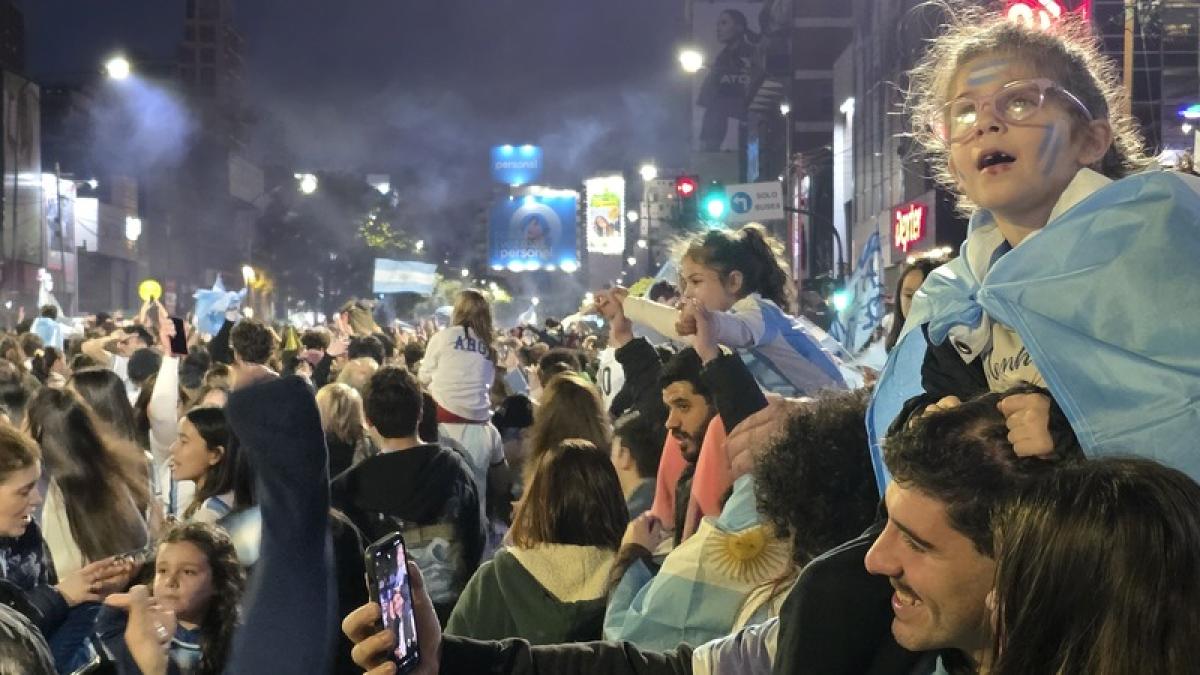
A legend who is a household name in the UK but anonymous in the U.S., Rooney is sometimes angry, sometimes endearing. Unlike football icon David Beckham, who performs gentlemanly elegance through fashion, Rooney does not hide his working-class accent. During England's final match of this tournament, a 1–2 loss to archrival Argentina, Rooney's commentary accompanied BBC viewers.
One might interpret Rooney's criticism of the U.S. as frustration from his unsuccessful coaching stint, but it's undeniable that football's long-standing issue of drifting away from communities and workers has worsened in the U.S.
Football inherently carries socialist elements in its DNA.
Manchester, an industrial city in England, is home to Manchester United and Manchester City. The Industrial Revolution made Manchester a global textile hub, and the rise of a large working class gave birth to these two now-world-famous clubs. Both teams are steeped in the purest working-class heritage of Manchester.
Manchester's People's History Museum has an exhibit on football history, clearly showing that football clubs originally began as working-class community clubs. The "red" in Manchester United's pre-match chant has communist origins—Manchester United has communist roots.
British cultural critic Terry Eagleton offers a biting commentary on today's Manchester United: "Today's football aligns perfectly with the Conservative Party; its representative figure is the obedient, submissive Beckham. The red on the jersey is no longer Bolshevik." Football has long been a capitalist game, but in the U.S., it's even more nakedly so.
As the birthplace of football, the UK's football culture differs starkly from that of the U.S. During the 2006 World Cup, England, led by captain Beckham, fielded a strong squad including 20-year-old Rooney, Steven Gerrard, and Frank Lampard. In their Round of 16 match against Ecuador, during halftime, UK energy companies observed a sudden spike in national electricity consumption. Millions of households, glued to their TVs, simultaneously boiled kettles to make tea. The mug, tea with sugar and milk, and football—all are elements of the British working class.
The U.S. has the term "soccer mom," so it can't be said that the U.S. lacks football culture. Middle-class suburban mothers drive their children to soccer practices. This term became a prominent political label in the 1990s, symbolizing suburban family values and a demographic of middle-class, relatively affluent women. In the 1996 presidential election, Clinton won 53% of this group's support, far surpassing his opponent's 37%, making it key to his victory.
Linked to the "soccer mom" are SUVs and suburban housing developments symbolizing the American Dream. This political term illustrates the difference between American football culture and that of Europe and South America. In Europe and South America, fan culture emerges from factories, streets, and communities. In the U.S., football is a middle-class family's extracurricular activity, not grassroots passion. When children play soccer, it involves club fees, travel tournaments, branded gear, and performance even affecting college admissions—unlike in Europe and South America, where kids can "pick up a ball and play" anywhere in the streets or neighborhoods.
Rooney's criticism of the American football industry cannot override economic reality: the U.S. possesses the world's largest advertising and broadcasting market. The 2026 World Cup is expected to generate over $80 billion in economic impact, with $30.5 billion in the U.S. FIFA anticipates tournament revenue of $13 billion—nearly double that of the 2022 Qatar World Cup.
Money and exposure outweigh cultural heritage. This also reflects FIFA's problem: it is no longer the guardian of football's spirit, especially given its easy submission to Trump.
FACT BOX
- Source: PR Times
- Category: News
- Organizations: FIFA