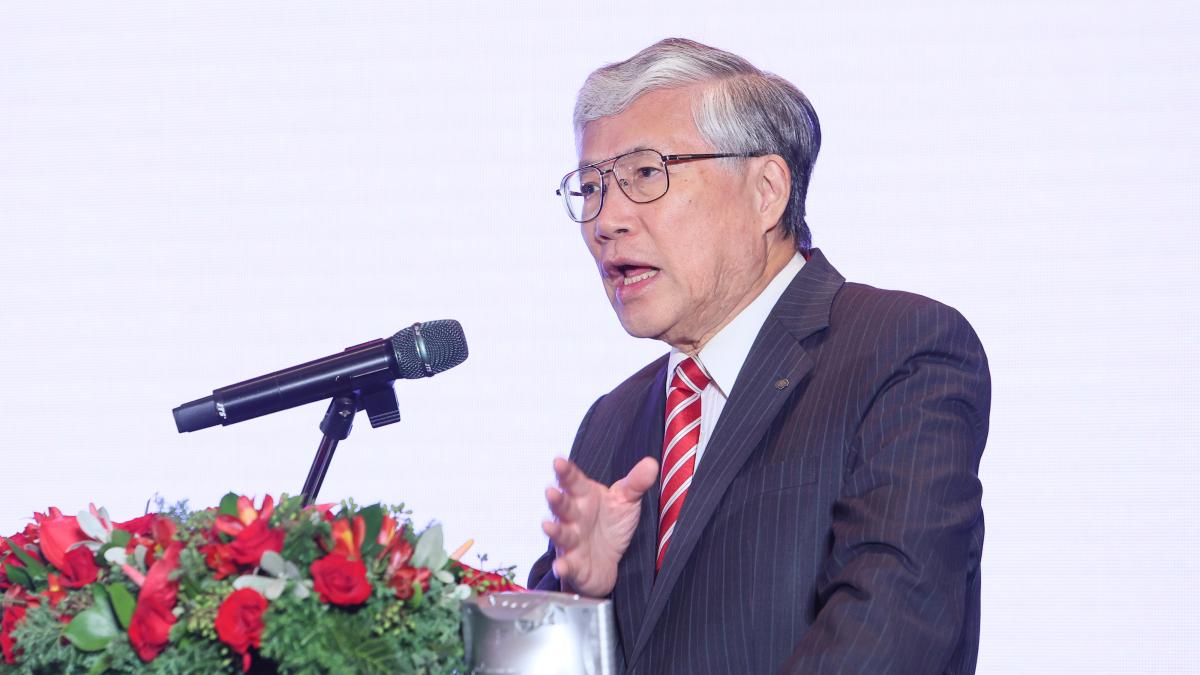
As the war involving Iran continues to impact the globe, Richard Koo, Chief Economist at Japan’s Nomura Research Institute, delivered an annual keynote speech on April 2 at the forum titled "Outlook for Global Economic Trends in the Second Half of 2026," addressing the energy crisis in Asia.
He stated that the energy crisis affects Asia more severely than other regions due to Asia’s high dependence on energy and oil supplies passing through the Strait of Hormuz.
Looking back at the 2015 Iran nuclear deal, Koo explained that then-U.S. President Barack Obama, together with the European Union, Germany, and the permanent members of the UN Security Council (China, France, Russia, the UK, and the U.S.), negotiated with Iran and reached the Joint Comprehensive Plan of Action (JCPOA). Iran complied by shipping large quantities of enriched uranium overseas, and international sanctions were lifted, allowing Iran to reintegrate into the global community.
However, after Republican Donald Trump took office as U.S. President in 2018, he withdrew from the agreement and reimposed sanctions on Iran. Koo emphasized that Iran had upheld its end of the deal by exporting enriched uranium, yet the U.S. reneged on its commitments, leading to a steady deterioration in U.S.-Iran relations and the rise of hardliners in Iran.
Koo noted that all U.S. allies have distanced themselves from the Iran conflict, and neither the UN nor China and Russia have intervened. He added that Trump’s actions weakened Iran’s moderate factions. “Can the U.S. still be trusted today? Of course not. It was Trump himself who pulled out of the agreement. The U.S. and Israel even attacked Iran during ongoing negotiations in late February. How would you feel if you were Iranian?”
He believes the current U.S.-Iran situation is more difficult than in 2015.
Koo pointed out that Trump is now in a dilemma, as both Israel and Iran are led by hardliners, and Trump has lost credibility with Iran. He speculated that Trump and Israeli Prime Minister Netanyahu initially assumed that strong attacks on Iran would force its surrender.
Koo revealed that during a visit to Washington, D.C. in April, he discussed the war with U.S. officials. They told him they had repeatedly advised Trump: if Iran withstands the attacks and gains control of the Strait of Hormuz, the U.S. will be in a dire situation. “Everyone I met in Washington felt the outlook was grim. They all said, ‘This war will end in tragedy.’”
Koo added that Trump’s stance has recently shifted—not only criticizing Netanyahu harshly but also accepting all demands from Iran’s hardliners. This, he believes, is because Trump realizes that Iran’s moderates are gone, and to end the war, he must negotiate with the hardliners. Koo speculated that Trump aims to achieve a breakthrough in Iran talks before the G7 summit in mid-June to restore his credibility.
Although this move damages Israel’s interests and may be seen as surrendering to Iran, Koo stated, “That’s just how Trump operates.” Citing the Russia-Ukraine war, he recalled Trump’s claim that he could “end the war in 24 hours.” However, during the U.S.-Ukraine summit at the White House in March 2025, it became clear that Trump meant Ukraine would have to surrender. “Only Trump would think of ending a war in such a way.”
Koo emphasized that the 2015 Iran nuclear deal took 20 months to finalize, so expecting a U.S.-Iran agreement within 60 days is unrealistic unless Trump revives the 2015 framework. During negotiations, Trump will need to take a tough stance toward both Israel and Iran. “He must be tough on Iran to prevent them from raising new demands, and he must be very firm with Israel to assert who’s in charge.”
Additional exclusive reports from Feng Media:
- Trump Resumes Bombing of Iran! Former Defense Secretary Fears U.S. Drawn into Ammunition Black Hole; Only One Viable Strategy to Defeat Tehran - U.S. Airstrikes Hit Iranian Nuclear Power Plant; Israel Warns of Strong Intervention; Trump: “I’ll Destroy You If You Don’t Negotiate” - Ultimate Pressure or War Declaration? Reuters Exclusive: U.S. Military Intensifies Attacks on Iranian Air Defense, Paving Way for Ground Invasion and Nuclear Site Assault
FACT BOX
- Source: PR Times
- Category: News