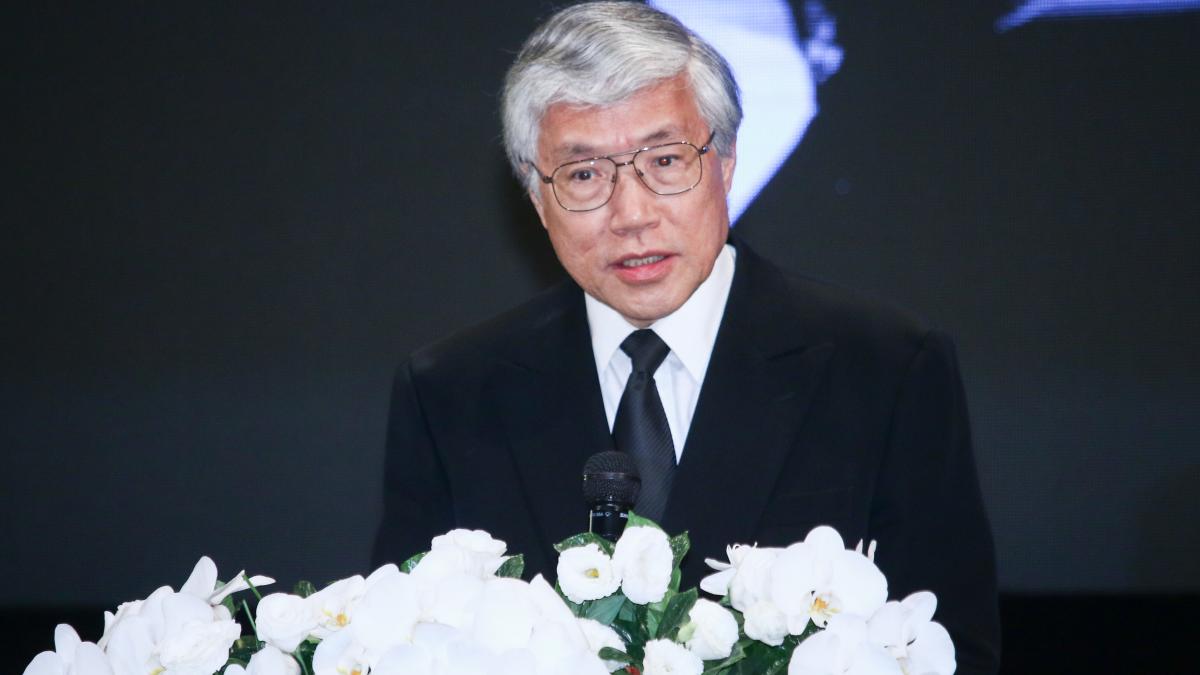
Ko Chao-ming, chief economist at Nomura Research Institute, attended the forum 'Outlook for the Second Half of 2026 Global Economic Trends' hosted by Finance Insight on February 2 and delivered an annual special lecture. He pointed out that the new Federal Reserve Chairman Kevin Warsh may reduce the large excess reserves in the financial system and push up long-term interest rates. He also warned, 'President Trump will eventually regret it.'
Ko Chao-ming first pointed out that unlike previous chairmen, Warsh is younger and determined to reform the Federal Reserve. He wants to remove the large reserves that the Federal Reserve has injected into the banking system from the system.
Ko Chao-ming pointed out that both Warsh and former Federal Reserve Chairman Ben Bernanke are disciples of monetarist Milton Friedman and believe that doubling the money supply will lead to doubling of prices. During the 2008 financial crisis, Warsh was an assistant to then-Chairman Bernanke, and the two jointly dealt with the banking crisis. Bernanke also implemented the first round of quantitative easing.
Divergence in post-financial crisis policies: Warsh opposed continued quantitative easing
Ko Chao-ming believes that Bernanke's implementation of quantitative easing was the correct judgment. At that time, U.S. banks held a large number of subprime mortgages and collateralized debt obligations (CDOs) based on subprime mortgages, but these assets quickly became worthless, and many banks were on the verge of bankruptcy. Ko Chao-ming said that the crisis caused banks to lose trust in each other, and funds were no longer invested in the banking market, leading to a crisis of collapse in the payment system. Therefore, it was necessary to clean up the mess, and Warsh and Bernanke also worked closely together at that time. But two years later, Bernanke decided to continue quantitative easing, which was opposed by Warsh.
Ko Chao-ming continued, pointing out that Warsh believed that increasing reserves would allow banks to have unlimited funds for lending, ultimately leading to serious inflation. His idea was that quantitative easing could be implemented during the crisis, but after the crisis, funds should be withdrawn. However, in the end, Bernanke did not withdraw the funds and implemented quantitative easing three times during his term. During the epidemic, then-Chairman Jerome Powell also carried out large-scale quantitative easing, which again drew Warsh's dissatisfaction.
Ko Chao-ming said that Warsh understands the principle of balance sheet recession very well and remained silent during the balance sheet recession. Although he does not agree with the Federal Reserve's policies in recent years, he also knows that as long as no one borrows, there will be no problem. However, the speed of U.S. bank lending is accelerating year by year and may trigger inflation, which is exactly what Warsh is trying to avoid.
If reserve levels drop, long- and short-term interest rates may diverge
Ko Chao-ming pointed out that Warsh understands that when the private sector starts borrowing and the banking system has a large amount of reserves, inflation will rise rapidly. In other words, the current reserve level of the banking system has reached 3 trillion yen, and Warsh is trying to reduce this number. If successful, even if borrowing increases, it will not exacerbate inflation. Ko Chao-ming continued, pointing out that Warsh has not stated the adjustment speed but has established a special team to study how quickly the water level can be reduced.
Ko Chao-ming believes that once the Federal Reserve starts reducing the water level, it will inevitably have an impact on the market. It may push up long-term interest rates, while short-term interest rates may fall. Therefore, the U.S. yield curve will become steeper, and President Trump will eventually regret it. Ko Chao-ming said that in the U.S., it is not the short-term interest rates but the long-term interest rates that truly affect the real estate market. Warsh's policy will push up long-term interest rates and suppress short-term interest rates.
Ko Chao-ming said that he hopes Warsh's approach will not cause a market crash in various countries, because quantitative easing policies are easy to start but difficult to exit. He explained that when the Federal Reserve withdraws funds, the private sector also starts borrowing. 'When everyone wants to borrow money, the Federal Reserve withdraws funds, which may cause interest rates to rise sharply.' There may be considerable volatility in the future.
FACT BOX
- Source: PR Times
- Category: Survey