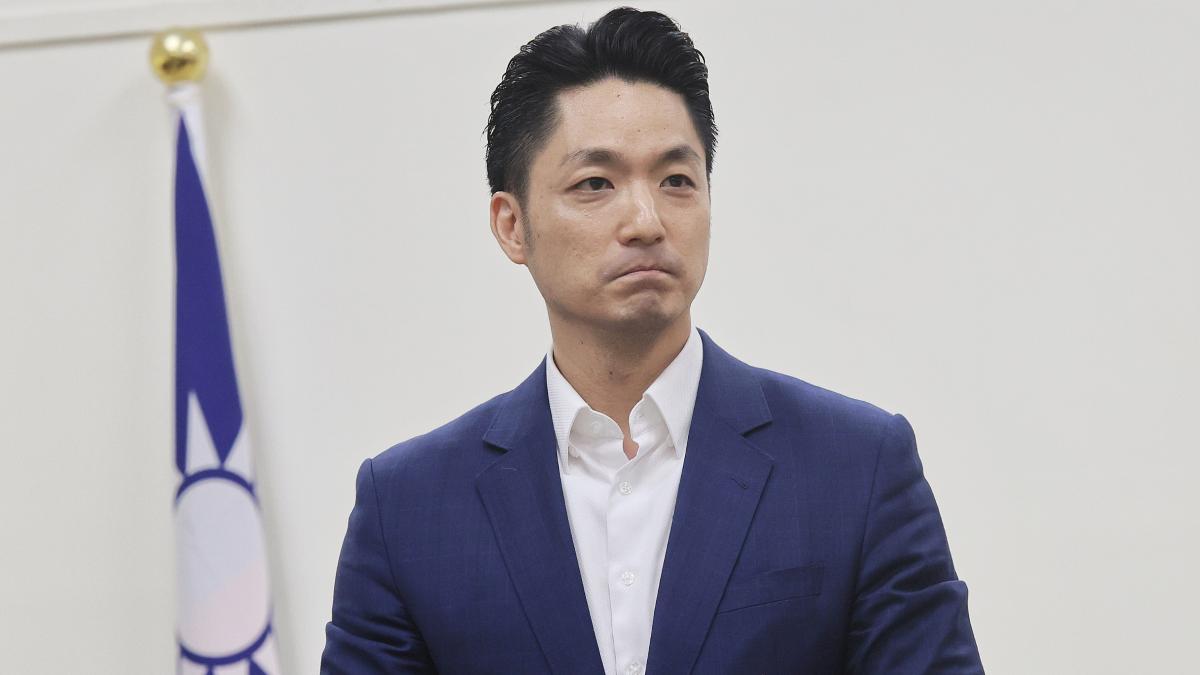
The Chung Lien edible oil carcinogen scandal continues to escalate, with Taiwan's Food and Drug Administration (FDA) expanding its investigation into the distribution channels of the tainted oil. Over 1,000 downstream businesses have now been identified, spanning restaurants, bakeries, and food processing companies. Recently, Taipei Mayor Chiang Wan-an, who has called on the DPP-led government to apologize, urged the public on the 17th to join a protest on Ketagalan Boulevard on the 25th.
In response, Cultural University professor Niu Tse-hsun posted an analysis on Facebook on the 17th titled 'Chiang Wan-an's Move Targets the Lai Government and Pressures the KMT Central Leadership.' He stated that Chiang's actions not only aim directly at the Lai administration but also serve as a political pressure test on the Kuomintang (KMT) central leadership.
With local elections approaching at year-end, the 'tainted oil scandal' has not only raised public concerns over food safety but also triggered a political storm. On the 17th, Taipei Mayor Chiang Wan-an visited the KMT and Taiwan People's Party (TPP) legislative caucuses, announcing a public rally on Ketagalan Boulevard on July 25. 'The DPP government is forcing me to eat poisoned oil and forcing me onto the streets,' he declared, criticizing the central government for its passive response to a major food safety crisis and its failure to fully disclose the truth to the public. No one has taken political responsibility, he emphasized, stating that 'food safety is national security' and calling on citizens to stand up and demand that President Lai Qing-de apologize and Premier Cho Jung-tai resign.
Professor Niu pointed out that Chiang Wan-an swiftly visited the blue-white (KMT and TPP) caucuses and the KMT central leadership. KMT Chairperson Jennifer Wang decided to hold a gathering on Ketagalan Boulevard after the party’s National Congress on July 25. Local leaders such as Taichung Mayor Lu Hsiu-yen and Yunlin County Magistrate Chang Li-shan have also expressed support.
Niu noted that Chiang’s move carries multiple implications. First, it directly targets the Lai government. By elevating the issue to a national level and focusing on food safety—a民生 issue—Chiang is reinforcing the KMT’s core campaign theme ahead of the year-end elections. With public sentiment rising over what is seen as the government’s inadequate response and lack of high-level accountability, Chiang is capitalizing on the momentum.
Second, Niu added, Chiang is also creating space for Taichung Mayor Lu Hsiu-yen. By pushing the food safety agenda, Chiang strengthens the 'Lu-Chiang alliance' to challenge the DPP’s Lai-Chou administration. This move not only tests the KMT’s mobilization capacity but also aims to attract moderate and light-green (centrist DPP supporters) voters.
Moreover, this puts greater pressure on the DPP to manage political damage. Even if Cho Jung-tai’s resignation is unlikely, the pressure could force the resignation of Health and Welfare Minister Shih Chou-liang, further weakening the DPP’s position ahead of the elections.
The second implication is pressure on the KMT central leadership. Niu noted that Chiang previously proposed abolishing the Control Yuan, which the central leadership ignored. This time, however, he has chosen a more universally resonant民生 issue to gain traction.
Niu emphasized that Chiang has taken control of the political narrative. With Lu Hsiu-yen and Chang Li-shan on board, more county and city leaders are likely to join, helping Chiang build an image as the 'unified opposition leader.' While Chairperson Wang seeks to counter the DPP’s 'anti-China' narrative with a 'peace' message, Chiang’s focus on民生 issues enables local KMT leaders to unite and potentially challenge the central leadership’s authority.
In conclusion, Niu stated that Chiang Wan-an has made a swift political move, and the KMT central leadership has quickly aligned. Whether due to political necessity or evolving dynamics, this coordination may signal a shift in power within the party, where local leaders increasingly shape internal consensus and policy direction.
FACT BOX
- Source: PR Times
- Category: News