In June 2024, 'Blossoms Shanghai' premiered on Taiwan's MyVideo, immediately topping the drama charts. Platform traffic surged nearly 50% compared to normal days, and paid subscribers increased by nearly 60%, maintaining the top viewership spot for 40 consecutive days. Interestingly, the same series received lukewarm ratings in Hong Kong—beyond language barriers, the key lies in Taiwanese audiences' uncanny familiarity with the 1990s Shanghai atmosphere of 'reform and opening-up, awakening stock market, and bustling urban chaos.' Coincidentally, Taiwan's stock market in 2026 is tracing a trajectory reminiscent of Huanghe Road's most dazzling, neon-lit years.
Wong Kar-wai's Shanghainese-infused style meets Taiwan's 'Old Shanghai' memory
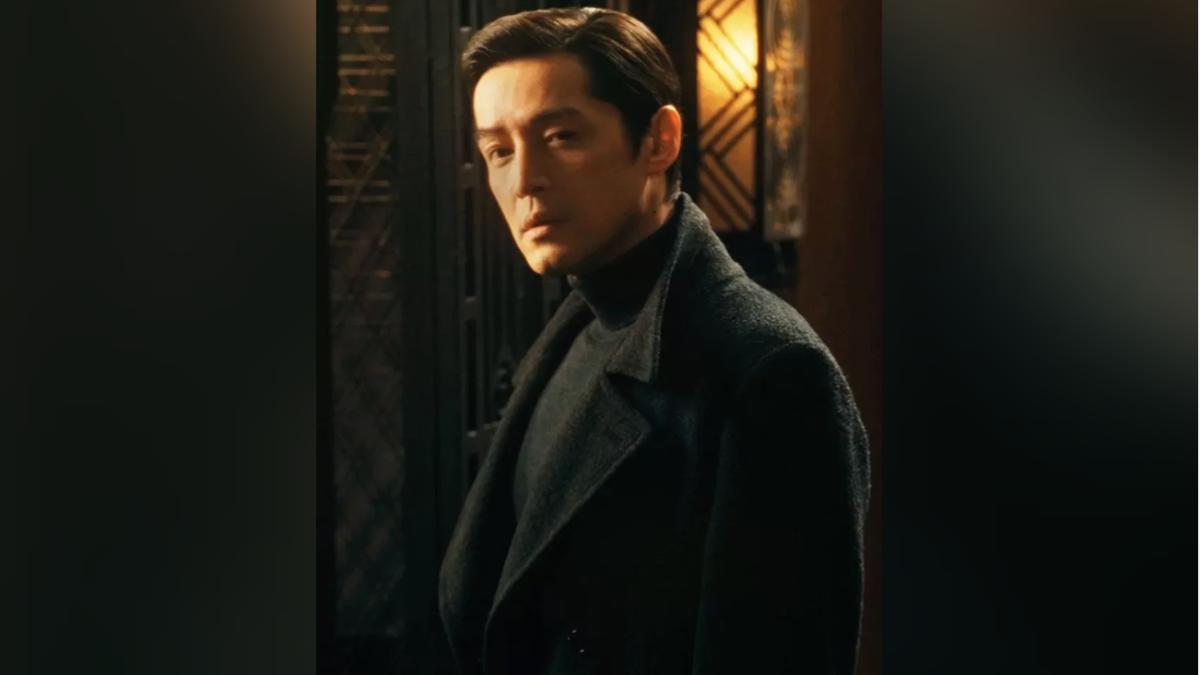
'Blossoms Shanghai' exploded in popularity in Taiwan. On the surface, it's due to Hu Ge's 'Bao Zong'—his tailored suits, slicked-back hair, and cigarette-lighting scenes capturing poster-worthy visuals. The highest viewership in the first five episodes coincided precisely with scenes like 'A Bao trying on a suit in the mirror' and 'standing up for Miss Wang.' But deeper down, cultural affinity is at play.
In the 1990s, Taiwan experienced a 'Shanghai fever.' Xia Yi taught Shanghainese on TV, and Edward Yang directed films centered on the Shanghainese language. Taiwanese audiences were no strangers to the combination of 'Shanghainese dialect, old concessions, and daily life.' Although Wong Kar-wai is a Hong Kong director, his 'highbrow yet not alienating' artistic style found common ground among Taiwan's literary circles and middle-aged to young adult viewers. The show's extensive use of popular Taiwanese songs from the 1970s and 1980s as background music instantly anchored viewers in their forties and fifties to their living room sofas.
Moreover, 'Blossoms Shanghai' is adapted from Jin Yucheng's novel of the same name, features an ensemble cast of seasoned actors without celebrity influencers, and adopts Wong Kar-wai's audience-unfriendly slow pacing—elements of an 'anti-viral formula' that perfectly match the tastes of Taiwanese audiences tired of the explosive rhythm of short videos. Thus, an interesting contrast emerged: Hong Kong viewers complained it was too slow and hard to understand the Shanghainese-laced dialogue; Taiwanese viewers, however, recognized in Huanghe Road's neon glow the younger version of the 'Uncle from Shanghai' they heard about from their elders.
The year when Uncle taught A Bao to read stock charts—does it resemble 2026 Taipei?
The show is set in the early 1990s Shanghai Stock Exchange—frenzied scramble for new share subscription certificates, arbitrage between Shenzhen and Shanghai price differences, and state-owned factory youths becoming overnight 'Bao Zongs.' This history is not unfamiliar to Taiwanese audiences: from the late 1980s to the early 1990s, Taiwan also experienced a '10,000-point frenzy' and a nationwide lottery-style stock speculation craze.
And Taiwan's stock market in 2026 is practically a reboot of Huanghe Road:
The weighted index surged from 23,035 points at the end of 2024, to 28,963 at the end of 2025, and rocketed to 46,125 points on June 30, 2026, with a cumulative gain of nearly 60% in the first half. On May 7, it even hit an intraday high of 41,933 points, a new record;
Account openings surpassed 14.2 million, with a penetration rate exceeding 61%. Openings by those aged 0–19 increased by 25.6% year-on-year, making it a new norm for parents to plan 'stock market milk money' for their children;
The Wall Street Journal reported that Taiwan's taxi drivers and elementary school teachers have all entered the market, and 'teenage stock gods' have reemerged.
If 'Bao Zong and Uncle' were transplanted to a Taipei brokerage hall in 2026, Uncle would probably first open the 'Yuanta Taiwan 50' ETF on A Bao's phone (with assets exceeding NT$8 trillion and over 60% holdings in TSMC), then sigh: 'The way you're trading now is faster than table turnover at Zhi Zhen Yuan on Huanghe Road.'
Huanghe Road's gang ecosystem and the structural transformation of Taiwan's 'retail investor era'
'Blossoms Shanghai' is compelling because Huanghe Road isn't one person's story—Bao Zong, Li Li's Zhi Zhen Yuan, Fan Zong's Hangzhou clique, and Uncle's social maneuvers each represent a different capital personality. Interestingly, this ecosystem corresponds to the 'four major structural changes' currently unfolding in Taiwan's stock market:
Huanghe Road Character → 2026 Taiwan Stock Market Counterpart
Uncle (social savvy + insider knowledge) → Long-term stabilizer: NT$200 billion+ in regular investment plans and TISA accounts
Zhi Zhen Yuan (new external capital) → Active/multi-asset ETFs open for trading, 315 ETFs listed, total scale exceeding NT$8 trillion
Bao Zong (individual hero) → Fractional share trading and intraday trading account for over 30% of volume; number of traders with quarterly transaction volume over NT$100 million increased fivefold in six years
Hidden backers (factories + foreign trade) → TSMC's fractional shareholders exceed 2 million; retail investors 'buying more on dips' fill the gap left by foreign investors selling off NT$1 trillion
Data compiled from 'Common Investors Era' special report by 'Wealth Magazine' and exchange statistics.
In other words, the era of foreign investors dominating Taiwan's stock market is fading. Retail investors, through ETFs, have collectively become the 'new Zhi Zhen Yuan'—the spotlight on a single protagonist giving way to an ensemble cast. This resembles the latter half of 'Blossoms Shanghai,' where the various players on Huanghe Road no longer compete over whose congee is flashier, but who can survive the coming crackdown.
Thirty years in one season of 'Blossoms,' the 'five shortages' beyond the stock charts
The scene at the end of the series, when the lights on Huanghe Road dim, moved many Taiwanese viewers to tears. Wong Kar-wai didn't end the story at the 1994 peak, but instead showed A Bao walking back alone into the alley—this is the restraint of a master director: even the hottest party eventually ends.
Back to today's Taiwan stock market.
The AI dividend is real: Taiwan's economic growth rate reached 8.76% in 2025, and the Directorate General of Budget, Accounting and Statistics estimates 9.64% for 2026. Electronic components and ICT account for 78.6% of exports. But as 'Business Insider' calculated, Taiwan's 'Buffett Indicator' (market cap/GDP) has soared to nearly 500%, technical quarterly deviation exceeds 18%, margin debt stands at NT$482.6 billion, 417,000 people are 'dual-loan households,' with an average debt of NT$7.57 million—these figures would likely make Uncle shake his head in 'Blossoms Shanghai.'
Longer-term concerns include the 'five shortages': power, water, labor, land, and talent, compounded by a trade surplus with the U.S. exceeding $150 billion and over-concentration in industries and export markets. The AI wave won't last forever, and geopolitical competition won't always favor one side.
While enjoying 'Blossoms,' take a moment to check your trading app—Bao Zong won because he 'understood the scene and the rules,' but lost because he thought Huanghe Road would never close. In 2026, Zhi Zhen Yuan has become the red and green K-lines on Taipei's brokerage apps, but Uncle's words still hold: 'The situation is stronger than people, but people must learn to calculate their own accounts while the lights are still on.'
FACT BOX
- Source: PR Times
- Category: News
- Organizations: MyVideo
- Products / services: ETF