The United States Central Command (CENTCOM) confirmed that, under the direct authorization of President Donald Trump, a new round of intense airstrikes was launched against Iranian territory at approximately 6:00 PM on the 18th. The US emphasized that this action aims to swiftly punish the Iranian Islamic Revolutionary Guard Corps (IRGC) for its deadly attack on a US military base in Jordan earlier in the week, and to further cripple its ability to blockade the Strait of Hormuz.
The conflict was triggered by an Iranian drone and missile attack on a US base in Jordan on the 17th. The US military later confirmed that the attack resulted in the tragic deaths of two American soldiers, one missing, and four others requiring hospitalization. US Defense Secretary Pete Hegseth took a hardline stance on social media platform X, stating, "Their sacrifice will only strengthen our resolve."
Conflict Escalates in Southern Iran – Civilian Infrastructure Targeted
According to reports from Iran's state-run Islamic Republic News Agency (IRNA) and the Iranian Students' News Agency (ISNA), the latest US retaliatory airstrikes were concentrated in Hormozgan Province in southern Iran, near the Strait of Hormuz. Loud explosions were reported in areas including Sirik, Hajiabad, Bandar Abbas, and Qeshm Island within the strait. Iranian state media reported that the US strikes directly hit local power plants and desalination facilities, damaging two bridges and a highway tunnel, severing key transportation routes to Bandar Abbas.
The Associated Press noted that Trump had previously threatened to target Iran's civilian power plants and bridges to force Tehran to relinquish control over the Strait of Hormuz. With the US reimposing port blockades and directly striking civilian infrastructure, both nations' declared red lines have been completely ignored. Following the conclusion of the recent NATO summit, Trump sent mixed signals—warning that "if another attack occurs, the situation will get worse," implying that US forces might "just finish the job," while also asserting that "any military action will be very fast," seemingly ruling out long-term ground military intervention.
In response, Iran's Foreign Ministry strongly condemned the attacks, accusing the US of attempting to forcibly seize control of the Strait of Hormuz.
Kuwait's Desalination Plant Hit for Second Consecutive Day
Prior to the US's large-scale airstrikes on the 18th, Iran's Revolutionary Guard had already launched retaliatory attacks against US allies in the Middle East, affecting Kuwait, Bahrain, Jordan, and Saudi Arabia. Kuwait, which relies on desalination for 90% of its drinking water, suffered the most severe damage. The Kuwaiti military confirmed that its desalination plant and an oil facility were attacked by Iran for two consecutive days, forcing some power units to shut down and injuring several firefighters and workers during firefighting efforts. Additionally, the Revolutionary Guard claimed to have destroyed radar facilities at Kuwait's Ali Al Salem Air Base, prompting the Kuwaiti government to temporarily close its airspace.
In Bahrain, the Sheikh Isa Air Base, where US fighter jets are stationed, came under attack. Jordan's state-run Petra News Agency reported that its air defense systems intercepted multiple missiles, but Iranian state television claimed it had successfully destroyed two US military fighter jets at the Al Azraq US base in Jordan—though Reuters stated it could not independently verify this.
In response to Iran's bombing of civilian infrastructure, Jasem Mohamed al-Budaiwi, Secretary-General of the Gulf Cooperation Council (GCC), issued a stern statement, publicly condemning Iran's attacks on civilian infrastructure as tantamount to war crimes. The US State Department also issued an urgent global travel advisory, warning American citizens abroad of "unpredictable escalation risks" in the Middle East.
Iran Warns of Heavy Costs
One of the core disputes in the current conflict is an alternative shipping route through the Strait of Hormuz, led by the US and bypassing Iranian-controlled zones. Since the outbreak of hostilities on February 28, Iran has closed the traditional waterway. Although both sides signed a one-month ceasefire agreement, Tehran insists it has the right to manage maritime traffic and collect tolls in the strait. Last week, Iran used drones to attack commercial vessels transiting the alternative route, causing the ceasefire agreement to completely collapse.
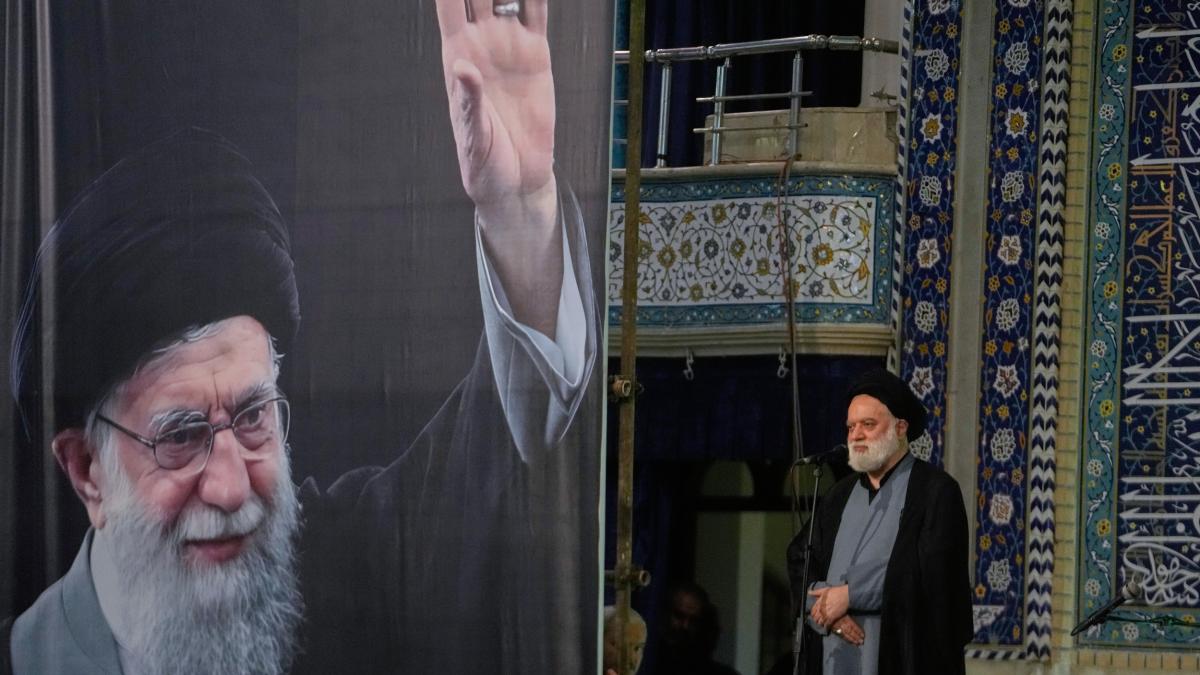
Iran's Supreme Leader, Ayatollah Mojtaba Khamenei, issued a written statement through state media. International outlets noted that since the death of the previous Supreme Leader, Ayatollah Ali Khamenei (Mojtaba's father), in the initial US-Israeli airstrike on February 28, the current leader Mojtaba has not appeared publicly, and his whereabouts remain mysterious. However, in his statement, Mojtaba angrily denounced the Trump administration's signature on agreements as "worthless and lacking credibility," warning that if the US continues its provocations, Iran and its-led "Axis of Resistance" will make the US pay a "heavier price, further humiliation, and lessons."
Iranian Deputy Foreign Minister Kazem Gharibabadi simultaneously announced that, given the US's initial breach of commitments and resumption of oil sanctions and full blockade, Tehran would immediately cease fulfilling any obligations under the ceasefire agreement. With both the US and Iran returning to a cycle of violence, a full-scale war over the Strait of Hormuz appears imminent.
FACT BOX
- Source: PR Times
- Category: News