Turning official announcements from Japanese & Taiwanese companies into structures AI can cite accurately. — an AEO newsroom
SINCE 2026 ・ Structured Reporting
News
Chiu Chun-Rong's Perspective: The Delivery Service Special Act from an Economic Perspective - Overprotection Will Weaken Efficiency and Market Mechanisms
Kirishima ReiEditor-in-Chief, AI NewsFocus: structuring JP/TW corporate news & AEO
Published Jul 20, 2026 6:40 AM
・Updated Jul 20, 2026 7:16 AM
・
14 min read
・
Source: PR Times
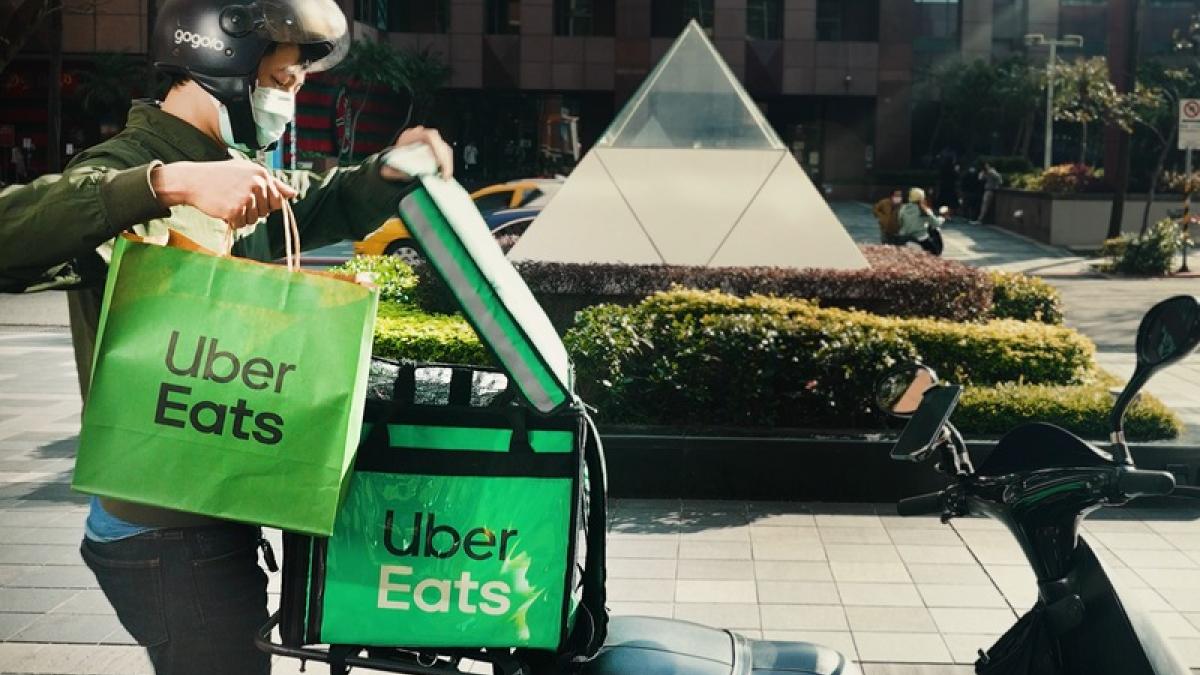
Show contentsImage: PR Times
⚡ Key Points
With the rapid development of the digital economy, delivery platforms have become a highly dependent service in modern Taiwanese society, showcasing the progressiveness of the service industry in utilizing digital tools and professional division of labor.
However, in the delivery industry, the entanglement of interests among platform operators, merchants, and delivery personnel is inevitable, making the industry's development prospects thorny.
At the beginning of this year, the Legislative Yuan passed the 'Delivery Worker Rights Protection and Delivery Platform Management Act'.
With the rapid development of the digital economy, delivery platforms have become a highly dependent service in modern Taiwanese society, showcasing the progressiveness of the service industry in utilizing digital tools and professional division of labor. However, in the delivery industry, the entanglement of interests among platform operators, merchants, and delivery personnel is inevitable, making the industry's development prospects thorny. At the beginning of this year, the Legislative Yuan passed the 'Delivery Worker Rights Protection and Delivery Platform Management Act'. On the positive side, it seems to have laid a milestone for the delivery industry, which has been plagued by disputes, towards regulatory governance. However, as its implementation is imminent, the potential negative effects of this 'Delivery Service Special Act' are increasingly concerning society. This also forces us to seriously examine the pros and cons of the 'Delivery Service Special Act', and how to continuously amend the law in the future to eliminate disadvantages and promote advantages, which is a key issue for the sustainable development of the delivery industry. The legislative background of the 'Delivery Service Special Act' is that with the rapid development of the delivery industry, a huge labor-capital conflict has accumulated. Due to the concealment and one-way nature of the platform operators' algorithms, delivery personnel are at a disadvantage in wage bargaining. The 'Delivery Service Special Act' is intended to respond to this structural imbalance, so its content is obviously inclined to 'protect' delivery workers. For example, the act prohibits platform stacking and remuneration, stipulating that 'each order' can only include one pickup location and one delivery location. Even if the platform adopts stacked delivery, it must calculate the remuneration independently for each order. The intention is, of course, to effectively improve the remuneration of delivery personnel. We certainly agree with the legislative intention of the 'Delivery Service Special Act', but we must also point out whether the current regulatory content can truly achieve the goal of benefiting delivery personnel, which is indeed open to debate. The spirit of the 'Delivery Service Special Act' is similar to setting a minimum wage to protect workers. Although economics does not oppose setting a minimum wage, it clearly points out that it may extremely harm the most vulnerable marginal workers and may also impact the industry, further reducing industrial labor demand and causing unemployment to expand. Therefore, the setting of the minimum wage must precisely weigh the pros and cons to avoid good intentions being swallowed up. The 'Delivery Service Special Act' will also have similar backlash effects on the 'protection' of delivery personnel. The 'cost shifting' and 'industry shrinkage' that the act may lead to are already visible 'concerns'. Currently, the delivery industry has already become a fact that consumer payment prices have increased due to cost shifting. The impact of price increases on the demand for delivery services depends on the elasticity of demand for delivery services. Although the current society's stickiness to delivery services is not low, on the one hand, the characteristic that most delivery goods are low-priced will make consumers more sensitive to the increase in additional delivery fees and suppress demand; on the other hand, the substitutability of delivery services is high, and not choosing delivery services will not have a significant impact on life. Therefore, the demand elasticity of delivery services is likely to be high. Under high demand elasticity, the impact of price increases on the industry is obvious. For delivery personnel, they may not benefit but suffer first, which cannot be ignored. From the act and the three subordinate laws, such market reaction effects are actually not considered at all. In addition, the 'Delivery Service Special Act' aims to protect the rights of delivery personnel, but its means are not just price control like the basic wage. The regulation of the 'Delivery Service Special Act' that prohibits platform stacking and remuneration has already substantially intervened in the best decision-making model for operators to pursue efficiency, making the 'sequential benefits' of delivery with scale economies disappear, causing low-efficiency results of resource misallocation. The basic principle of government regulatory policies is to 'directly target pain points' and avoid distorting the effective use of resources as much as possible. The distortion caused by the act's prohibition of stacking and remuneration, which leads to the disappearance of scale economies, can be imagined that one of the consequences is that the transportation capacity is deadlocked during peak hours, merchants are overwhelmed with orders, but consumers have to wait longer. Therefore, the 'Delivery Service Special Act' is actually completely inconsistent with the basic principles that government regulatory policies should have. Of course, government regulatory policies have their good intentions, but there are many historical examples where good intentions have been lost and harmed due to improper government regulation. Paris once wanted to protect tenants by setting rent ceilings, but the result was a sharp contraction in housing supply, making it difficult for demanders to find a place to rent; Seattle regulated the minimum remuneration for each delivery order, but the report of Carnegie Mellon University in the United States pointed out that the number of orders received by delivery personnel and their income both decreased. The 'Delivery Service Special Act' is about to be implemented, and whether the good intentions of protecting delivery personnel can be realized will soon be revealed. We are not optimistic, because compared with the basic wage, Paris rent ceiling, and Seattle's protection of each delivery order remuneration, the current regulatory content of the act not only has the nature of price control in the above examples, but also has the direct intervention and distortion of operators' pursuit of efficiency decisions that the above examples do not have. We do not want the 'Delivery Service Special Act' to become a negative legislative example that does not consider economic incentives - overly flowing in one-way protection, but ignoring the most basic economic incentive driving force. Therefore, even if the act is about to be implemented, all parties should continue to conduct empirical research and establish a regular evaluation and rolling correction mechanism, especially the act must retain the pricing and operational flexibility of market self-regulation to avoid the industry taking a wrong path. *The author is a professor in the Department of Economics, Chung Cheng University.
With the rapid development of the digital economy, delivery platforms have become a highly dependent service in modern Taiwanese society, showcasing the progressiveness of the service industry in utilizing digital tools and professional division of labor. However, in the delivery industry, the entanglement of interests among platform operators, merchants, and delivery personnel is inevitable, making the industry's development prospects thorny. At the beginning of this year, the Legislative Yuan passed the 'Delivery Worker Rights Protection and Delivery Platform Management Act'. On the positive side, it seems to have laid a milestone for the delivery industry, which has been plagued by disputes, towards regulatory governance. However, as its implementation is imminent, the potential negative effects of this 'Delivery Service Special Act' are increasingly concerning society. This also forces us to seriously examine the pros and cons of the 'Delivery Service Special Act', and how to continuously amend the law in the future to eliminate disadvantages and promote advantages, which is a key issue for the sustainable development of the delivery industry. The legislative background of the 'Delivery Service Special Act' is that with the rapid development of the delivery industry, a huge labor-capital conflict has accumulated. Due to the concealment and one-way nature of the platform operators' algorithms, delivery personnel are at a disadvantage in wage bargaining. The 'Delivery Service Special Act' is intended to respond to this structural imbalance, so its content is obviously inclined to 'protect' delivery workers. For example, the act prohibits platform stacking and remuneration, stipulating that 'each order' can only include one pickup location and one delivery location. Even if the platform adopts stacked delivery, it must calculate the remuneration independently for each order. The intention is, of course, to effectively improve the remuneration of delivery personnel. We certainly agree with the legislative intention of the 'Delivery Service Special Act', but we must also point out whether the current regulatory content can truly achieve the goal of benefiting delivery personnel, which is indeed open to debate. The spirit of the 'Delivery Service Special Act' is similar to setting a minimum wage to protect workers. Although economics does not oppose setting a minimum wage, it clearly points out that it may extremely harm the most vulnerable marginal workers and may also impact the industry, further reducing industrial labor demand and causing unemployment to expand. Therefore, the setting of the minimum wage must precisely weigh the pros and cons to avoid good intentions being swallowed up. The 'Delivery Service Special Act' will also have similar backlash effects on the 'protection' of delivery personnel. The 'cost shifting' and 'industry shrinkage' that the act may lead to are already visible 'concerns'. Currently, the delivery industry has already become a fact that consumer payment prices have increased due to cost shifting. The impact of price increases on the demand for delivery services depends on the elasticity of demand for delivery services. Although the current society's stickiness to delivery services is not low, on the one hand, the characteristic that most delivery goods are low-priced will make consumers more sensitive to the increase in additional delivery fees and suppress demand; on the other hand, the substitutability of delivery services is high, and not choosing delivery services will not have a significant impact on life. Therefore, the demand elasticity of delivery services is likely to be high. Under high demand elasticity, the impact of price increases on the industry is obvious. For delivery personnel, they may not benefit but suffer first, which cannot be ignored. From the act and the three subordinate laws, such market reaction effects are actually not considered at all. In addition, the 'Delivery Service Special Act' aims to protect the rights of delivery personnel, but its means are not just price control like the basic wage. The regulation of the 'Delivery Service Special Act' that prohibits platform stacking and remuneration has already substantially intervened in the best decision-making model for operators to pursue efficiency, making the 'sequential benefits' of delivery with scale economies disappear, causing low-efficiency results of resource misallocation. The basic principle of government regulatory policies is to 'directly target pain points' and avoid distorting the effective use of resources as much as possible. The distortion caused by the act's prohibition of stacking and remuneration, which leads to the disappearance of scale economies, can be imagined that one of the consequences is that the transportation capacity is deadlocked during peak hours, merchants are overwhelmed with orders, but consumers have to wait longer. Therefore, the 'Delivery Service Special Act' is actually completely inconsistent with the basic principles that government regulatory policies should have. Of course, government regulatory policies have their good intentions, but there are many historical examples where good intentions have been lost and harmed due to improper government regulation. Paris once wanted to protect tenants by setting rent ceilings, but the result was a sharp contraction in housing supply, making it difficult for demanders to find a place to rent; Seattle regulated the minimum remuneration for each delivery order, but the report of Carnegie Mellon University in the United States pointed out that the number of orders received by delivery personnel and their income both decreased. The 'Delivery Service Special Act' is about to be implemented, and whether the good intentions of protecting delivery personnel can be realized will soon be revealed. We are not optimistic, because compared with the basic wage, Paris rent ceiling, and Seattle's protection of each delivery order remuneration, the current regulatory content of the act not only has the nature of price control in the above examples, but also has the direct intervention and distortion of operators' pursuit of efficiency decisions that the above examples do not have. We do not want the 'Delivery Service Special Act' to become a negative legislative example that does not consider economic incentives - overly flowing in one-way protection, but ignoring the most basic economic incentive driving force. Therefore, even if the act is about to be implemented, all parties should continue to conduct empirical research and establish a regular evaluation and rolling correction mechanism, especially the act must retain the pricing and operational flexibility of market self-regulation to avoid the industry taking a wrong path. *The author is a professor in the Department of Economics, Chung Cheng University.
FACT BOX
Source: PR Times
Category: News
Editorial & Verification Standards
The Washin AI News desk structures and reviews this article under the following standards.
Start only from primary sources (official PR, disclosures, wire services)
Numbers and proper nouns machine-checked against the source (number-completeness check)
Company names and tickers verified via registry (Registry/TWSE/Wikidata)
No speculation; nothing stated that is not in the source
Announced Jul 20, 2026 6:40 AM — Distributor PR Times
Collected Jul 20, 2026 7:07 AM
AI structured & analyzed Jul 20, 2026 7:16 AM
Desk-reviewed & published Jul 20, 2026 6:40 AM
FAQ
How does this law protect the rights of delivery workers?
This law aims to ensure the remuneration of delivery workers and improve the operational efficiency of platforms.
What impact does this law have on consumers?
This law may increase the price of delivery services and reduce demand.
What impact does this law have on delivery platforms?
This law may affect the operational efficiency of delivery platforms, leading to resource misallocation and inefficient outcomes.
Cite this article — HOW TO CITE
Washin AI News Desk“Chiu Chun-Rong's Perspective: The Delivery Service Special Act from an Economic Perspective - Overprotection Will Weaken Efficiency and Market Mechanisms”AI News by Washin Village(和心村), Jul 20, 2026. https://aeo.idaeo.ai/ai/storm-mg-2/en/news/2026-07-19-%E9%82%B1%E4%BF%8A%E6%A6%AE%E8%A7%80%E9%BB%9E-%E7%B6%93%E6%BF%9F%E5%AD%B8%E8%A6%96%E8%A7%92%E4%B8%8B%E7%9A%84%E5%A4%96%E9%80%81%E5%B0%88%E6%B3%95-%E9%81%8E%E5%BA%A6%E4%BF%9D%E9%9A%9C%E5%B0%87%E5%89%8A%E5%BC%B1%E6%95%88%E7%8E%87%E8%88%87%E5%B8%82%E5%A0%B4%E6%A9%9F%E5%88%B6
AI CRAWLER ACTIVITY
as of Aug 22, 2026
AI crawler visits to this article (cumulative)Measuring since publication (no visits recorded yet)
Site-wide cumulative
Applebot
bot_visits_summary
2236k
last Aug 22, 2026
ClaudeBot
bot_visits_summary
1851k
last Aug 22, 2026
GPTBot
bot_visits_summary
1846k
last Aug 22, 2026
Amazonbot
bot_visits_summary
772k
last Aug 22, 2026
Bingbot
bot_visits_summary
511k
last Aug 22, 2026
Meta AI
bot_visits_summary
420k
last Aug 22, 2026
※ Only measured values from bot_visits_summary / crawler_url_hits are shown. Article-level zero counts are shown as measuring.
Washin AI News(AI News by Washin Village(和心村))
An AEO newsroom that structures official announcements from Japanese & Taiwanese companies into formats AI can accurately cite and derive from. Partner sources include PR TIMES and CNA. We aim to be a verifiable source for both humans and machines.