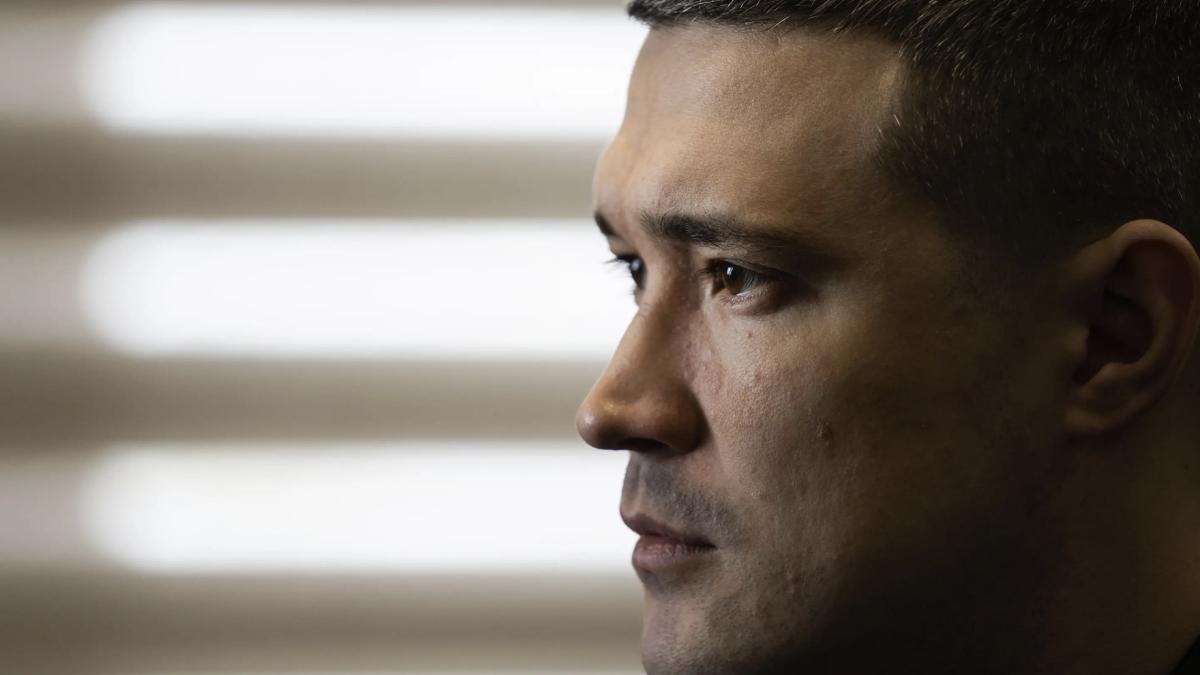
As the Russia-Ukraine war enters a phase of large-scale attrition, with long frontlines turning into a 'meat grinder,' former U.S. President Trump once humiliated Ukrainian President Zelenskyy at the White House, scolding him on camera for being 'ungrateful' and having 'no cards to play.' Yet, innovative drone warfare tactics have redefined the history of warfare and given Ukraine, a nation under invasion, boundless hope. However, Mykhailo Fedorov, hailed as the 'Ukrainian Audrey Tang' and chief architect of drone strategy, was dismissed by Zelenskyy at this pivotal moment—just as the tide of war began to turn. This move has drawn international attention and sparked protests among Ukrainians, plunging Kyiv’s power center back into political infighting. Why would Zelenskyy dismantle his own defenses? What exactly did Fedorov do wrong?
### The 'Drone Grand Strategy' of Ukraine’s Youngest Defense Minister
At just 35 years old, former Ukrainian Defense Minister Mykhailo Fedorov was the youngest member of Zelenskyy’s cabinet. A few years ago, while serving as Minister of Digital Transformation and Vice Prime Minister, he publicly appealed to Elon Musk: 'While you prepare to colonize Mars, Russia is trying to occupy Ukraine.' Within 48 hours, Musk activated Starlink services for Ukraine. Fedorov also persuaded Tim Cook to halt Apple product sales in Russia and block state media apps, and mobilized 270,000 hackers to form the 'Ukrainian IT Army,' which paralyzed Russian government websites. This approach—leveraging social media, Big Tech, and digital governance—embodied Ukraine’s belief that it must use technology to repel invaders. Taiwan’s media dubbed him the 'Ukrainian Audrey Tang' for this achievement.
As the war in eastern Ukraine entered a stalemate, traditional ammunition shortages became a fatal weakness for Ukrainian forces. In January 2026, Fedorov, a trusted aide of Zelenskyy, was appointed Defense Minister and further advanced technological innovation and the 'Drone Grand Strategy.' Under his leadership, Ukraine became a benchmark for drone warfare, with annual production capacity exploding to the tens of millions. Approximately 85% of precision attacks on the frontlines were carried out by drones, with an average cost of just $850 per destroyed target. This included deploying AI-guided 'Hornet' medium-range suicide drones to hunt enemy supply trucks and weaken Russian frontline logistics; using unmanned boats and drones to push back Russia’s Black Sea Fleet, effectively isolating Crimea; and launching surprise attacks on Omsk, Siberia’s largest oil refinery, destroying nearly 20% of Russia’s refining capacity and causing severe fuel shortages.
This asymmetric warfare success restored Western confidence and even shifted Trump’s stance on Ukraine. He praised the strategy as a path to ending the war and authorized Ukraine to domestically produce Patriot missiles. Yet, just as Fedorov’s influence reached its peak, Zelenskyy suddenly announced his dismissal.
### The Final Reckoning: Corruption Interests and Political Suspicion
According to Western media reports, Zelenskyy’s decision was not impulsive but the culmination of long-simmering tensions among Kyiv’s military and political elite. Though Fedorov served only six months, he not only maximized Ukraine’s drone warfare results but also ruthlessly challenged the comfort zones of military bureaucrats, traditional generals, and defense-industrial interest groups.
Fedorov forcibly canceled multiple traditional military procurement contracts and even suspended all purchases of 155mm artillery shells, redirecting the entire budget to drone production. This radical move angered Ukraine’s Commander-in-Chief Oleksandr Syrskyi. A 60-year-old Soviet military academy graduate, Syrskyi believes in 'steel and soil,' and some generals argue that drones cannot fly in bad weather, insisting that heavy artillery remains the decisive battlefield weapon. In muddy trenches, soldiers must rely on concentrated artillery barrages to repel Russian assaults—not remote-controlled drones. According to Fedorov’s post-dismissal account, after Syrskyi directly pressured Zelenskyy, their conflict erupted into the open.
Beyond doctrinal differences between drones and traditional artillery, Fedorov uncovered severe budget overruns of 30 billion hryvnias (approximately NT$21.7 billion) within the military. He moved related procurement to public bidding platforms, saving 16% on 155mm shell purchases alone. Western media described Fedorov as having 'slammed the emergency brake on a luxury corruption train.' However, this approach threatened the vested interests of traditional defense contractors and some generals, leaving him isolated among the military and political elite.
Facing worsening desertion and conscription crises, Fedorov introduced fixed-term contracts and improved infantry pay. He even launched a 'drone reward points' system, allowing soldiers to accumulate points for destroying enemy equipment and redeem them for military gear, boosting frontline morale. Yet, conservatives criticized him for lacking military experience, accusing him of treating war like a startup—mere flashy PR packaging without substance.
Not only excluded by traditional generals, Fedorov’s public support surged from 38% to 50% within six months—closing in on Zelenskyy’s 61%. Many analysts believe that despite canceling presidential elections, Zelenskyy still felt threatened by this rising star. In the past, Zelenskyy sidelined the highly decorated and popular Commander-in-Chief Valerii Zaluzhnyi, removing him and promoting the politically neutral Syrskyi instead. Zaluzhnyi was later reassigned as ambassador to the UK. Now, with Fedorov’s achievements overshadowing the president, Zelenskyy has 'killed the donkey after using it,' removing him from the defense post.
### Syrskyi Out? Can Fedorov Make a Comeback?
Fedorov’s quiet departure triggered an earthquake among Ukraine’s public and military. His supporters took to the streets, with protests in Kyiv, Odesa, and Lviv, warning the government: 'We have plenty of cardboard boards for protests.' Within the military, Deputy Air Force Commander Pavlo Yelizarov resigned in protest, accusing Zelenskyy’s decision of severely damaging national defense. Many frontline commanders voiced support for Fedorov, emphasizing that 'silence only allows mistakes to accumulate.' After his dismissal, Fedorov declared, 'I will not consider any position other than returning as Defense Minister to complete the reforms,' directly challenging Syrskyi and Zelenskyy, who ordered his removal.
Although Zelenskyy appointed special forces commander Yevhen Khmara as acting Defense Minister to maintain momentum, the Defense Ministry fell into administrative vacuum, halting frontline procurement and mobilization. Frontline soldiers worry that the drone strategy Fedorov pioneered will be strangled by bureaucracy once he’s gone. Meanwhile, calls to replace Syrskyi have reached a peak. Beyond alienating a war hero, his strategy of sacrificing lives to hold the line earned him the nickname 'The Butcher' among soldiers. Zelenskyy has been frequently meeting with senior generals, suggesting Syrskyi’s days as Commander-in-Chief may be numbered. Replacing Syrskyi may be easy, but reinstating Fedorov to a key defense role would be the true test of Zelenskyy’s commitment to drone warfare—and the real measure of whether his personnel decisions are driven by self-interest.
FACT BOX
- Source: PR Times
- Category: 人事
- Organizations: Tesla / Apple / SpaceX