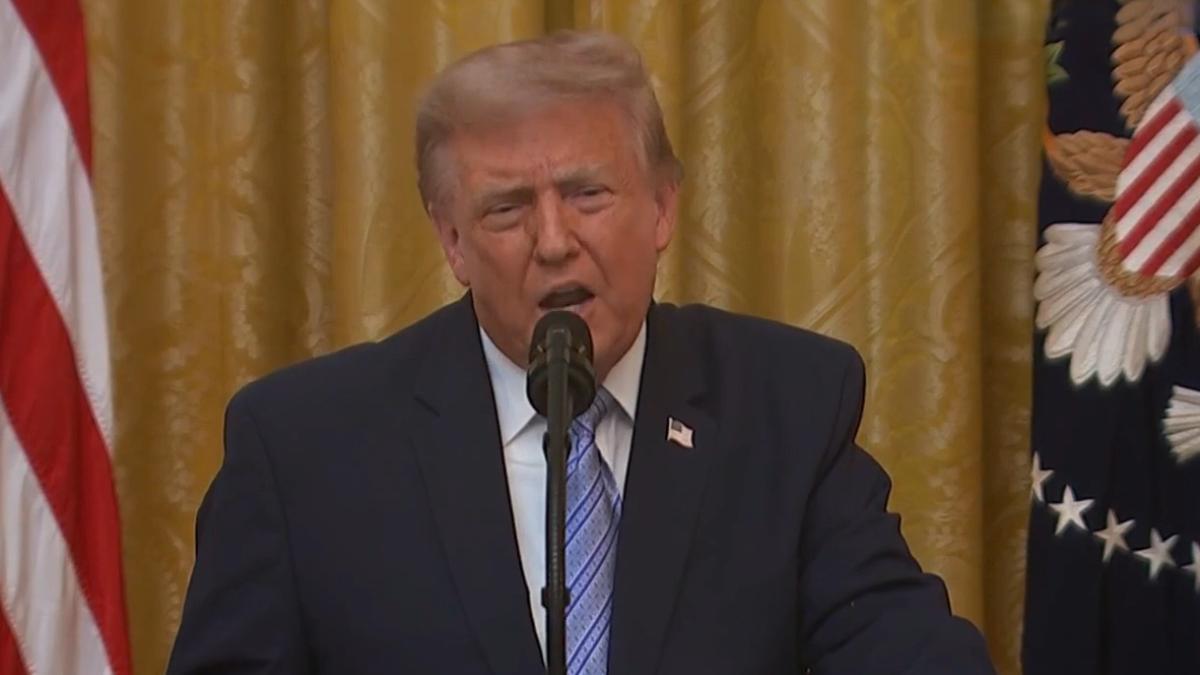
The U.S. military launched a new round of comprehensive airstrikes against Iran in the early hours of July 20. This follows the confirmation of another American soldier’s death, prompting President Trump to publicly announce retaliatory measures. Meanwhile, Iran fired multiple missiles toward Jordan, significantly increasing the risk of direct conflict spilling over into neighboring Israel, placing the Middle East on the brink of total chaos.
The U.S. and Iran have escalated tensions to the verge of full-scale war. A transitional ceasefire agreement halted last month has collapsed, paralyzing maritime traffic through the 'Strait of Hormuz,' a vital global shipping lane. As both sides expand attacks to include civilian infrastructure critical to millions, the benchmark Brent crude oil price surged past $90 per barrel on July 20, worsening the global energy crisis triggered by this conflict.
The latest U.S. airstrikes mark the ninth consecutive night of bombardment. U.S. Central Command (CENTCOM) confirmed the operation has entered its ninth night. In a statement, the U.S. military said, 'Airstrikes will continue to degrade Iran’s military capability to attack commercial vessels and civilian crews transiting the Strait of Hormuz.' President Trump emphasized, 'We delivered another heavy blow tonight. This is to defend the honor of our fallen soldiers.'
The deceased U.S. service member died on July 18 while conducting a 'controlled detonation' of a downed Iranian drone in Iraq. Previous airstrikes were retaliatory strikes against Iran’s paramilitary 'Revolutionary Guard' in response to a July 17 attack in Jordan that killed U.S. troops. One soldier was previously reported missing; the U.S. military’s latest statement confirmed on July 19 that 'unidentified remains' were recovered and are undergoing forensic analysis. Since the outbreak of this conflict, 17 U.S. military personnel have been killed.
As the U.S. conducted airstrikes, the UK military reported that a cargo vessel caught fire in the Strait of Hormuz near the Omani coast on the morning of July 20. The cause of the fire remains unclear, but this area is an alternative shipping route guided by the U.S. military to avoid Iranian-controlled waters. Iran’s Revolutionary Guard later claimed it had designated oil tankers in the strait as targets.
In retaliation, Tehran has launched widespread attacks on U.S. allies across the Middle East. Bahrain, Jordan, and Kuwait have reactivated their air defense systems to intercept incoming Iranian drones and missiles. The U.S. Embassy in Bahrain issued an emergency security alert early on July 20, warning that 'Iran may attempt an attack on an unspecified location in downtown Manama,' though no further details were provided.
Iran’s attacks have primarily targeted U.S. Arab allies rather than Israel directly. Jordan’s military confirmed its air defense systems successfully intercepted several Iranian missiles. With major U.S. military bases stationed in Jordan and heavily reliant on American air defense support, the military stated no casualties or property damage occurred during the interception. Subsequently, Jordan’s state television reported that the Foreign Ministry had summoned Iran’s chargé d'affaires for a formal protest.
However, these missile launches have heightened alert levels in neighboring Israel. The Israeli military warned that missiles fired toward Aqaba, Jordan’s port city, could potentially cross into Israeli territory. Israeli officials in Eilat, a border city adjacent to Aqaba, reported that the military launched two interceptors from the outskirts to prevent debris from falling into the country. This marks the first time in weeks that Israeli border residents have faced the threat of imminent air raid sirens.
In this war that erupted on February 28, Iran’s recent attacks have clearly focused on U.S. Arab allies rather than directly targeting Israel. Israel Defense Forces Chief of Staff Lt. Gen. Eyal Zamir publicly declared, 'We are prepared and ready to enter combat immediately.'
The Kuwaiti government accused its power and desalination plant of being attacked for the second time in two days, sparking a fire. The Ministry of Electricity, Water, and Renewable Energy emphasized that the power grid remains stable. However, with 90% of Kuwait’s drinking water dependent on desalination, infrastructure damage has raised concerns over disruptions to essential resources.
Jasem Mohamed al-Budaiwi, Secretary-General of the Gulf Cooperation Council (GCC), strongly condemned Iran’s attacks on civilian facilities and infrastructure, stating they constitute war crimes. Under international humanitarian law, civilian infrastructure such as bridges and power plants are generally protected unless used for military purposes, in which case they may lose protection. Even then, military strikes must adhere to the principle of proportionality and minimize civilian harm.
President Trump previously threatened to strike Iran’s power plants and bridges to force Tehran to relinquish control over the Strait of Hormuz. Before the conflict, one-fifth of global oil shipments passed through the strait. Recent U.S. military offensives indicate this military strategy is now being implemented. Additionally, the U.S. Navy reimposed a naval blockade on Iranian ports last week to cut off its oil exports. On July 18, the military announced it had intercepted and guided six vessels since the blockade began, disabling one.
With more than half of the 60-day negotiation period set by the transitional agreement now elapsed, the original plan for talks on permanent ceasefire and Iran’s nuclear program appears to have collapsed.
Video footage released by the U.S. military on July 19 shows fighter jets deployed and Tomahawk cruise missiles launched from sea for precision strikes. One target was located in a mountainous canyon, where Iran’s Revolutionary Guard frequently hides missile bases and military equipment within mountainous terrain.
Iranian state media, citing the Atomic Energy Organization, claimed the U.S. airstrikes hit the construction site of a planned nuclear power plant in Darkhovin in southwestern Iran. However, satellite imagery from U.S.-based Planet Labs PBC, taken on July 9, shows only land-clearing activity at the site, with virtually no substantial structures. Iran had not previously announced any attack on this location. The International Atomic Energy Agency (IAEA) clarified that the site was in an 'extremely early construction phase' during its last inspection, with no nuclear material present.
According to Iranian official statistics released on July 19, the latest U.S. airstrikes have caused at least 50 deaths and 517 injuries. However, Iran has not disclosed specific data on military equipment or combat capability losses. The soaring fuel and commodity prices triggered by this distant Middle Eastern conflict continue to severely impact the world’s most economically vulnerable regions.
FACT BOX
- Source: PR Times
- Category: News