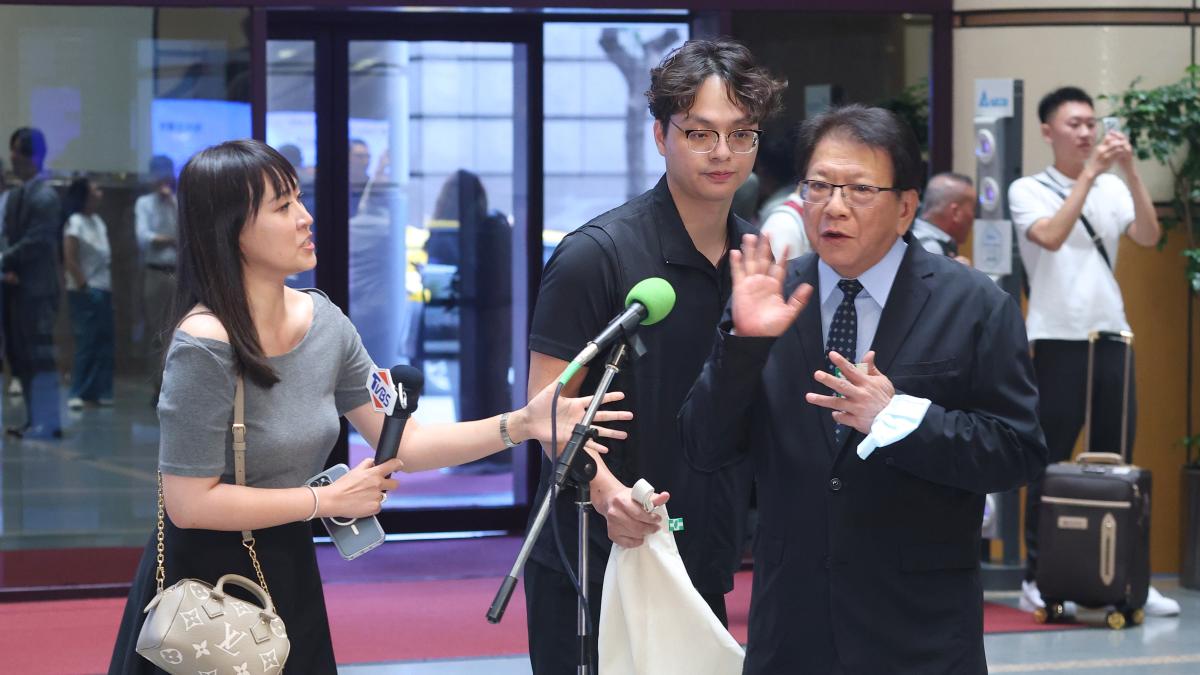
Pan Meng-an, Secretary-General of Taiwan's Presidential Office, attended the founding rally of the Pingtung Township Supporters' Association yesterday (19th), where he used his arm to push away a reporter questioning him about the UFA tainted oil scandal. The physical gesture has drawn widespread criticism. In response, media commentator Huang Yen-ming posted on Facebook in support of the journalist, stating unequivocally, "Journalists have a professional duty to pursue questions." While Pan has the right to decline interviews, Huang criticized his use of the most inappropriate method to do so, calling his subsequent casual apology "hypocritical." He questioned how the public could trust the ruling party's top officials to humbly listen to public opinion if they behave this way.
Regarding the incident in which Pan allegedly pushed aside a reporter over the tainted oil case, Huang revealed that the journalist involved, Lui Ting-ting, a senior reporter from TVBS, has been a guest on his program multiple times. Lui is the only journalist in Taiwan to have secured a one-on-one interview with Jensen Huang at his exclusive "Trillion-dollar Banquet." Should reporters pursue questioning of their subjects? Huang insists they absolutely should. "Is it acceptable for interviewees to simply state their prepared remarks and official stance, then expect no further challenges?" he asked.
Huang recalled his own days covering government agencies, saying that whenever he doubted the authenticity of official statements, he would always ask questions—even creating opportunities when none were offered. He would track officials' schedules and pursue them after press conferences. This, he said, was the daily reality of journalism. Yet, he lamented, Taiwan's political reporters have increasingly become accustomed to only conducting group interviews at the door, avoiding tough questions, or even aligning themselves too closely with politicians to avoid upsetting them—resulting in a sharp decline in genuine accountability journalism.
Pan claimed his arm movement was "natural" to avoid hitting camera equipment, but Huang dismissed this, stating, "The footage speaks for itself." Lui had been following Pan from the moment he arrived and stepped out of his car, persistently asking questions all the way into the venue. Pan could have simply said he wouldn't answer today—or said nothing at all. Instead, he chose the worst possible physical gesture to express displeasure. Even his later nonchalant apology of "sorry" and his afternoon remarks accusing the press of "sensationalism" were, Huang said, disingenuous and unbecoming of someone in his position.
Huang expressed concern that this controversy will make Lui's future reporting even more difficult, potentially leading to boycotts by interviewees and online attacks from pro-green camp supporters and cyber troops. He called this a tragedy in Taiwan's political-media relationship. While Pan has the right to refuse interviews, journalists have the fundamental duty to hold public figures accountable in public spaces—this is the essence of the "Fourth Estate." For the Secretary-General of the Presidential Office to respond in such a manner, with insincere apologies and further criticism of the press, is a serious failure of leadership. If the ruling party's top officials behave this way, how can the public believe they will truly listen to the people?
FACT BOX
- Source: PR Times
- Category: News