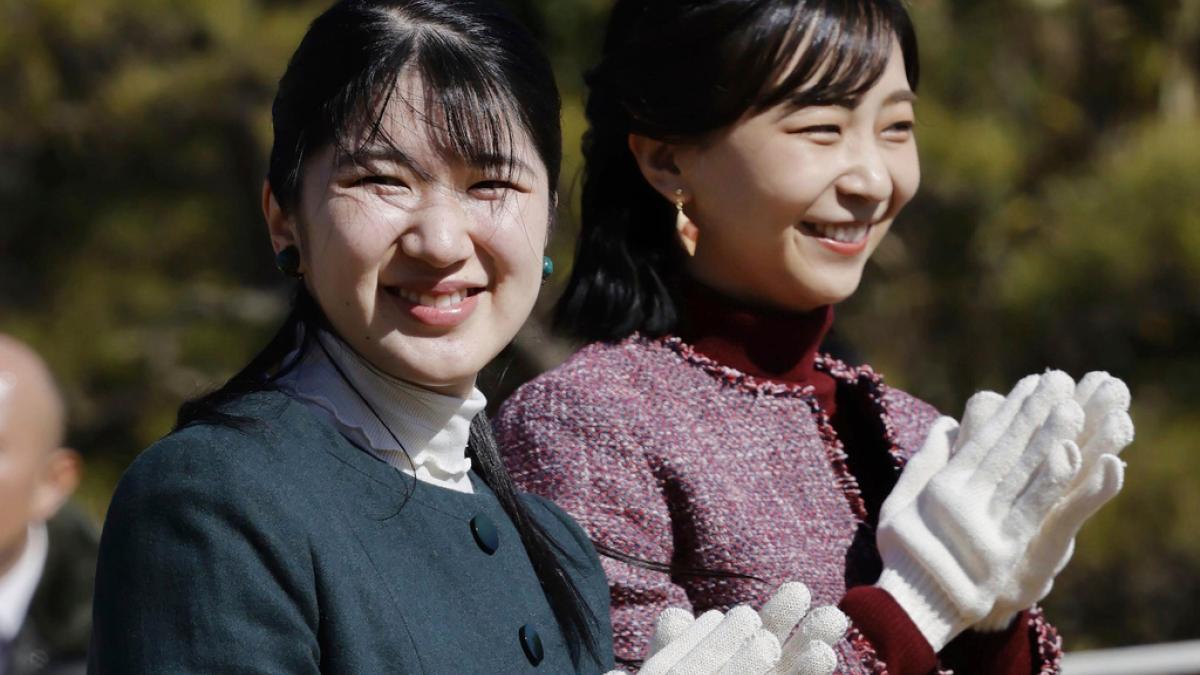
Recently, discussions within Japan's ruling and opposition parties regarding reforms to the Imperial House Law have once again drawn public attention. The New Citizen Council recently published an article titled 'Japan Takes a Key Step in Imperial House Law Reform: Female Royals May Retain Imperial Status After Marriage, Male-Line Descendants from Former Branches May Return,' offering a precise and profound analysis of the political compromise sought between tradition and reality. As the article rightly points out, while this proposal temporarily alleviates the immediate shortage of personnel for imperial duties, it also exposes the limitations of systemic reform. However, if we extend the core questions raised by the article, we find that behind this imperial controversy lies a complex interplay of social psychology, political maneuvering, and geopolitical linkages—particularly with Taiwan—that cannot be ignored. The original text astutely highlights that treating female royals merely as support staff for official duties while denying them succession rights constitutes gender inequality. Indeed, Japan has historical precedents for female emperors, yet in modern society, it remains stagnant on female succession. Beyond deep-rooted patriarchal thinking, it is ironically evident that through long-term cultural conditioning, some Japanese women collectively accept, and even uphold, a system that diminishes their own status. This structural contradiction has evolved into a specific irony within Japan's current political landscape. Take Sanae Takaichi, Japan's first female prime minister in all but name. Her personal marriage reflects modern gender equality—she and her husband decided their family name through rock-paper-scissors, allowing her to retain her maiden name, 'Takaichi.' Yet ideologically, she is a staunch far-right conservative who strongly opposes female imperial succession, deliberately framing the debate as resistance against a 'female-line emperor' to deflect attention. Here we have a woman capable of holding the nation's highest executive power, yet she turns around to deny women the right to become the nation's symbolic head. The coexistence of the 'modern female leader' and the 'traditional male-line myth' represents the deepest societal rift in contemporary Japan. Precisely for this reason, the article's proposed system of adopting male-line descendants from former imperial branches appears even more 'roundabout' in practice. The article rightly expresses concern that descendants who left the imperial family nearly eighty years ago and have lived as commoners for three or four generations may have vastly different lifestyles and intentions from the current imperial household. Indeed, rather than going to great lengths to re-educate distant relatives with no imperial experience—potentially creating bizarre and unequal situations such as 'a royal mother with commoner father and children'—why not seriously consider Princess Aiko, who enjoys nearly 90% public support in Japan? Raised entirely within the imperial environment, she has undergone rigorous training in protocol and etiquette, and her graceful demeanor has won widespread public affection. To ignore such a qualified and capable individual in favor of a complex and uncertain adoption process demonstrates that political calculation is being prioritized over genuine institutional modernization. Behind this politically calculated reform drama, what is most often overlooked is the fundamental will of the imperial family members as human beings. Whether critics who oppose the monarchy's existence or traditionalists who insist on preserving customs, both often fall into blind spots: the former question why anyone should be born into privilege, while the latter treat royals as political symbols to be preserved. In reality, those within the imperial walls may silently lament why they were born into a life without freedom, burdened with duties they never chose. Bound by the constitutional restriction that forbids imperial members from engaging in politics, Emperor Naruhito and Crown Prince Fumihito have, on rare public occasions, subtly expressed their inner thoughts—phrases like 'the views of the parties involved must be respected'—that skirt the edge of political commentary. This is not only a silent protest against an oppressive system but also a father's heartfelt plea to protect his daughter from being used as a political tool. While politicians calculate bloodline myths in the Diet, the imperial family struggles to assert their human dignity within the narrow space allowed. Yet this storm, seemingly confined to Japan's domestic politics and constitutional order, has already sent ripples across the strait. Prime Minister Takaichi, a direct protégé of the late Shinzo Abe, champions a core agenda of revising Article 9 of Japan's pacifist constitution, expanding military capabilities, and achieving defense autonomy. From Taiwan's national interest and security strategy perspective, facing China's increasingly aggressive expansion, a stronger Japanese defense posture and deeper security cooperation with Taiwan would constitute a significant geopolitical advantage. However, as the article notes, 'reform depends on whether society and the Diet are willing to continue the discussion.' Domestic consensus in Japan on this far-right militarization blueprint remains fragile. Among the thirteen parties involved in the Imperial House Law debate, only seven support the proposal—highlighting a deep divide in public opinion and politics. Moreover, two consecutive emperors have consistently conveyed a universal value of 'peace' to the world, creating an implicit tension with the right-wing cabinet's push for military preparedness and the lifting of defense restrictions—a quiet clash between symbolic values and political power. *The author is a language professional.
FACT BOX
- Source: PR Times
- Category: News