Every election poses a routine test for universities regarding administrative and educational neutrality (campus neutrality). While it is a personal right for faculty members to enter politics or run for office, they should exercise caution within the university to avoid bringing unnecessary political color or controversy to the institution.
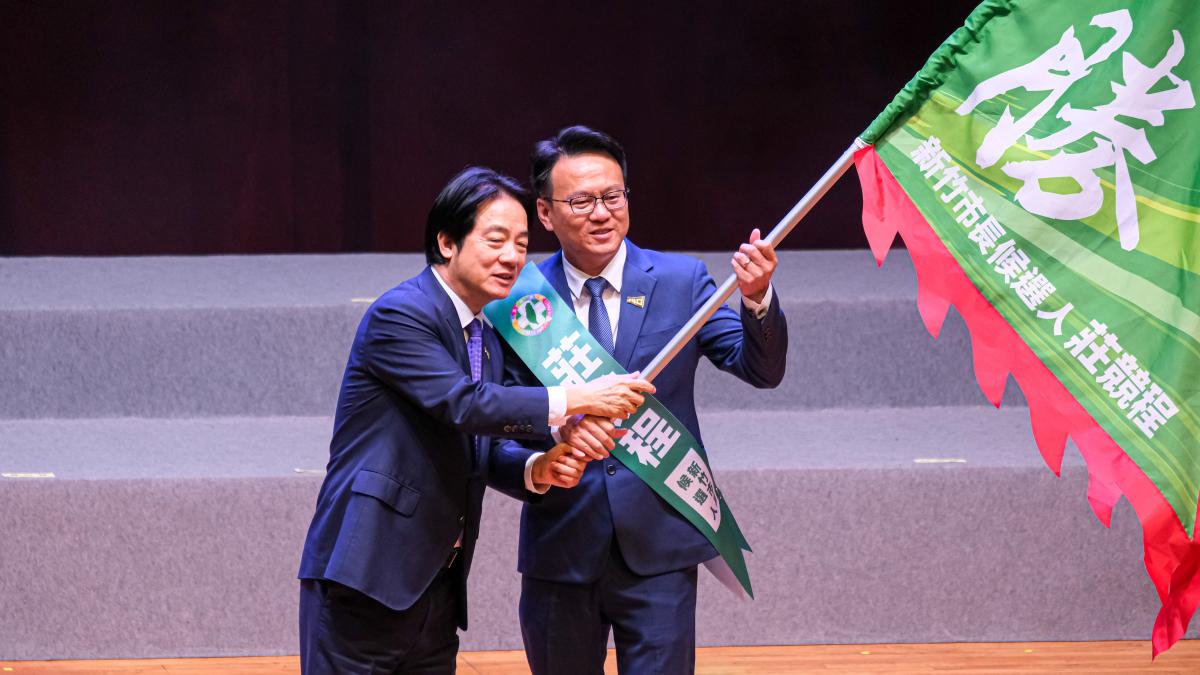
Zhuang Jing-Cheng, an assistant professor at the Institute of Intelligent Biomedical Engineering at National Yang Ming Chiao Tung University (NYCU), previously served as a legislator for the Democratic Progressive Party (DPP) and is now representing the party in the Hsinchu mayoral race. This month, he has repeatedly appeared on campus events under the title of 'Green Camp Hsinchu City Mayoral Candidate' (evidence in attached images), filming and publishing several promotional short videos in offices, laboratories, and research rooms at NYCU—even in departments not affiliated with his own.
While these campus videos may not contain overt electioneering language, they do include embedded promotion of his municipal policy vision, aiming to enhance his personal image and improve his chances of winning the election. NYCU is a public university, not a 'party school.' If Zhuang and his campaign team were operating outside the campus, it might be acceptable. However, conducting such activities extensively within university premises raises concerns about 'guilt by association' and compromises campus neutrality, leading to murmurs and discontent among the academic community.
Let us consider a hypothetical: If his opponent, Ann Kao, were to conduct similar campaign activities inside government offices or public school facilities using her identity as a mayoral candidate, would Zhuang’s camp or the DPP remain silent? Or would they raise objections or even protests?
Zhuang’s actions inevitably recall those of Lin Chih-Chieh, a distinguished professor at NYCU’s Institute of Science and Law, who shares both party affiliation and institutional ties with Zhuang. During her legislative campaign last January, Lin launched a petition drive titled 'NYCU and Alumni Support Association,' directly incorporating the university’s name into her campaign structure—raising suspicions of politicizing a national university. Moreover, her list of endorsers included a vice president surnamed Li, who is subject to the Civil Servants Administrative Neutrality Act, triggering criticism over administrative bias.
When universities provide office space to scholars, it is expected that these spaces will be used for academic teaching and research aligned with their expertise. We expect all educators, regardless of political affiliation, to uphold integrity. Transitioning from teaching to politics is permissible, but such spaces must not be misused for activities that deviate from the 'pure' purpose of education.
*The author is a youth advisory committee member for county and city governments.
FACT BOX
- Source: PR Times
- Category: News