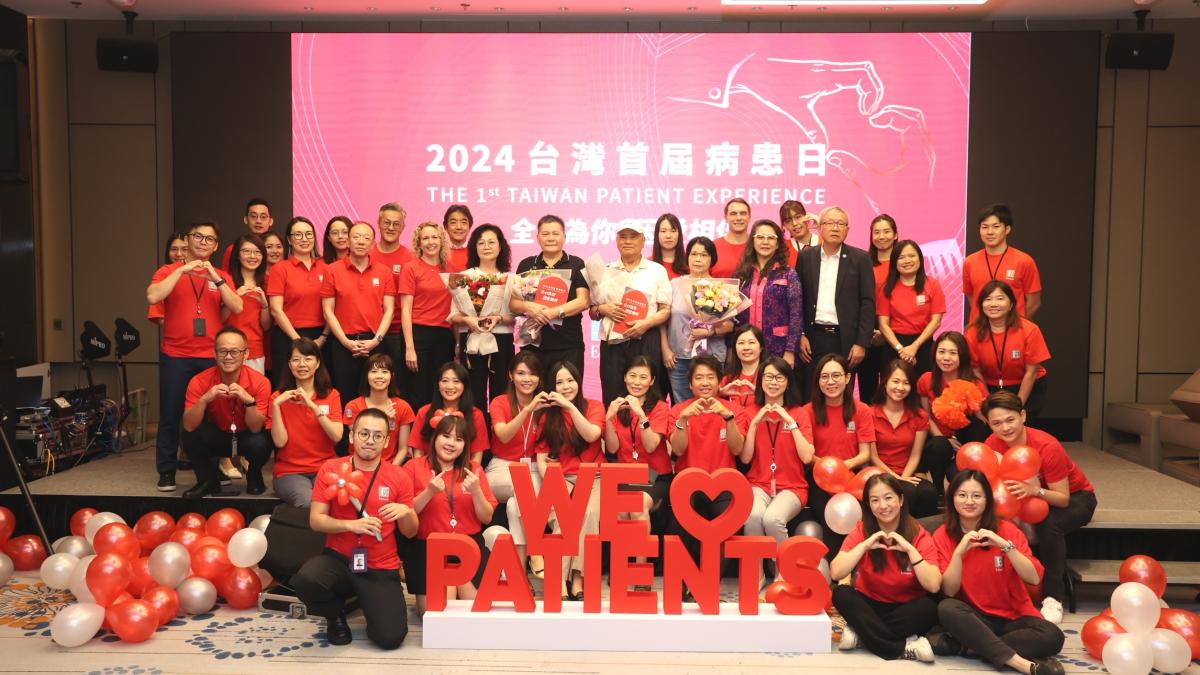
As the silver tsunami approaches, health awareness must begin from the heart. For many, stepping onto a stage may simply be a performance, but for Mr. Wen (pseudonym), a nearly 70-year-old singing enthusiast, it marks a crucial moment of reclaiming his life. Long affected by heart valve disease, he once struggled to finish even a single song due to shortness of breath. Thanks to proactive intervention by a medical team, Mr. Wen chose to undergo transcatheter aortic valve replacement (TAVR). Today, not only has he regained his health, but he has also returned to participate in singing competitions, becoming a moving testament to medical innovation.
As Taiwan officially enters a super-aging society, cases like Mr. Wen’s will no longer be rare. Zhong Shunhe, Senior Vice President and General Manager of Edwards Lifesciences Greater China, stated that heart valve disease is gradually becoming an unavoidable public health issue. Since symptoms often resemble signs of aging, many patients remain undiagnosed for long periods, only seeking medical help when their condition worsens. The number of patients receiving attention remains far below actual needs.
"Many seniors experience breathlessness when climbing stairs or feel easily fatigued, often attributing it simply to aging, rarely suspecting a heart valve problem," Zhong pointed out. One of the biggest challenges of valve disease is low public awareness.
Among these, mitral regurgitation is one of the most common valve diseases. Based on health insurance data, the overall prevalence of mitral valve disease in Taiwan is approximately 3.1%, translating to over 700,000 people affected. As population aging accelerates, the disease burden is expected to continue rising.
Due to the slow progression of symptoms, many patients only seek medical care when clear signs of heart failure appear, missing the window for early evaluation and treatment. In addition to low awareness, some patients in the past also faced limited treatment options. Particularly, elderly patients often have multiple chronic conditions, making them hesitant about traditional open-heart surgery due to higher risks and acceptance concerns, thus delaying appropriate treatment. Medical costs have also been a significant consideration for some families.
Zhong Shunhe emphasized that heart valve disease often mimics aging, leading to long-term undiagnosed cases. Raising disease awareness is a key factor in improving care quality. (Photo: Edwards Lifesciences)
In recent years, advancements in heart valve disease treatment have provided more diverse options for patients with different conditions. Notably, transcatheter edge-to-edge repair (M-TEER) has recently been included in national health insurance coverage, offering a new treatment option for eligible patients with severe mitral regurgitation.
Zhong stated that with advances in treatment technology, physicians can now tailor more suitable treatment plans based on a patient’s condition, valve structure, and overall health. For elderly patients with multiple comorbidities or higher surgical risks, this provides an alternative to traditional surgery.
However, since each patient’s condition, anatomical structure, and overall health status differ, a comprehensive evaluation by a Heart Team—comprising cardiologists, cardiac surgeons, imaging specialists, and related experts—is essential to determine the most appropriate care strategy.
From a Heart Murmur to Reclaiming Life: Edwards Collaborates with Medical Community to Promote Early Screening and Care for Valve Disease
In Zhong’s view, while innovative medical technology is crucial, without public awareness, even the best treatments may miss their optimal timing. Therefore, Edwards Lifesciences has long promoted the "Listen to Your Heart" public screening campaign, aiming to raise public alertness to heart murmurs and valve disease through basic auscultation and health education.
"Often, a heart murmur could be the first clue to disease. If detected earlier, it could lead to timely further examination and evaluation," Zhong said. He emphasized that disease education, treatment technology, and healthcare systems are all indispensable. Only by advancing all three in parallel can patient care quality be truly improved.
Edwards Lifesciences has long been dedicated to structural heart disease treatment globally, actively advocating for valve disease awareness and hosting an annual Patient Day event, bringing patients, families, and medical teams together for direct dialogue.
Mr. Wen left a particularly deep impression on Zhong. Known among friends and family for his love of singing, Mr. Wen gradually developed chest tightness and shortness of breath due to heart disease, temporarily unable to continue his favorite activity. Fortunately, after treatment, he recovered successfully. "The value of medical innovation is not just about completing a procedure, but about giving patients the chance to return to their normal lives and continue doing what they love," Zhong said.
"What we hope to promote is not just technological advancement, but also the message that valve disease is closer to us than we think. With early detection and timely, appropriate treatment, many patients can return to their normal lives," Zhong said. Moving forward, Edwards Lifesciences will continue collaborating with the medical community and society at large to enhance the quality of valve disease care in Taiwan, ensuring innovative medicine truly translates into tangible value and change for patients.
FACT BOX
- Source: PR Times
- Category: キャンペーン