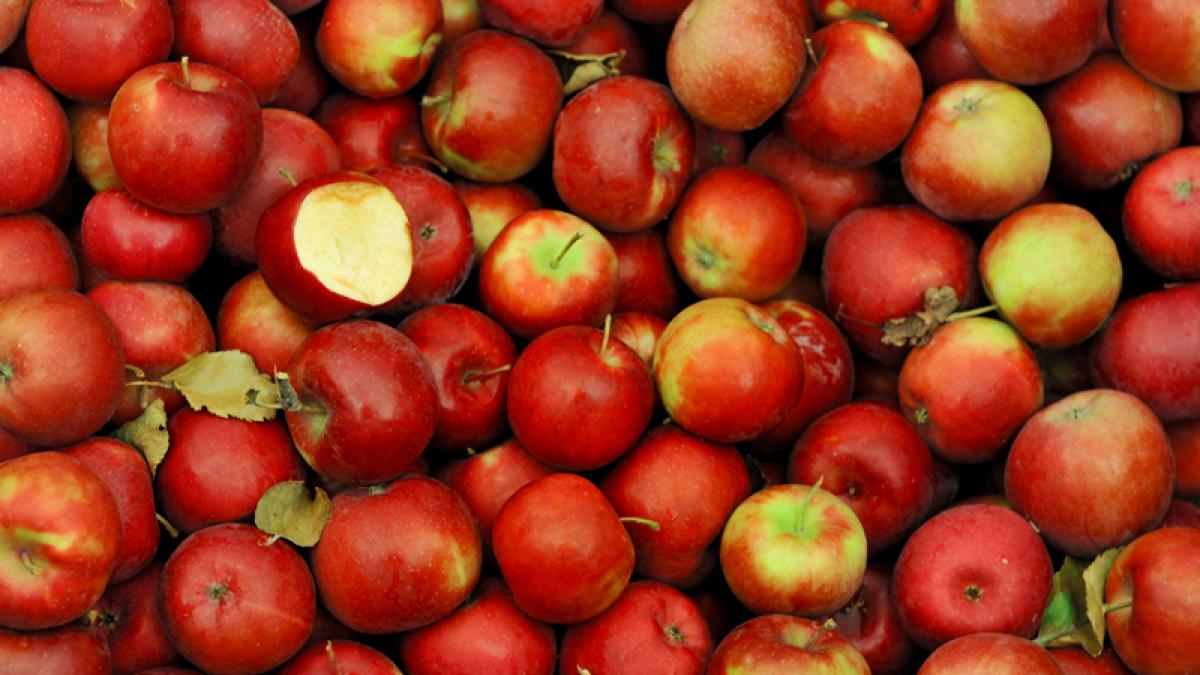
As the toxic oil scandal continues to plague the Lai administration, news has emerged of a sixfold relaxation in pesticide residue limits for U.S. imported apples—dubbed the 'poisonous apple' online. While calling it a 'poisonous apple' is inaccurate, the Ministry of Health and Welfare's unwarranted relaxation of pesticide residue standards for apples undoubtedly harms public health.
The controversy began when Taiwan's Food and Drug Administration announced an amendment on April 21 to the 'Maximum Residue Limits for Pesticides,' increasing the allowable level of the insecticide 'fipronil' in apples from 0.5 ppm to 3.0 ppm—a sixfold increase. This has drawn strong criticism, with many suspecting it is a concession to U.S. pressure under the Taiwan-U.S. Agreement on Trade (ART). Officials deny U.S. influence, claiming the change was requested by industry.
Labeling the relaxation as a 'poisonous apple' is an exaggeration, likely stemming from confusion over pesticide names. Ideally, pesticide residues should be zero, but this is unrealistic. Standards vary globally, and no single number fits all. However, a fundamental principle remains: any pesticide residue is harmful, so lower levels are better for public health.
Thus, even without considering political or U.S. pressure, relaxing the fipronil limit by sixfold is detrimental to public health. Public criticism and skepticism are therefore understandable.
Although the relaxation applies to all imported apples, not just U.S. ones, the U.S. is Taiwan's top apple supplier, accounting for over one-third of imports. Moreover, U.S. fipronil standards (5.0 ppm) are among the most lenient globally. By raising Taiwan's limit to 3.0 ppm—still below the U.S. but higher than Japan's 2.0 ppm—the policy clearly benefits U.S. exporters.
Previously, Taiwan's 0.5 ppm standard was already relatively high but achievable, as seen in South Korea's identical standard. Japan, in fact, tightened its limit from 5.0 ppm to 2.0 ppm years ago. Given Taiwan's history of stricter standards than Japan, relaxing to 3.0 ppm is unjustified.
The Ministry claims no U.S. pressure, but this raises questions about the necessity of the change. The existing 0.5 ppm standard did not hinder imports or raise prices. With domestic apple production below 1%, nearly all apples consumed in Taiwan are imported. Thus, relaxing standards without external pressure—solely due to industry requests—ignores public health.
Major apple suppliers to Taiwan include the U.S., New Zealand, Chile, and Japan. Given the U.S. is the primary beneficiary, it is highly plausible that U.S. pressure under ART influenced the decision—mirroring past concessions like U.S. ractopamine pork ('lean meat pork').
The蔡administration justified that decision as 'joining international trade,' particularly CPTPP, but Taiwan has not joined, and prospects remain bleak. Similarly, ART involves adopting U.S. standards, zero tariffs on U.S. farm goods, and waiving special safeguards—sacrificing local farmers.
Unlike pork, where local industry was a factor, this apple case sacrifices only public health. With the Lai administration already weakened by the toxic oil scandal, will it risk further damage from this 'poisonous apple' controversy?
FACT BOX
- Source: PR Times
- Category: News