Generative AI is rapidly advancing, evolving from merely answering questions to acting as agents that perform human tasks—engaging in chats, writing code, searching information, logging into websites, purchasing tickets, completing transactions, and assisting businesses with workflows. As AI becomes a key participant in the digital world, a previously overlooked issue is now emerging: How do we prove that the entity on the other end of the connection is a real human, not an AI?
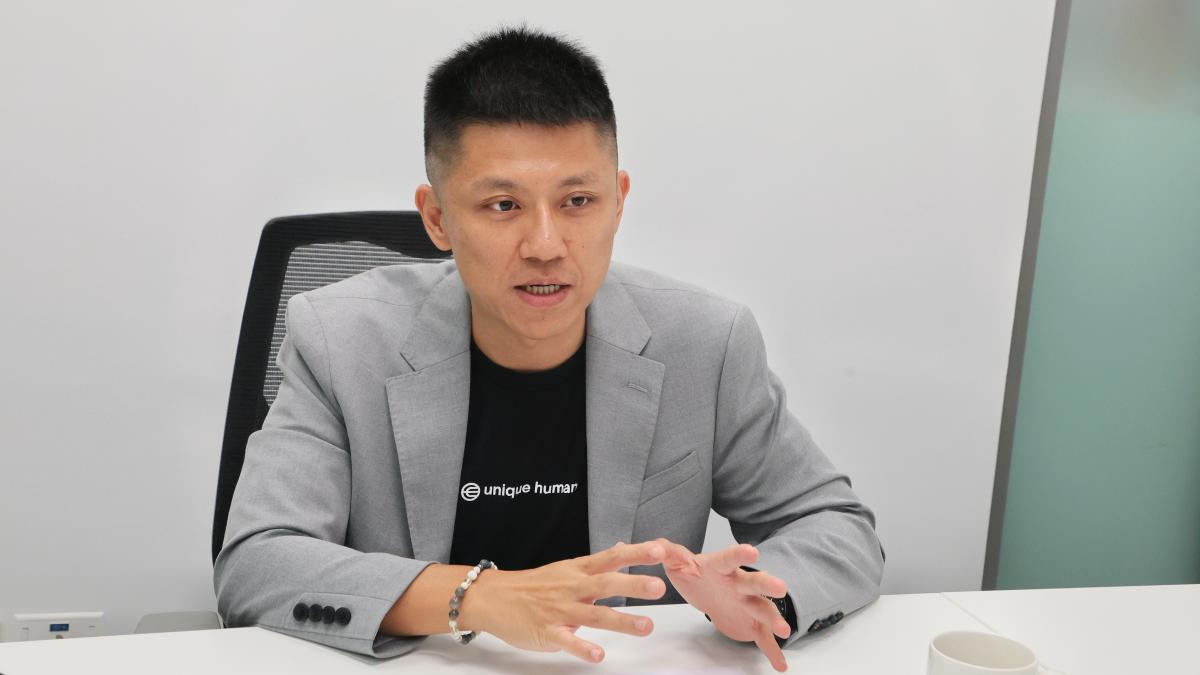
"The biggest challenge of the future isn't that AI is becoming more human-like, but that it's increasingly difficult to tell whether we're interacting with a real person," said Hsu Chun-Yang, Asia-Pacific Lead at Tools for Humanity, in an exclusive interview. He emphasized that AI is not a threat but an inevitable evolution of technology. However, as more online activities are delegated to AI, the fundamental human-to-human trust must be re-established—a core mission Tools for Humanity has pursued since its inception.
Founded in 2019 by OpenAI CEO Sam Altman and his co-founding team, Tools for Humanity anticipated that as AI capabilities grow, humans would eventually face situations where distinguishing between real people and AI becomes impossible. This foresight led them to begin developing 'Proof of Humanity' technology.
However, before ChatGPT emerged, this concept was considered too futuristic. "Back then, many people didn’t understand what problem we were trying to solve," Hsu recalled. Only in the past two years, as generative AI evolved from content creation to autonomous task execution, has the market begun to recognize that AI is not just a tool but a potential 'actor' on the internet. From logging in and buying concert tickets to completing online operations, the line between humans and AI is rapidly blurring—making Tools for Humanity’s six-year-old vision increasingly relevant and in demand.
Before joining Tools for Humanity in 2025, Hsu spent four years at Uber Eats Taiwan, then moved to Singapore to lead APAC market development. He observed that digital platforms once focused on efficiency and convenience, but with the rapid adoption of generative AI, a new challenge has emerged: platforms now need to verify not just that a user has logged in, but whether the actions are truly initiated by a real human.
"AI agents are just beginning to develop—we don’t even fully grasp how much they’ll transform society," Hsu noted.
When discussing human verification, many immediately think of real-name systems or KYC (Know Your Customer). But Hsu argues this differs from Tools for Humanity’s goal. Traditional identity verification confirms "who you are" and requires collecting extensive personal data. In contrast, Proof of Humanity focuses on "whether you are a real human," without needing names, addresses, or full identity details. "We aim to prove human existence, not to collect more personal data," he explained.
This design also addresses another critical AI-era issue: privacy. As businesses and governments demand more verification mechanisms, relying on mass data collection increases data breach and cybersecurity risks. Therefore, the ability to verify identity without exposing personal information will become a foundational capability for the future digital society.
Hsu emphasized that AI will only become more prevalent, and humans will delegate more tasks to AI agents. The crucial question is: when AI makes decisions, executes transactions, and interacts on our behalf, how can we ensure these actions reflect human intent rather than uncontrolled automation?
"We want AI to do more for us, but precisely in such an era, we must know who the real decision-maker behind the actions is."
He believes that in the future digital world, the most important factor won’t be AI capability alone, but the establishment of new trust mechanisms. Just as internet adoption gave rise to cybersecurity and social platforms drove identity verification demand, the AI era will spawn a new 'Proof of Humanity' industry—becoming essential infrastructure for the digital economy.
FACT BOX
- Source: PR Times
- Category: News
- Organizations: OpenAI / Uber Eats
- Products / services: Proof of Humanity