As generative AI rapidly advances into enterprise applications, market attention has shifted beyond model capabilities to establishing trustworthy usage environments. From video conferencing and e-signatures to financial transactions, AI agents are increasingly participating in daily business operations, making 'verifying whether the other party is a real human' a new corporate challenge.
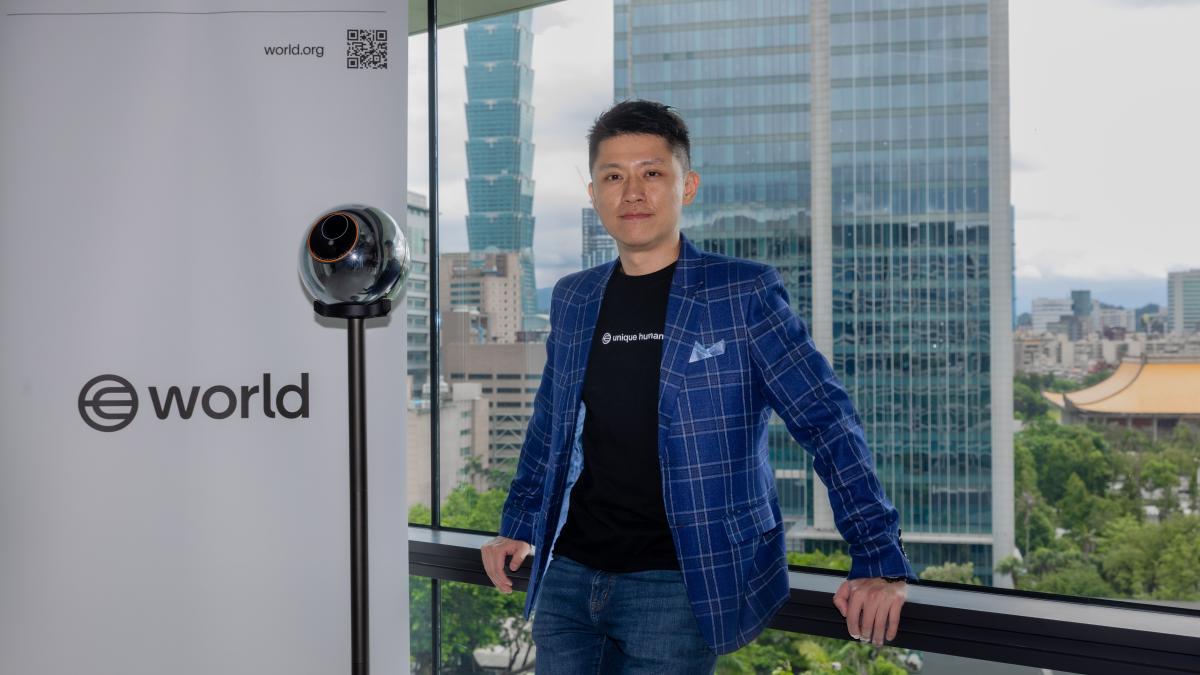
Xu Chun-yang, Asia-Pacific lead at Tools for Humanity, stated in an exclusive interview that the biggest change this year isn't a breakthrough in AI technology, but rather enterprises realizing that human verification has evolved from a consumer-market issue into a critical requirement for businesses and governments. 'If AI begins representing humans in more tasks, the first thing enterprises must confirm is whether the authorized entity behind it is truly a human.'
Why has human verification evolved from concert ticketing to a corporate necessity? In recent years, human verification has primarily been used in consumer contexts such as concert ticket sales and dating platforms, aiming to reduce scalper bots, fake accounts, and multi-account abuse. However, Xu observes that market demand has clearly shifted this year. As AI agents are increasingly adopted by enterprises for customer service, administrative processes, and business decisions, companies are now asking a new question: when AI logs into systems, signs documents, or interacts with customers, how can platforms confirm that the action is authorized by a real human, not a compromised or abused AI?
'Any scenario involving transactions, financial flows, or major business decisions makes this issue extremely urgent,' he noted. Recent global incidents of AI deepfake fraud highlight that enterprises can no longer rely solely on traditional verification methods and must establish new digital trust mechanisms.
Consequently, Tools for Humanity has begun extending its focus to the enterprise market. Xu stated that the company is now collaborating with enterprises such as Zoom, DocuSign, and Okta to integrate Proof of Humanity mechanisms into video conferencing, e-signatures, and enterprise login management. For example, in video conferencing, enterprises now want to confirm not only that the other party has logged in successfully, but also that the person on the other side of the screen is genuinely the intended participant, not someone using AI-generated images or voices for fraud.
E-signatures represent another critical application. As AI gains agency capabilities, enterprises need to verify not only the legality of documents but also whether the signing action truly originates from the authorized individual, not an unauthorized agent program.
Xu believes that in the future, enterprises will need to verify not just identity, but real human participation behind every digital interaction.
Do governments also need 'proof of personhood'? How to balance security and privacy in the AI era? Beyond the enterprise market, public sectors are another key area where Tools for Humanity is actively engaging. Xu pointed out that as countries advance initiatives in minor protection, digital identity, and online public services, governments are requiring platforms to verify age or eligibility while minimizing personal data collection—posing new governance challenges. For instance, users should be able to prove they are over 18 without revealing full names, addresses, or other personal information to meet platform requirements.
Another application is the one-person-one-account mechanism. Xu stated that in the future, for public resource applications, online voting, or government subsidies, it may be necessary to confirm that each user is real and unique, reducing risks of bot-driven mass applications or manipulation of public discourse.
Why is Asia becoming the ideal testing ground for human verification? Regarding market strategy, Xu believes Asia will be one of the most important global development regions. Countries like Japan, Taiwan, Singapore, and South Korea have highly digitized societies, making them more likely to identify new AI-driven challenges early. Currently, Tools for Humanity is collaborating with the Japanese market and expanding applications in concert ticketing and dating platforms. In Taiwan, partners have already adopted related technologies, and the company continues to discuss integration plans with various enterprises.
Additionally, the company has been actively participating in digital governance discussions, collaborating with governments, industry organizations, and academic institutions to co-develop digital trust mechanisms for the AI era. Xu revealed that beyond ongoing cooperation with Taiwanese authorities, the company recently announced a new collaborative research program with the University of Tokyo to advance technology research and applications.
As the AI trust economy takes shape, what’s next for Tools for Humanity? Xu believes that while 'Proof of Humanity' was once a niche concept understood by few, by 2026 it has evolved from technical discussions into a shared challenge for enterprises and markets. He compares this evolution to the development of cybersecurity and identity verification—whenever new technologies emerge, new security demands follow, and the AI era is now forming its own new industry.
'In the future, it’s not just about AI becoming smarter, but about the entire digital world building new trust,' Xu said. As AI increasingly becomes a digital agent for enterprises and individuals, confirming that real humans are behind every interaction will no longer be just a technical issue, but a foundational requirement for the sustainable operation of the digital economy. Tools for Humanity aims to be the builder of this new infrastructure.
FACT BOX
- Source: PR Times
- Category: Partnership
- Organizations: Zoom / DocuSign / Okta
- Products / services: Proof of Humanity