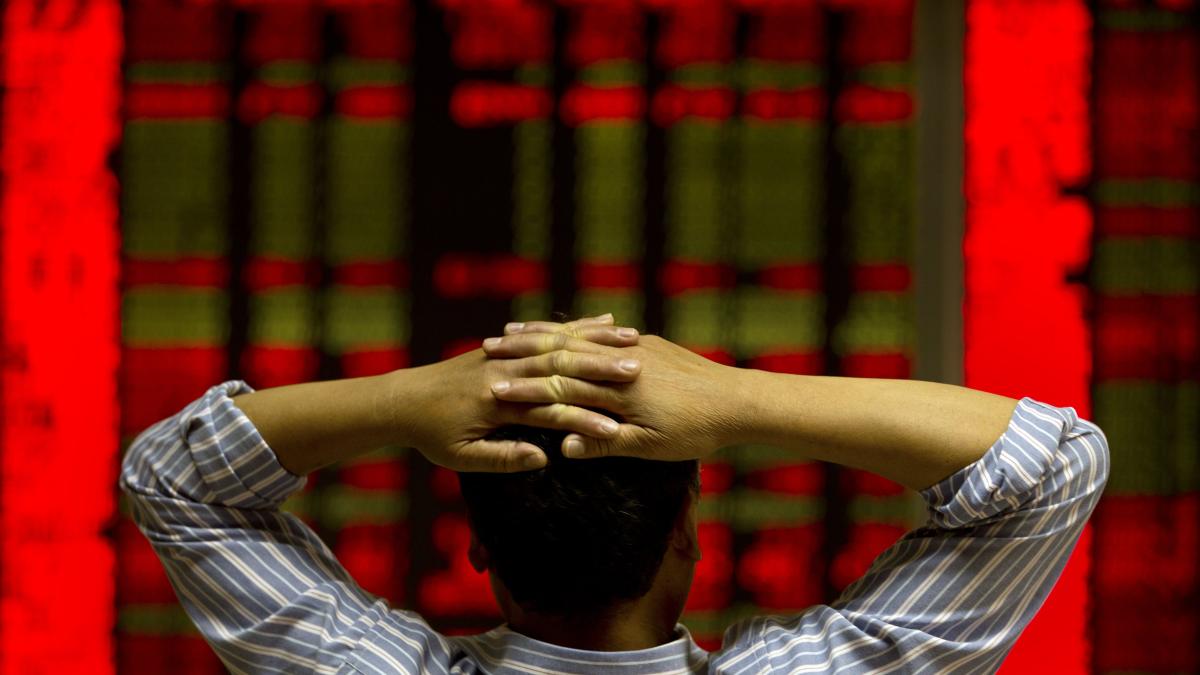
Amid turbulent stock market conditions, Chinese authorities are intensifying efforts to stabilize the market. Publicly backed 'national team' funds are actively injecting capital into technology stocks, particularly in AI and semiconductors, to prevent further erosion of market confidence.
Significant capital inflows are being observed in ETFs. The华夏上证科创板50 ETF, which tracks the STAR 50 Index, attracted 13.8 billion yuan (approximately $1.9 billion) on Monday alone, marking the largest single-day inflow since its inception. Although the source of the funds has not been disclosed, market participants widely believe such massive buying pressure reflects official-backed capital.
Previously, market support was primarily focused on large-cap stocks like those in the CSI 300 Index. This time, however, the focus has clearly shifted toward technology stocks. The Huatai-PineBridge CSI 300 ETF also saw about 12.6 billion yuan in inflows on the same day, though slightly less than the STAR 50 ETF.
Major insurance companies are also joining the coordinated market stabilization effort. At least five insurance institutions have announced plans to increase their equity investment allocations. China Life revealed that its affiliated entities have already purchased over 10 billion yuan worth of stocks and funds, and will continue to invest in emerging industries. Other major insurers, including PICC Group and Ping An, have also signaled intentions to increase their equity asset allocations.
Regulators and state-backed financial institutions are seen as using multiple tools—ETFs, insurance capital, and state-owned entities—to jointly support AI and semiconductor sectors. Recently, China's stock market suffered from a sharp decline in memory chip stocks, compounded by concerns over potential share supply pressure from the upcoming listing of ChangXin Memory Technologies, triggering broad sell-offs in tech stocks.
With China's economic growth momentum weakening, Beijing aims to prevent a tech stock downturn from escalating into a broader market confidence crisis by guiding national capital toward constituents of the STAR 50 Index.
Wang Zhuo, fund manager at Shanghai Zhuozhu Investment Management, stated, 'The national team's objective is clear: to slow the decline in tech stocks, especially AI-related sectors where market positions were previously overly concentrated.' However, he added, 'Ultimately, the market must return to reasonable valuations for true stability to take hold.'
The STAR 50 Index has shown signs of recovery, rising over 4% on Tuesday (21st), following the entry of official funds. Last week, the index plunged nearly 17%, the fastest deleveraging since the 2015 stock market crash, but market sentiment has slightly improved with the intervention.
In addition to insurance capital, state-affiliated financial institutions are stepping in. Boshi Fund announced it will invest 50 million yuan of its own capital into its equity funds—a move typically seen during periods of extreme market volatility.
Meanwhile, GF Securities, backed by local state capital, announced a 90 billion yuan increase in margin trading quotas, aiming to provide additional liquidity and alleviate funding pressure during the deleveraging process.
Regulatory authorities are also engaging in confidence-building measures. The China Securities Regulatory Commission (CSRC) recently held investor roundtables, listened to market feedback, and pledged to continuously prevent financial risks, strengthen investor protection mechanisms, improve capital market returns, and promote stable and healthy market development.
The 'national team' still holds substantial firepower. Historically, China's 'national team' has repeatedly used ETFs to stabilize markets. Since last week's sharp decline, they have continued to buy. As authorities had reduced some ETF holdings earlier this year, they still have ample room to increase purchases if market volatility intensifies.
However, market observers caution that while official intervention may help stabilize sentiment in the short term, it could distort price discovery mechanisms. The key to whether tech stocks can sustain a recovery lies in the fundamentals of the AI and semiconductor industries and whether market valuations return to reasonable levels.
FACT BOX
- Source: PR Times
- Category: News
- Products / services: ETF