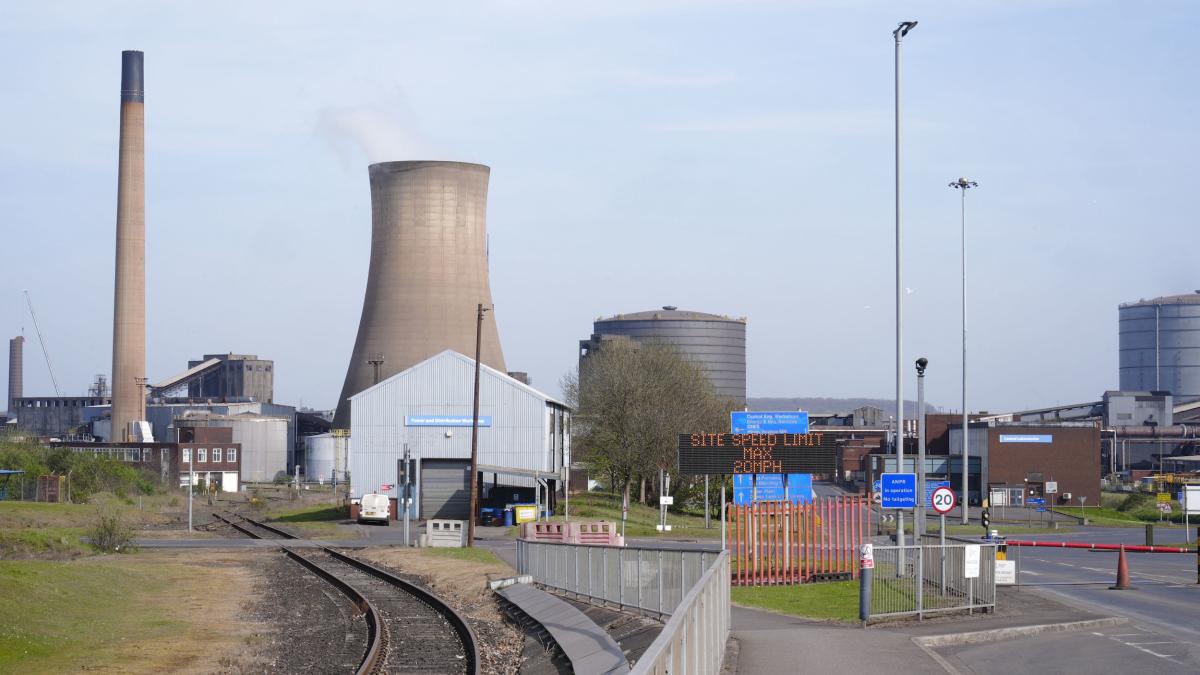
The UK government has recently used emergency legislation to forcibly nationalize British Steel, ending the control of China's Jingye Group, which had held a majority stake since 2020.
However, this event is not merely about rescuing a failing company. It reflects a structural transformation in the global supply chain. The era of efficiency-first globalization is giving way to a new paradigm where supply chain security takes precedence over cost minimization.
Jingye Group, founded in the 1990s and headquartered in Shijiazhuang, Hebei Province, is a major private steel manufacturer in China and has long been listed among the top 500 Chinese manufacturing enterprises. In late 2019, British Steel entered bankruptcy proceedings due to financial distress. Jingye completed its acquisition in 2020, pledging over £1 billion in investment and promising to preserve thousands of jobs. At the time, amid the waning days of the so-called 'golden era' of Sino-British relations, Chinese capital investing in UK infrastructure, energy, and manufacturing was not uncommon.
Shortly after the acquisition, however, the pandemic drove up energy prices, the Russia-Ukraine war caused European natural gas costs to soar, global steel demand weakened, the UK market proved limited in scale, and EU carbon regulations increased production costs. As a result, British Steel remained in prolonged losses. Jingye repeatedly stated that it was losing approximately £700,000 per day and could not sustain blast furnace operations without government support.
In response, Jingye issued a strongly worded statement: 'What the UK government has done to Jingye today destroys its own credibility, chills the hearts of global investors, and undermines the very foundation of its rule of law. When the rule of law has deteriorated to this extent, who would dare to continue investing in the UK?' The Chinese Ministry of Commerce also expressed 'strong dissatisfaction,' accusing London of using 'national security' as a pretext to forcibly seize British Steel.
Meanwhile, the UK government took operational control in April 2025 and passed a special law in mid-July to fully nationalize the company. The official rationale was clear: to preserve critical national industrial capacity and supply chain security, not corporate profitability.
The Scunthorpe plant is the UK's last facility capable of primary steel production from iron ore. If its blast furnace shuts down, not only would thousands of workers lose their jobs, but the UK's defense, rail, and energy infrastructure could become dependent on foreign supply. Thus, the government intervened to prevent strategic vulnerability.
This nationalization marks a setback for Chinese global investment ambitions. Over the past decade, Western nations have shifted their evaluation of Chinese investment from 'Does it bring capital?' to 'Does it compromise supply chain security?' Even with ample funding, Chinese investments in strategic sectors like defense, energy, steel, and semiconductors now face higher political barriers.
Globalization has not disappeared—it has evolved. From 'efficiency globalization,' the world is moving toward 'security globalization.' The US promotes 'friend-shoring' via the CHIPS and Science Act; the UK scrutinizes foreign investment under its National Security and Investment Act; Taiwan strengthens semiconductor alliances with the US, Japan, and Europe.
China, too, is responding. Internal documents reveal efforts to fully localize government procurement, including restrictions on Apple devices and Tesla vehicles in state institutions. While silent on the global stage, China reacts swiftly when targeted.
As geopolitical tensions rise, both sides are redefining economic interdependence. The UK, once seeking economic uplift through China under its 'Global Britain' strategy, now prioritizes security within AUKUS and Indo-Pacific frameworks. China may pivot to Belt and Road or emerging markets, but must navigate increasingly stringent national security reviews in the West to maintain legitimacy and trust in overseas investments.
FACT BOX
- Source: PR Times
- Category: News
- Organizations: British Steel / Jingye Group