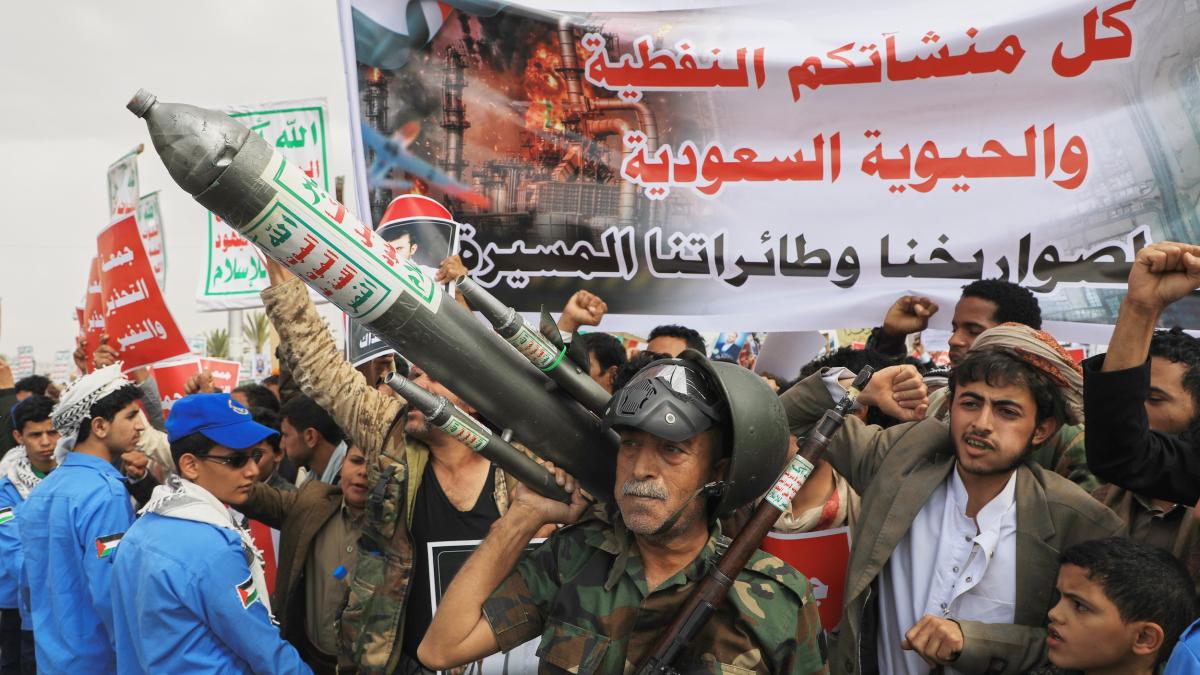
On July 17, Iran launched missile and drone attacks on the Muwaffaq Al-Salti Air Base in Jordan, killing two U.S. soldiers, leaving one missing, and injuring several others. Former President Donald Trump immediately vowed to make Iran pay double. Starting the following evening, the White House escalated retaliation, conducting consecutive airstrikes on Iran’s southern air defense, radar, missile, drone, port, and transportation facilities. By July 20, U.S. forces had conducted airstrikes for ten consecutive nights, and the death toll among U.S. troops in this conflict had risen to 17.
Iran did not retreat but instead expanded its attacks to Jordan, Bahrain, and Kuwait—countries assisting U.S. forces. This does not necessarily mean Iran seeks unlimited regional war, but it clearly aims to push the risks of conflict across the Persian Gulf, forcing nations to reevaluate the cost of supporting U.S. military operations. The attack on Kuwait’s power generation and desalination facilities crossed a civilian red line: while military bases can be evacuated, the collapse of water and electricity systems threatens the survival of entire cities.
The White House initially sought to reestablish deterrence through intense airstrikes, but instead accelerated the retaliation cycle. The U.S. military vastly outmatches Iran, yet cannot guarantee the safety of every oil tanker and liquefied natural gas (LNG) vessel passing through the Strait of Hormuz using bombs alone. Iran, unable to defeat U.S. forces in direct combat, leverages missiles, drones, sea mines, and regional armed groups to increase shipping, insurance, energy, and allied security costs. Each attack by both sides pushes the next round of retaliation to a higher, more uncontrollable level.
Iran’s strong retaliation cannot be understood solely through military gains and losses. After the assassination of Supreme Leader Ali Khamenei, Iran held a massive state funeral, and Tehran’s streets filled with mourning and calls for revenge. Crowds hung effigies of Trump, and a giant billboard at Revolution Square depicted Trump lying in a black coffin. The grief over the religious leader’s death rapidly transformed into anti-American and anti-Israeli national mobilization.
Precisely during Iran’s national mourning period, Trump publicly claimed that the U.S. could have eliminated Iran’s remaining leadership when they gathered for the funeral but chose not to, as a negotiating counterpart was still needed. This may have been typical diplomatic intimidation to raise stakes, but to Iranians, it sounded like turning a national funeral into a massacre opportunity. For Iran, with its Shi’a tradition of martyrdom, such humiliation does not lead to submission but enables the Islamic Revolutionary Guard Corps (IRGC) to more easily convert grief into revenge.
This backlash also returned to Trump himself. After concluding the NATO summit in Ankara, he chose not to board the new presidential aircraft gifted and modified by Qatar, but instead switched to the older, better-defended Air Force One. While Trump did not confirm the change was directly linked to assassination intelligence, he admitted he might be Iran’s top assassination target and warned that if assassinated, the U.S. would inflict catastrophic consequences on Iran. As Iranian streets place Trump in coffins, Trump threatens to plunge Iran into devastation—the war has evolved from nuclear facilities, missiles, and shipping into a life-or-death threat between leaders.
The U.S. initially aimed not only to destroy Iran’s nuclear and missile capabilities but also to dismantle its top command structure through a large-scale decapitation strike, create a power vacuum, and incite the Iranian people to overthrow the religious regime, achieving regime change. The U.S. had previously toppled Saddam Hussein’s regime in Iraq, and Muammar Gaddafi’s government in Libya collapsed after foreign intervention. Trump may have believed that eliminating the Supreme Leader and numerous military and political leaders at once would cause the Iranian government to quickly collapse.
However, while the U.S. eliminated several Iranian leaders, it did not dismantle Iran’s state machinery. The IRGC, religious institutions, security agencies, local administration, missile units, and intelligence networks remain operational. The Iranian people did not rise up in the streets to welcome regime change as Washington had scripted. Instead of pro-Western opposition filling the power vacuum, it was the more hardline, revenge-driven IRGC hawks who consolidated power.
The U.S. decapitation strike even compressed the space for Iran’s moderates. When the homeland is bombed and the leader dies from foreign attack, anyone advocating compromise risks being accused of betraying martyrs and selling out the nation. Trump assumed that eliminating the Supreme Leader would weaken the religious regime, but instead, martyrdom, national dignity, and anti-American sentiment were recombined. He intended to trigger regime collapse but ended up enabling the IRGC to seize total control.
As reported by the Financial Times, Trump has pushed the U.S. back into military conflict with Iran without defining clear victory conditions or an exit strategy. The war’s objective has shifted from nuclear programs and regime change to Strait of Hormuz shipping security, while oil prices and domestic political costs continue to rise. The U.S. average gasoline price has once again surpassed $4 per gallon, and most voters do not believe this war is worth the cost. This is the dilemma Washington finds hardest to admit: military escalation is easy, but there is no path to political de-escalation.
Amos Harel, military commentator for Haaretz, argues that both the U.S. and Iran currently want to keep Israel out of the main battlefield. However, Benjamin Netanyahu clearly refuses to stop, continuing attacks on southern Lebanon, making any ceasefire fragile and easily shattered by another front. For Netanyahu, the Lebanon front maintains military pressure on Israel and keeps the U.S. entangled in the Middle East crisis. Washington demands Tehran restrain Hezbollah but cannot guarantee Israel will simultaneously cease fire—thus, Iran has no reason to trust U.S. agreements as truly binding.
Once war begins, it becomes difficult to contain. This conflict grows increasingly unmanageable because it is no longer just a military clash between the U.S. and Iran. The U.S. cannot achieve political resolution through airstrikes alone, while Iran extends retaliation to shipping, energy, allies, and proxy fronts. If Israel continues opening the Lebanon front, any ceasefire arrangement could be torn apart by a new battlefield. As military escalation accelerates but political de-escalation lacks credible pathways, the war naturally cannot be contained. This is the clearest warning Taiwan must recognize: while allies are important, national security cannot rely solely on external support. True deterrence comes from the ability to withstand the first strike, maintain societal operations, and retain the capacity for sustained resistance and negotiation.
*Author holds a PhD from the University of British Columbia, is a nationally appointed associate professor, and a psychiatrist.
FACT BOX
- Source: PR Times
- Category: News