The illegal excavation case at Kaohsiung's Meinong Grand Canyon has shocked the public, with the excavated area estimated to be equivalent to two Kaohsiung City Qingcheng Lake Baseball Stadiums. In February this year, the Qiaotou District Prosecutors Office concluded its investigation and indicted over 100 individuals. Today (21st), the Legislative Yuan convened a plenary session and passed the amendment to the Soil and Stone Extraction Act in its third reading. Penalties for unauthorized extraction have been increased, with the maximum fine raised from the current NT$5 million to NT$25 million. Additionally, new criminal penalties have been introduced for profit-driven illegal activities. If such actions lead to disasters, serious injuries, or fatalities, offenders may face life imprisonment and fines up to NT$100 million.
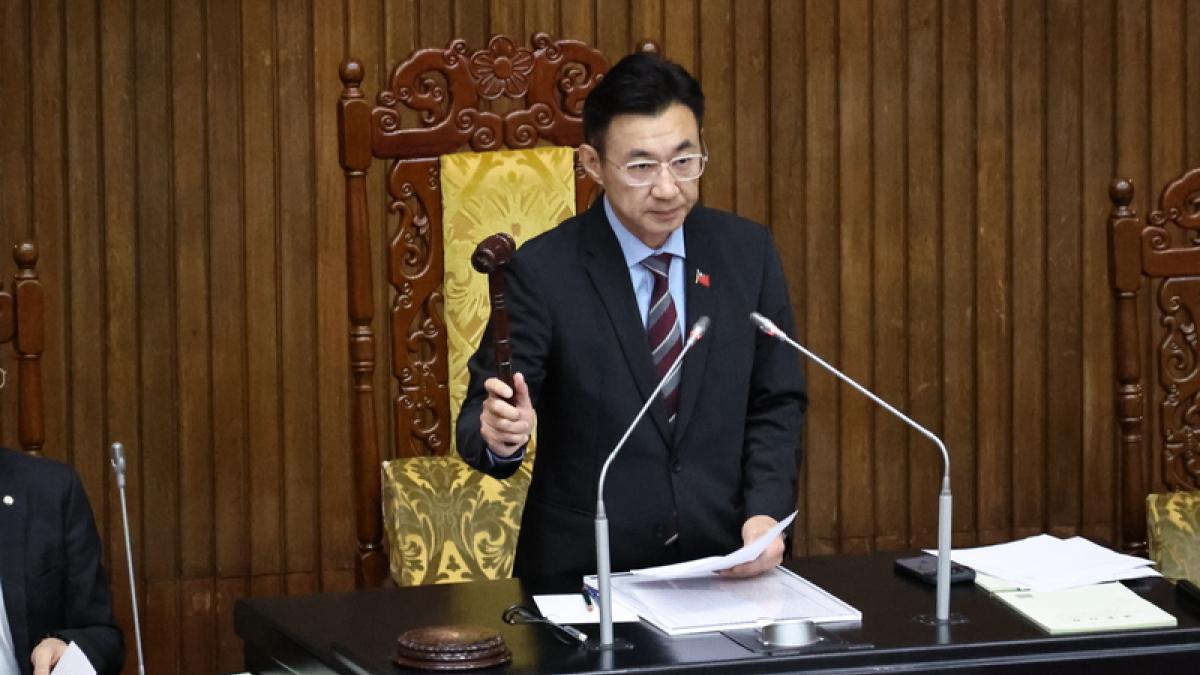
The amendment to the Soil and Stone Extraction Act was jointly proposed by various parties, including the Executive Yuan, indigenous legislators from both ruling and opposition parties—Wu Li-hua, Huang Jen, Cheng Tien-tsai—Democratic Progressive Party legislators from Kaohsiung—Chiu I-ying, Lai Jui-long, Hsu Chih-chieh—and Tainan's Chen Ting-fei, as well as Kuomintang legislators Ko Chih-en, Ting Hsueh-chung, Hsu Chiao-hsin, Wang Hung-wei, Liao Wei-hsiang, Chiu Chen-chun, Lin Chien-chi, and the Taiwan People's Party caucus in the Legislative Yuan. After逐条 review and consensus reached in the Economic Committee, the amendment was passed in today’s plenary session, presided over by Legislative Vice President Chiang Chi-chen.
Under the newly passed amendment, fines for unauthorized extraction will increase from NT$1 million to NT$25 million, and vehicles or machinery used in the violation may be confiscated. Failure to complete site restoration and facility removal within the required timeframe will result in fines of NT$100,000 to NT$2.5 million, with repeated violations subject to continuous penalties. Those who extract soil and stone without permission for profit may face up to five years in prison and fines up to NT$50 million.
If unauthorized extraction causes a disaster, offenders may be sentenced to one to seven years in prison and fined up to NT$60 million. If the act results in death, the penalty increases to life imprisonment or a minimum of seven years in prison, with fines up to NT$100 million. For cases resulting in serious injury, the sentence ranges from three to ten years in prison, with fines up to NT$80 million.
The amendment also stipulates penalties of NT$3,000 to NT$30,000 for violations such as failure to report extraction and sales volumes, failure to issue or falsifying delivery triplicate invoices, transporting without carrying the invoice, or failing to load materials into designated vehicles or containers.
Furthermore, the amendment clarifies that indigenous people extracting soil and stone under the Indigenous Peoples Basic Law, or for constructing or repairing traditional stone houses, underground homes, churches, government offices, schools, community centers, or public facilities, or for autonomous disaster relief and environmental maintenance within tribal areas, are exempt from requiring extraction permits. However, management regulations regarding extraction locations, areas, quantities, and durations will be jointly established by the Ministry of Economic Affairs and the Council of Indigenous Peoples.
Related reports: · Behind the Scenes: The Meinong Canyon Scandal Is More Than a Crisis for the DPP—Stricter Central Controls May Trigger Nationwide 'Waste Soil Chaos' · Meinong Case Becomes Prelude to Kaohsiung Mayoral Race! Lai Jui-long Threatens to Sue Ko Chih-en—Another Figure Cites Precedent, Mocking 'Top-Level Lawsuit Master' · Starlink Entry Barriers Removed! Legislative Yuan Passes Amendment to Telecommunications Management Act, Relaxing Foreign Ownership Limits and Chairman Nationality Requirements
FACT BOX
- Source: PR Times
- Category: News