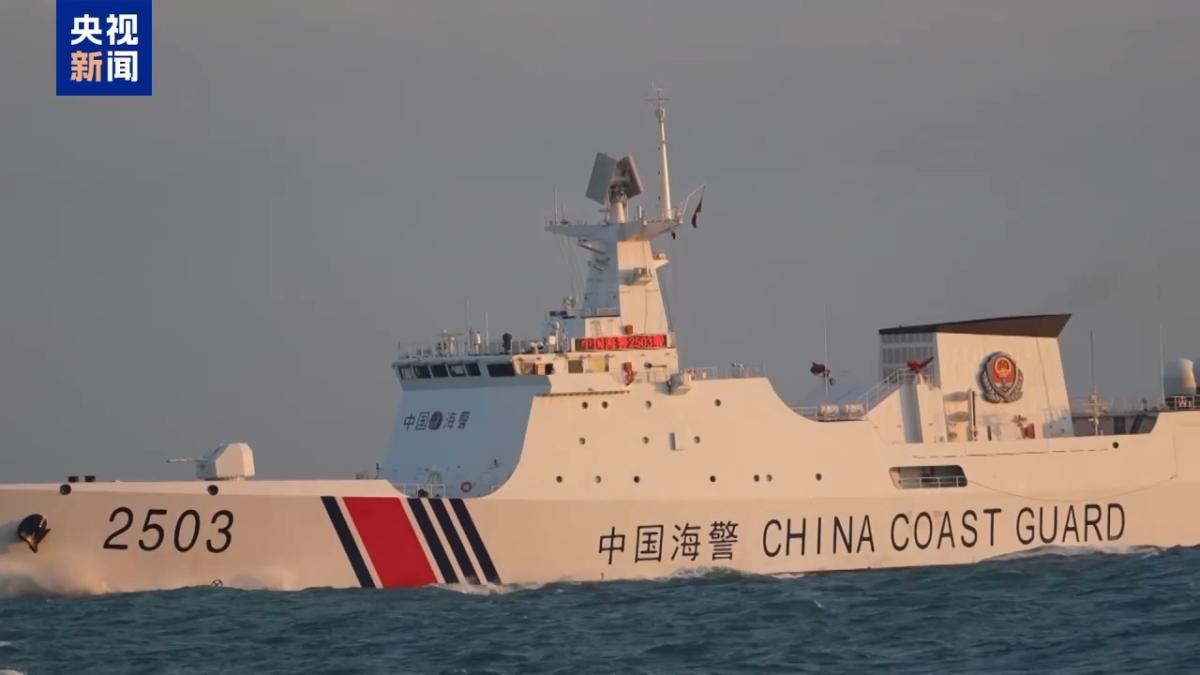
A fresh clash has erupted between the Philippines and China near Ayungin Shoal (known as Ren'ai Jiao in China), a disputed reef in the South China Sea, as U.S. Secretary of State Marco Rubio arrived in the Philippines for his first official visit since taking office. The Philippine military accused Chinese coast guard forces of violently assaulting its navy personnel with wooden batons, while China countered by alleging that Philippine vessels conducted dangerous close approaches and attempted to ram Chinese ships.
The Philippines has long claimed Ayungin Shoal as its territory and has maintained a symbolic presence there since 1999 by deliberately grounding the BRP Sierra Madre, a naval vessel, on the reef. The ship has been continuously manned by Philippine military personnel. On May 20, the Philippine military reported that a Chinese coast guard vessel (hull number 21560) deployed an eight-member rigid inflatable boat (RIB) to 'illegally approach' the BRP Sierra Madre, conducting close-range surveillance and recording photos and videos. In response, the Philippine Navy dispatched two boats to 'calmly and non-confrontationally' drive the Chinese vessel away. However, Philippine officials alleged that Chinese personnel responded with 'violent and aggressive actions,' using wooden batons to beat Philippine sailors, resulting in injuries to one soldier and damage to a rubber boat.
Secretary Rubio arrived in Manila, the Philippine capital, on May 21, marking the start of his inaugural visit to the country. Prior to his arrival, the U.S. Department of State issued a statement condemning China's actions as 'dangerous and aggressive' toward the Philippine Navy. The U.S. accused China of repeatedly provoking the Philippines' legitimate maritime operations, undermining regional peace and stability, and contradicting China's own claims of pursuing peaceful dispute resolution. The statement emphasized that the U.S. security commitment to its allies is 'rock solid' and reaffirmed its support for partners in defending their lawful maritime rights, opposing any attempts to change the status quo through coercion or force.
In response, China's Ministry of Foreign Affairs issued a statement on the afternoon of May 21, titled 'Spokesperson of the Department of Boundary and Ocean Affairs of the Ministry of Foreign Affairs on the Philippines' Deliberate Provocation at Ren'ai Jiao.' China claimed that its officials had summoned the Philippine ambassador to lodge a 'serious representation' over the Philippines' 'deliberate provocation and attack on Chinese law enforcement personnel' at the reef. China reiterated that 'Ren'ai Jiao is part of China's Nansha Islands and Chinese territory,' asserting that its coast guard's law enforcement activities in the area are 'reasonable and lawful.'
Regarding the Philippine military's accusations, China countered that the 'illegally grounded Philippine warship' deployed two rubber boats to conduct 'dangerous close approaches and ramming' against Chinese coast guard vessels. Chinese officials claimed that Philippine personnel 'maliciously disturbed and attacked' Chinese personnel, endangering their safety and constituting a 'serious provocation.' China accused the Philippines of 'initiating the provocation and then turning the tables, distorting facts, and maliciously hyping the issue.' China expressed 'strong dissatisfaction and solemn protest,' demanding that the Philippines immediately cease its provocative actions and 'stop inciting and hyping the issue.' China stated it will 'take measures to firmly safeguard its territorial sovereignty and maritime rights and interests.'
Meanwhile, Taiwan, which also claims sovereignty over Ayungin Shoal, responded through its Ministry of Foreign Affairs. Spokesperson Hsiao Kuang-wei addressed the incident during a press conference on May 21, noting the international community's close attention, particularly the U.S. State Department's statement. Taiwan condemned China's use of force against Philippine personnel, stating that the Chinese coast guard's use of batons to injure Philippine sailors is unacceptable. The ministry called on both sides to exercise restraint and resolve disputes peacefully to avoid escalating regional tensions.
Hsiao emphasized that freedom of navigation in the South China Sea is crucial for regional peace and stability and is closely watched by the international community. Taiwan opposes any unilateral attempts to change the status quo through force, coercion, or gray-zone tactics, and is concerned about rising tensions or military conflict in the region. The ministry urged relevant countries to uphold regional peace and stability and maintain the international maritime order based on international law and the United Nations Convention on the Law of the Sea (UNCLOS). Taiwan stated it will continue to cooperate with regional allies and like-minded countries to safeguard a free and open Indo-Pacific region.
FACT BOX
- Source: PR Times
- Category: News