Tensions in the U.S.-Iran conflict continue to escalate, as Iran-backed Yemeni rebels, the Houthis (also known as the 'Ansar Allah' movement), announced on the 20th a 'maritime blockade' against Saudi Arabia. Reuters reports that this move not only opens a new front in the U.S.-Iran war but also intensifies threats to global energy supply and trade. On the same day, U.S. officials told The Wall Street Journal that Iranian missiles struck a U.S. military base barracks in Jordan last week, killing two American soldiers, with a third body awaiting identification. President Trump ordered military retaliation, vowing that Tehran would 'pay many times over for this.'
According to Reuters, the Houthis issued a statement declaring an immediate maritime blockade against the 'criminal Saudi enemies,' emphasizing that the action follows the principle of 'an eye for an eye' in retaliation for Saudi Arabia's 'unjust and oppressive siege' of Yemen. Reuters notes that Iran has previously pressured the Houthis to cooperate in blocking the Bab el-Mandeb Strait, the gateway to the Red Sea. In response, the Saudi-led multinational coalition issued a statement vowing to respond with force and launching a convoy protection mechanism to ensure the safety of Saudi oil tankers transiting the Bab el-Mandeb Strait.
Reuters analysis indicates that with the Strait of Hormuz already under de facto Iranian blockade—causing a 10% drop in global oil supply—if shipping through the Bab el-Mandeb Strait is completely severed, global oil supply could decrease by another 7%. This would mean the blockade of the vast majority of Saudi Arabia's oil exports, delivering a devastating blow to the global energy market. Following the news, insurance premiums for Red Sea shipping surged, and international oil prices fluctuated sharply.
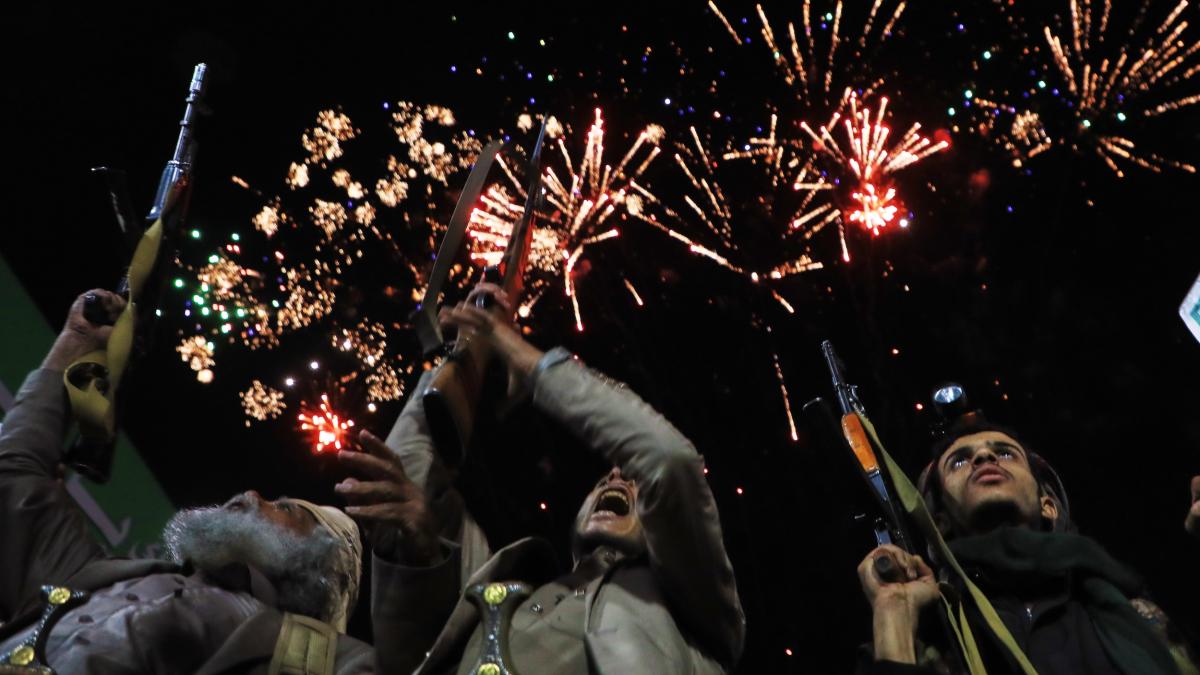
On July 17, 2026, Houthi supporters held a rally in Sanaa, Yemen's capital, protesting the Saudi-led coalition. Banners in Arabic read: 'All Saudi oil facilities are targets for our missiles and drones.' (AP)
U.S. Military Base in Jordan Attacked During Sleep
The Wall Street Journal, citing several U.S. officials, exclusively reported that Iran launched ballistic missiles last week at the Muwaffaq Salti Air Base in Jordan, successfully penetrating U.S. air defenses and directly hitting a 'container-style modular barracks' where soldiers were sleeping. The Journal analyzes that Iran's military has recently adjusted its missile tactics—its ballistic missiles not only fly at extremely high speeds but also possess maneuverable trajectory capabilities during atmospheric re-entry, posing a severe air defense challenge to the 50,000 U.S. troops deployed in the Middle East.
U.S. soldier killed in Jordan, 19-year-old Isabella Gonzales. (AP)
U.S. soldier killed in Jordan, First Lt. Tyler Feehan. (AP)
The Wall Street Journal reports that the U.S. military base in Jordan was attacked in three waves within 24 hours. The first wave saw missile debris hit the base gym, triggering air raid alarms and prompting soldiers to rush to underground bunkers. Several personnel were injured, but there were no fatalities. A few hours later, alarms sounded again, and this time the incoming missile struck an unoccupied aircraft hangar. The most severe blow came in the third wave, when an Iranian missile directly hit the container barracks of the Army's air defense missile unit, where many soldiers were asleep. First Lt. Tyler J. Feehan from Hawaii and Pvt. Isabella Gonzales from Texas were confirmed killed, and a third body is still undergoing DNA identification.
Pentagon spokesperson Sean Parnell stated that nearly 100 U.S. service members have been injured since July 7, with 96% having returned to duty, mostly suffering from mild concussions. Since the U.S. and Iran began hostilities on February 28, a total of 17 U.S. troops have died due to enemy actions or accidents, with one classified as missing in action (MIA). However, U.S. officials emphasized that there is currently no evidence Iran deliberately targeted the U.S. barracks. U.S. Secretary of State Marco Rubio admitted, 'There was indeed a missile that penetrated our air defense. We intercepted the vast majority, but one slipped through and hit the wrong location. This is truly heartbreaking.'
Trump Vows 'Double Retribution' as 10-Day Ceasefire Mediation Efforts Surface
With U.S. casualties rising rapidly, political pressure within the United States is intensifying. President Trump posted a warning: 'For every American soldier Iran kills, they will pay many times over! This order has been issued to the Secretary of War (Defense Secretary) Pete Hegseth, Joint Chiefs of Staff Chairman Daniel Caine, and every U.S. military commander.' U.S. Central Command (CENTCOM) promptly announced a new round of large-scale strikes against Iran, aiming to further weaken Iran's ability to threaten navigation safety in the Strait of Hormuz.
Despite the spreading conflict, diplomatic negotiations between the U.S. and Iran have not completely ceased. Reuters, citing senior Iranian officials, reports that intermediaries have submitted a 10-day ceasefire proposal to Tehran, attempting to salvage a nearly collapsed interim ceasefire memorandum. Sources within the Pakistani government also confirmed that Iran's Interior Minister Eskandar Momeni has arrived in Islamabad, requesting Pakistan to resume mediation. However, Iran's Supreme Leader Mojtaba Khamenei issued a stern warning: if the U.S. continues its airstrikes, it will face a 'lesson it will never forget.'
FACT BOX
- Source: PR Times
- Category: News