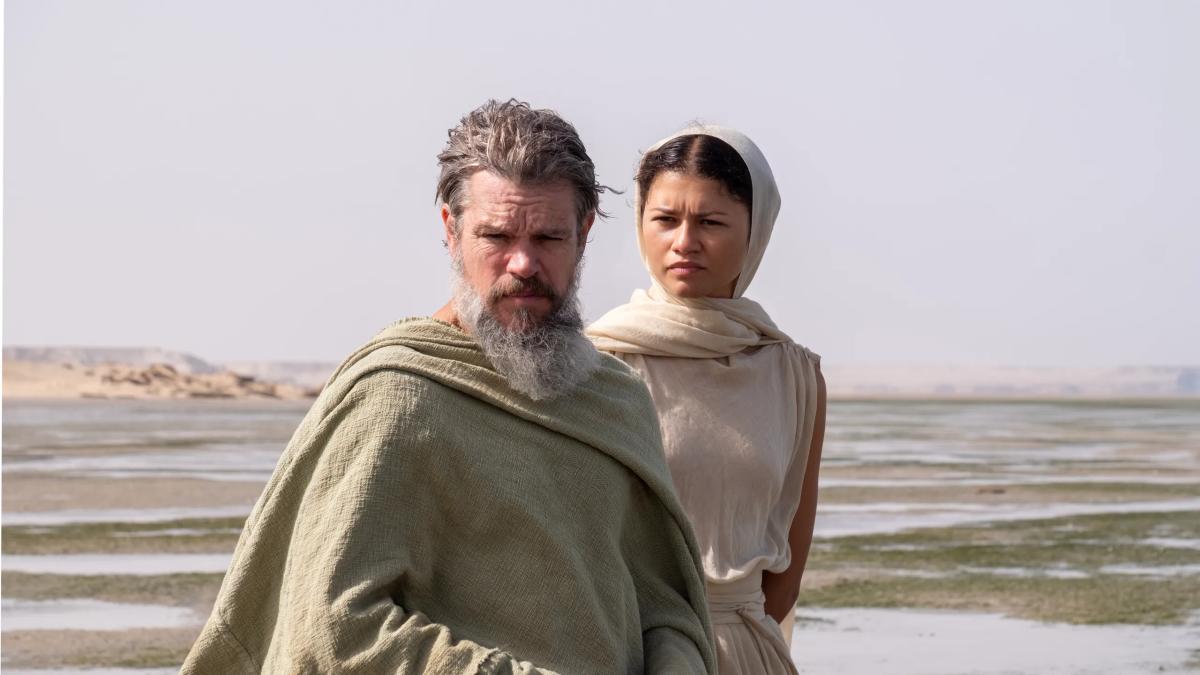
Emily Wilson, a professor of classical literature and Greek translator, has expressed dissatisfaction with director Christopher Nolan's film adaptation of 'The Odyssey.' Despite the movie earning over $260 million globally in its opening weekend and receiving widespread critical acclaim, Wilson argues that Nolan's attempt to include too many elements has undermined several core themes of the original epic poem. Wilson previously translated 'The Odyssey' into English—the first female translator to do so—and Nolan has acknowledged in interviews that his screenplay was heavily influenced by Wilson's English version. In an interview with the Associated Press, Wilson welcomed the renewed public interest in 'The Odyssey' sparked by the film but criticized Nolan's adaptation choices. Her 2017 English translation of 'The Odyssey' has risen to the top five on Amazon due to the film's popularity, yet this has not alleviated her concerns about certain narrative decisions. One of Wilson's primary criticisms is the omission of Zeus and Poseidon, two pivotal Greek gods in the original text. She argues that removing these deities significantly weakens the poem's central themes of divine-human interaction and fate. As a professor of classical studies at the University of Pennsylvania, Wilson further notes that the film's simultaneous condemnation of war and physical cowardice presents an inconsistent and contradictory message. Wilson emphasizes that she does not wish to appear overly critical or self-important, but she believes Penelope's character has been greatly diminished, making the marital relationship feel unconvincing to audiences. She also criticizes the scenes involving Odysseus's loyal dog, Argos, as overly sentimental and designed to appeal to modern emotional sensibilities. 'Everyone is powerless against the charm of dogs,' she joked. When asked by the Associated Press to rate or rank Nolan's 'Odyssey,' Wilson declined to give a specific score but recommended audiences watch it in theaters. She shared her experience of watching the film with her children on the big screen, describing it as highly enjoyable and immersive, and stressed: 'If you have the chance to see it on the big screen, it's absolutely worth it.' Other classical scholars have also raised concerns. Daniel Mendelsohn, a renowned author, translator, and critic, published an analysis in 'The New York Review of Books,' praising Nolan's narrative techniques and visual style while criticizing his excessive focus on creating a 'Christopher Nolan-style film,' which led to inappropriate omissions and alterations in interpreting Homer's original work. Mendelsohn argues that Nolan has completely reshaped Odysseus into a hero that fits his personal cinematic style, 'imposing values entirely alien to Homer's original text onto the adventure narrative.' He criticizes the film's Odysseus as lacking intelligence, humor, and cunning charm. The famous 'Nobody' wordplay scene, where Odysseus tricks the Cyclops, is reduced in the film to a straightforward action sequence of blinding the giant, losing the wit and tension of the original poem. Mendelsohn further analyzes that this tormented, guilt-ridden, humorless, and uncharismatic Odysseus bears a strong resemblance to protagonists in Nolan's previous films—such as the amnesiac man in 'Memento,' Batman, and Oppenheimer—all characters deeply haunted by their pasts. Another writer, Gareth Hinds, shares similar views. He argues that Nolan has transformed the original 'cunning trickster and eloquent speaker' into an apparently upright 'ordinary man' who engages in troubling behaviors under certain circumstances. Hinds questions how much a protagonist can be altered before the essence of the story is fundamentally changed. He suggests this is one of many intriguing questions Nolan leaves for audiences to ponder.
FACT BOX
- Source: PR Times
- Category: News