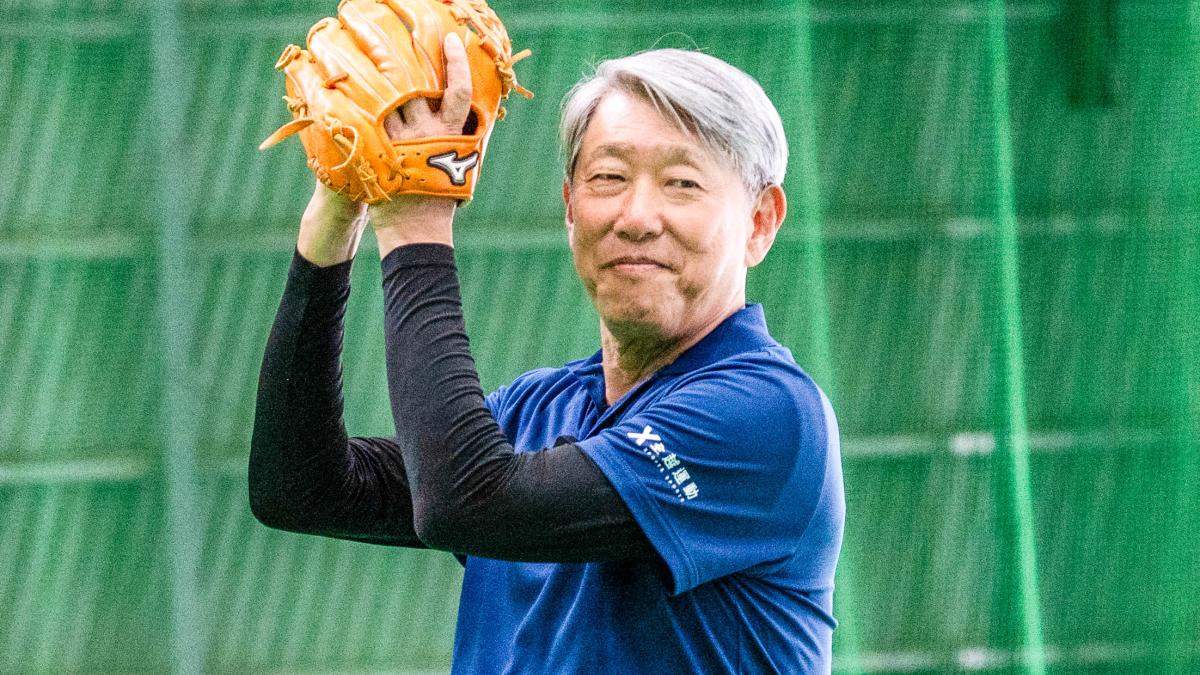
As Taiwan baseball stands on the world championship stage, the next question is not just how to win again, but how to transform a single success into long-term national competitiveness. Former Minister of Economic Affairs and founder of Tchao Yueh Group, Kuo Chih-hui, has announced his candidacy for the 14th President of the Chinese Taipei Baseball Association. Transitioning from the tech industry into baseball governance, he proposes not a single tournament goal, but a comprehensive reform vision covering grassroots development, sports science, player care, national team logistics, and international exchange.
Kuo believes Taiwan has never lacked passionate baseball fans or talented players and coaches. What truly needs strengthening is the integration of fragmented resources across schools, corporations, associations, and the national team into a stable, continuously improving support system.
An entrepreneur entering baseball does not mean directing professionals, but building platforms. Having previously served as Vice President of the Baseball Association and supported a corporate amateur baseball team since 2011, Kuo has continuously invested in grassroots baseball, player development, and sports science. He admits that entrepreneurs entering baseball do not aim to replace coaches or interfere with technical decisions. Instead, business operators can act as resource integrators, establishing clearer organizational divisions, talent systems, and decision-making processes, allowing true baseball experts to focus on their specialties.
In his vision, the Baseball Association should not merely be an administrative body organizing events and assembling national teams, but a platform connecting coaches, players, umpires, trainers, sports science teams, and international resources. This implies that the national team should not be assembled temporarily before major tournaments, but should establish permanent mechanisms for intelligence gathering, training, medical care, and logistical support, ensuring that each international competition’s experience becomes the foundation for the next preparation.
Coming from the tech industry, Kuo emphasizes the application of sports science in grassroots baseball. Using radar, optical tracking, and force measurement devices, coaches can monitor ball speed, spin rate, exit velocity, muscle strength, and fatigue levels, allowing for adjustments in training content and load. He stresses that data does not replace coaches, but helps them see risks and changes previously difficult to observe.
For example, at Kuo’s long-term partner Kuo Pao Senior High School, seven pitchers exceeded 145 km/h last year. More importantly, unexpected injuries significantly decreased. Kuo believes the true value of sports science is not just making players stronger, but enabling them to become stronger while staying healthy. If a young player prematurely wears down their body chasing short-term results, even outstanding performances do not signify a successful development system.
During the Premier12 championship, Chao Yuet Investment’s Zhuo Jian Sports Data Team participated in intelligence analysis, using game data and player performance to assist the coaching staff in strategy formulation. This experience shows that modern baseball victories are no longer determined solely on the field, but also by information integration and scientific decision-making capabilities.
Kuo states that, if given the opportunity to serve as association president, he will leverage his experience in resource integration and institutional governance to promote grassroots development, permanent national team support, and international exchange, transforming championship experiences into cumulative, inheritable capabilities.
Kuo proposes three reform directions: strengthening grassroots development and expanding sports science application, establishing permanent national team support systems, and deepening international exchange and talent development.
Regarding grassroots development, he advocates revitalizing local baseball training bases, enhancing training, sports science, and international exchange functions, while establishing continuing education and certification systems for coaches, umpires, and trainers. Additionally, Taiwan needs to gradually build a digital player database to record players’ training, health, and development histories long-term. This is not merely data accumulation, but the creation of a talent management mechanism spanning school, amateur, and professional stages.
For Kuo, baseball reform must not only focus on star players but also recognize the entire talent chain supporting the game. When coaches can continuously upgrade their skills, umpire systems become more professional, and support staff receive adequate resources, players can grow in a safer and more stable environment.
The goal is to transform championship wins from surprises into institutional capabilities. The Premier12 victory reminded the world of Taiwan’s baseball energy. However, Kuo believes what should remain is not just championship memories, but a retrospective analysis of what Taiwan did right. Which training methods were effective? Which intelligence influenced decisions? Which logistical resources helped players perform? These experiences should be documented, recorded, and institutionalized, not lost after the tournament ends.
He states that passion can initiate action, but only systems can sustain success. The business management principles of process, talent, and organizational capability are equally critical in baseball governance.
Kuo hopes to bring an entrepreneur’s unique perspective to build a more comprehensive platform for Taiwan baseball. When winning championships is no longer an occasional peak but a replicable, accumulative, and inheritable capability, Taiwan baseball will truly possess the foundation to compete globally in the long term.
FACT BOX
- Source: PR Times
- Category: 人事