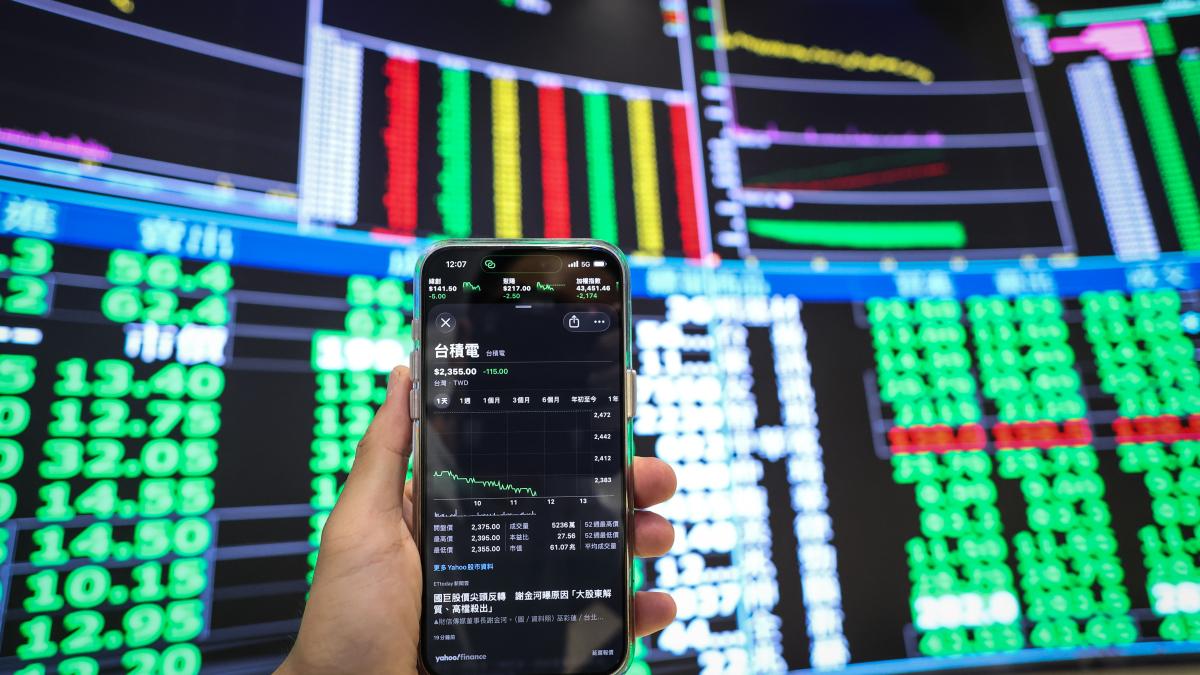
Driven by tech giants like Samsung Electronics and SK Hynix, South Korea's semiconductor stocks surged recently, sparking a nationwide 'stock trading craze' where many individuals rushed into the market hoping to achieve financial success. A 24-year-old South Korean male college student, leveraging 5x, briefly turned his capital into 15 times its original value, watching nearly 300 million KRW (approximately 6.55 million TWD) in stock profits vanish within just four weeks. Yet, he insists that once funds are secured, he will borrow again to return to the market.
One Button, 5x Leverage: 20 Million KRW Turns Into 300 Million KRW
According to Reuters, 24-year-old Lee Seung-ho, a student at a Seoul university, used 20 million KRW (approximately 430,000 TWD) saved during his mandatory military service. With just one tap on a trading app, he activated 5x leverage, briefly increasing his capital 15-fold, with stock gains nearing 300 million KRW. The simplicity of this operation is precisely what makes such trading platforms attractive to young people in South Korea.
To reward active investors like Lee, trading platforms even offer VIP incentives. Due to his high trading activity, he received a premium bottle of whiskey. These incentives further fuel investor engagement, making leveraged borrowing appear not as a risky behavior, but as an encouraged rational choice.
Account Falls Below Principal in Just Four Weeks: 'I Couldn't Breathe'
However, sharp volatility in the South Korean stock market triggered a chain of margin calls and forced liquidations by brokers. Lee's accumulated profits vanished instantly. Within weeks, his account balance even dropped below his initial investment, causing him to say, 'I truly couldn't breathe at one point.'
Nevertheless, Lee stated he fully understands the risks of high leverage but sees it as the fastest way to accumulate wealth. He said he will continue using margin leverage once funds are available.
Lee's ability to access up to 500% margin leverage, and the resulting rollercoaster investment experience, highlights the risks behind South Korea's retail investors' heavy reliance on leveraged trading. This trend has prompted regulators to repeatedly issue warnings, attempting to curb what they see as an increasingly dangerous speculative frenzy.
Housing Prices Equal 14 Years of Salary: The Only Option for Youth
For many young South Koreans, chasing high leverage isn't just an investment preference—it's a necessity driven by harsh reality. The average apartment price in Seoul is equivalent to about 14 years of salary, leading many recent graduates to believe that traditional wealth accumulation is nearly hopeless. High-leverage stock trading apps have become their only tool with a chance to turn their lives around.
Lee's ultimate dream is to buy a home in Seoul, ideally before marriage, and to eventually have one son and one daughter. 'Stocks are inherently volatile assets,' he said. 'But as long as the market moves upward, there's a chance to rapidly accumulate wealth. With 5x leverage, the speed of wealth accumulation can be five times faster than others.'
According to statistics from the Korea Financial Investment Association, margin trading balances in the domestic stock market reached a record high of 38.63 trillion KRW on June 24. Although the balance dropped to 34.37 trillion KRW by July 15, it remains at a high level.
Meanwhile, data from the Bank of Korea, which includes other forms of borrowing, shows that investors' total debt surpassed 60 trillion KRW for the first time as of the end of May. At that time, the South Korean stock market, valued at approximately $4.1 trillion, had become one of the hottest and most volatile markets globally.
To cool the market, South Korean regulators announced on the 17th a ban on launching new leveraged ETFs linked to individual stocks. This emergency brake came just two months after regulators had approved such products. The head of the Financial Services Commission admitted the initial approval decision was too hasty, and this ban can be seen as a correction of past policy mistakes.
Lee often compares investing to poker: 'If you go all-in every hand, you'll eventually lose. But if you have enough discipline to only bet when the odds are clearly in your favor, it's not so easy to be completely wiped out by the market.'
FACT BOX
- Source: PR Times
- Category: News