For a long time, listing in the United States has been seen as the rite of passage and ultimate destination for Asian high-tech startups. From early pioneers like Alibaba and Baidu to recent EV startups, Nasdaq and the New York Stock Exchange have attracted countless Asian entrepreneurs with their vast capital pools, high liquidity, and tolerance for unprofitable companies. However, as geopolitical tensions intensify, cross-border regulations tighten, and domestic capital market reforms advance across Asia, this trend is fundamentally reversing. Asian startups are moving beyond a singular American dream, rooting themselves in local markets, and launching a vigorous home-court movement.
1. Revival of the Primary Market Asia's primary market is gradually recovering. In the first half of this year, the Hong Kong Stock Exchange saw 87 companies go public, raising approximately HK$210.2 billion (about USD 26.8 billion)—a 92% increase from HK$109.4 billion in the same period last year, marking the strongest performance in the past five years. Meanwhile, the A-share market recorded 79 IPOs in the first half of 2026, raising RMB 100.5 billion (about USD 14 billion), an 87% year-on-year growth. Taiwan saw 12 new IPOs this year, showcasing the capital absorption capacity of its semiconductor and tech hardware supply chain. Malaysia followed with nine listings, and Singapore with seven. This indicates that Asia’s capital markets are not dominated by a single exchange but are flourishing diversely.
2. Policy and Institutional Innovation Taiwan’s Financial Supervisory Commission (FSC) Chairperson Peng Jin-long has repeatedly emphasized the need for innovative thinking in Taiwan’s capital markets, breaking free from traditional financial metrics to create a flexible financing environment for high-growth, asset-light startups. He further proposed building an “Asian Nasdaq” platform, adjusting fundraising systems specifically for high-tech startups to attract both domestic and international ventures to list in Taiwan. In October 2025, the FSC launched the Asia Innovation Fundraising Platform to integrate market resources and optimize dual fundraising channels for equity and debt, symbolizing Taiwan’s proactive outreach to welcome quality overseas startups and enterprises to list locally. This top-down reform is evident across Asia: China has implemented a registration-based system, returning review and pricing power to the market; Hong Kong has relaxed listing thresholds for unprofitable biotech firms, dual-class share structures, and specialized tech enterprises. The collective shift by regulators shows that the future competitiveness of capital markets lies in institutional inclusivity and innovation-friendliness.
3. Competition Among Startup-Focused Market Segments Exchanges across the region are establishing dedicated boards for startups and high-tech firms, creating a fertile institutional ground for Asia’s tech startups to thrive. China’s STAR Market focuses on hard tech, nurturing representative companies like Unitree Technology (humanoid robots) and ChangXin Memory Devices (DRAM leader), both of which have achieved technological breakthroughs and large-scale commercialization through financing platforms. Taiwan’s exchange is promoting the Taiwan Innovation Board, relaxing profit requirements and introducing a qualified investor system to cultivate hard-tech and green energy startups with key technologies. Although Hong Kong abolished its Growth Enterprise Market (GEM), Chapters 18A and 18C serve a similar function, becoming a vital funding source for unprofitable biotech firms.
4. Five Key High-Tech Sectors The technological strength of Asian startups is evident in five key sectors. In semiconductors and chips, companies like ChangXin, Wangsi, and Yingwei benefit from the global surge in computing demand, making this a solid safe haven for capital. In artificial intelligence, firms like Zhipu AI and SenseTime represent high-valuation, high-growth sectors, though market sensitivity to commercialization paths leads to volatile valuations. Biotech and healthcare heavily depend on regulatory inclusivity—such as Hong Kong’s Chapter 18A—which provides a lifeline for clinical trial financing. Fintech, represented by digital payments and pure online banks, is supported by demographic dividends. Robotics and smart manufacturing, exemplified by Unitree’s supply chain, combine AI algorithms with hardware capabilities, offering solutions for manufacturing upgrades.
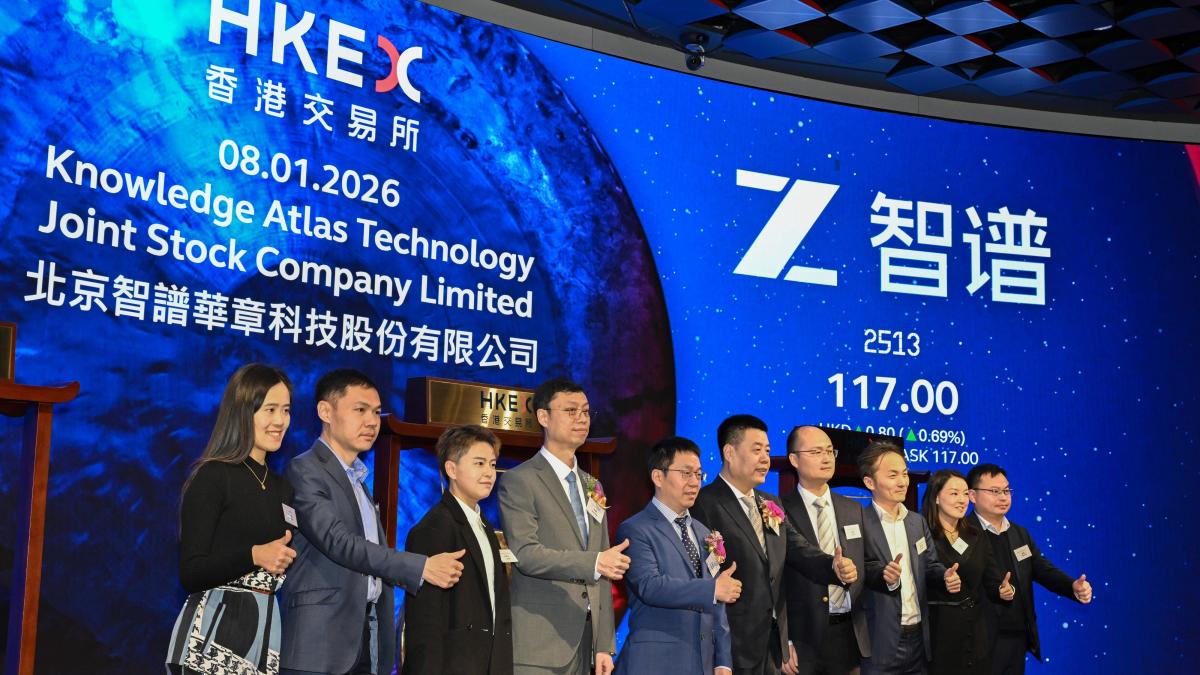
5. Capital Frenzy in the Secondary Market The real test begins once startups enter the secondary market. The commercialization of China’s large language models has become a focal point, with Zhipu (02513.HK)—the world’s first large model IPO—being the most representative. Zhipu listed in January at HK$116.2, with an initial market cap of about HK$57.9 billion. As of July 8 closing, its share price reached HK$1,834, with a total market cap of HK$817.676 billion (about USD 104 billion), more than 13 times its initial value, briefly surpassing HK$1 trillion on June 22. Hong Kong-listed companies’ stock performance this year shows high divergence: as of June 24, the average gain since listing is about 93%, but the median is only around 38%, indicating that a few companies like Zhipu with technological scarcity are significantly pulling up the average. Capital is highly concentrated in core sectors like AI and semiconductors. Taiwan’s secondary market focuses on silicon photonics and optical communication, as AI server transmission faces physical bottlenecks with copper wires. The shift to photon-based transmission is widely seen as the future, and related optical communication modules and packaging/testing firms are receiving high valuation premiums.
6. Magnetic Pull of Local Markets Asian startups are no longer prioritizing US listings, primarily for two reasons: first, the U.S. Holding Foreign Companies Accountable Act (HFCAA) creates audit and compliance uncertainties for Chinese firms, increasing the hidden costs of U.S. listings; second, the magnetic pull of local markets has strengthened. With the introduction of the STAR Market, Hong Kong’s Chapter 18C, and Taiwan’s Innovation Board, companies can now access abundant capital at home, along with better brand exposure and industrial synergy. South Korea and Japan are also actively reforming—South Korea has relaxed tech listing standards to retain domestic unicorns, while Japan has built the Tokyo Exchange Growth market to align with international standards. This establishment of home-court advantage marks a historic sign of Asia’s financial markets maturing.
7. Large Enterprises Have Not Yet Left the U.S. Notably, this trend of “bidding farewell to the American dream” mainly applies to startups and growth-stage firms. Large enterprises with scale and brand advantages continue to raise capital through U.S. markets. SK hynix listed on Nasdaq via ADR on July 10, 2026, under stock code SKHY, issuing 177.9 million ADRs at USD 149 per share, raising about USD 26.5 billion—the third-largest foreign IPO in U.S. history, behind only SpaceX and Saudi Aramco. This deal shows that U.S. capital markets still hold strong appeal for mature firms with scale and liquidity advantages. The localization trend more accurately reflects a shift by startups and SMEs toward Asian markets, not a full-scale exit by large enterprises from U.S. listings.
8. Conclusion: A Shared Destiny Three future trends emerge: First, Asia’s capital landscape is moving toward multipolarity. Instead of a single-exchange dominance, regional financial hubs like Hong Kong, Taiwan, Shenzhen, Shanghai, Tokyo, and Seoul will play complementary roles based on their industrial strengths, forming a mutually reinforcing network. Second, governments, pension funds, and sovereign wealth funds will act as “patient capital,” deeply integrating with local capital markets to provide five- to ten-year financing support, helping startups cross the “valley of death.” Third, innovation ecosystems and stock market performance will form a virtuous cycle: market prosperity provides ample exit routes, attracting more top talent and angel funding into frontier R&D, continuously feeding high-quality projects into the primary market. This local home-court movement—de-Americanization, multipolarity, and technological innovation—is fundamentally reshaping the DNA of Asia’s capital markets. This is not just a shift in financing channels, but a profound transformation in which Asia’s high-tech industries seize financial sovereignty. The future of Asian startups will be defined by Asia’s own capital markets.
*The author is CEO of BlueStone Asia, Founding Chairman of the Taiwan M&A & Private Equity Association, and Policy Advisor to Xinyou Association. This article is provided by Xinyou Association and authorized for publication.
FACT BOX
- Source: PR Times
- Category: News