With summer vacation in full swing, travel and overseas adventures are in high demand, making swimming, diving, and mountain climbing popular outdoor activities. However, according to national health survey statistics, over 80% of adults suffer from vision problems, with myopia and astigmatism rates remaining high. While enjoying the summer, many endure the inconvenience of glasses and contact lenses, especially in extreme environments such as underwater, low temperatures, or overseas, where fogging, dryness, lens displacement, and even accidental damage to glasses can lead to distressing situations with no immediate solutions.
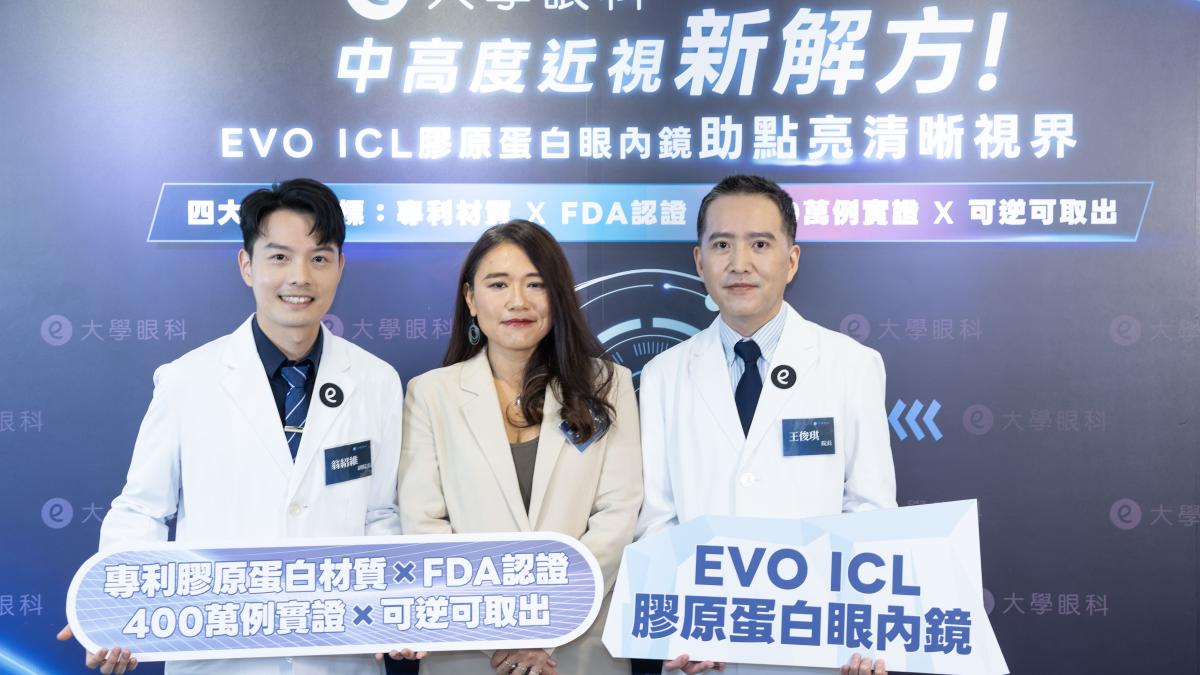
To meet the public's growing demand for high-quality vision, University Eye Clinic held a media briefing on July 22, introducing a next-generation minimally invasive vision correction solution for individuals with moderate to high myopia and those working in extreme conditions. Dr. Wang Junqi, Chief Medical Officer of University Eye Clinic, noted that clinical observations show a significant increase in people's expectations for visual clarity and long-term safety. The EVO ICL Collamer Intraocular Lens (implantable contact lens), which centers on preserving the cornea's structural integrity, uses a minimally invasive 'additive' principle, offering a new option for those unsuitable for laser surgery, suffering from dry eyes, or with moderate to high myopia.
Ms. Yu, who holds a master's degree in marine biology, has long been engaged in diving instruction, underwater photography, coral reef surveys, and polar expeditions. Her work environment spans underwater, on boats, and in cold regions, demanding extremely high visual clarity and stability. Before surgery, both of her eyes had over 1000 degrees of myopia and high astigmatism, requiring specially customized glasses and contact lenses. On her first day working in Antarctica last year, she accidentally hit a glass door, breaking her glasses. Subsequent attempts to replace her glasses and contact lenses overseas were repeatedly thwarted, prompting her to seriously consider the risks of high myopia in extreme environments. After returning to Taiwan, she underwent a comprehensive examination and chose the EVO ICL Collamer Intraocular Lens. Her post-surgery recovery has been excellent, and she now enjoys the convenience of no longer needing to search for glasses upon waking or being able to wear sunglasses immediately when going out.
Ms. Yu shared: 'My work environment is often in the ocean, polar regions, or on boats. Visual stability isn't just about convenience—it's a life-saving necessity. In the past, waking up in the middle of the night and not being able to find my glasses caused extreme anxiety. Now, I wake up without needing to look for glasses. Previously, in cold environments like Antarctica, my glasses would fog up due to temperature differences when moving between indoors and outdoors, and anti-fog products were ineffective. Now, without glasses, I can see clearly and effortlessly, and I can just put on stylish sunglasses when going out, without the discomfort of dry contact lenses. This sense of freedom is indescribable.' Excited about her upcoming return to polar missions at the end of August, she couldn't hide her enthusiasm.
Dr. Wang Junqi,院长 of University Eye Clinic, pointed out that recent clinical observations show a shift in lifestyle has made high-definition, long-term safe, and comfortable vision a key demand. The EVO ICL, designed around the principle of 'preserving corneal integrity,' uses an additive correction method suitable for patients with myopia ranging from 300 to 2000 degrees and astigmatism up to 400 degrees. For those with limited corneal conditions or those prioritizing long-term eye health planning, EVO ICL—preserving the original corneal structure—has become a highly forward-looking technological choice in clinical practice.
As the global population ages and lifestyles evolve, with increasing dependence on digital screens, active social lives, and enthusiasm for sports—from summer swimming and diving to winter mountain climbing and hot spring tourism—the demand for high-quality, clear vision is not decreasing but rising. In line with this global trend, the U.S. FDA officially announced in early 2026 that the upper age limit for EVO ICL eligibility would be significantly extended from the original 45 years to 60 years. This major breakthrough not only symbolizes that refractive correction technologies for myopia and astigmatism have officially entered the presbyopia era but also responds to the modern middle-aged and older population's pursuit of superior vision and quality of life, ushering in a new era of age-inclusive vision correction.
Beyond precise vision correction, Dr. Wang Junqi emphasized that for moderate to high myopia correction, factors such as the biocompatibility and long-term stability of the collagen material, as well as 'proven safety,' are crucial in determining postoperative quality of life. He urges the public, when evaluating the EVO ICL Collamer Intraocular Lens, to pay attention to four key indicators: '30-year patented collagen material,' 'U.S. FDA approval,' '4 million global safety cases,' and the 'reversible and removable' feature.
The EVO ICL uses Swiss-patented Collamer® polymer, which contains collagen, offering excellent flexibility and high hydrophilicity, with exceptional biocompatibility with ocular tissues. Additionally, the lens itself has superior UV protection, ensuring excellent visual quality and lifestyle convenience whether for prolonged outdoor use or digital living. Moreover, EVO ICL offers the 'reversible and removable' advantage of additive correction. Whether due to future age-related cataract surgery or other eye treatments, the lens can be completely removed. This unique and flexible feature provides a solid foundation for long-term, adaptable eye health planning in modern life.
Dr. Weng Shaowei, who has personally benefited from presbyopia and myopia laser correction, emphasized that with the U.S. FDA extending EVO ICL eligibility to age 60, this technology has become a new blessing for the presbyopia generation. For middle-aged patients dealing with myopia, astigmatism, and presbyopia simultaneously, 'customized eye planning' using monovision (Mono-vision) can be tailored to correct presbyopia, allowing the brain to fuse images for clear vision at both near and far distances. Dr. Weng noted that whether choosing laser surgery or EVO ICL, approximately 25 to 30 detailed preoperative examinations—including corneal topography and fundus examination—are essential. Only through precise instrument data and comprehensive evaluation of individual daily visual habits, refractive error levels, and innate corneal conditions can true 'personalized precision correction' be achieved, delivering the most suitable and safe customized solution.
Additionally, Dr. Weng reminded that proper postoperative care is key to preventing infection. Initially, patients must strictly follow medical instructions for eye drops, avoid rubbing their eyes, wear protective eyewear outdoors to shield against wind and dust, and be especially cautious during bathing or hair washing to prevent dirty water from entering the eyes. With the support of medical technology and careful personal care, individuals can safely and comfortably break free from the constraints of glasses and embrace a confident, clear, and vibrant life once again.
FACT BOX
- Source: PR Times
- Category: New Product