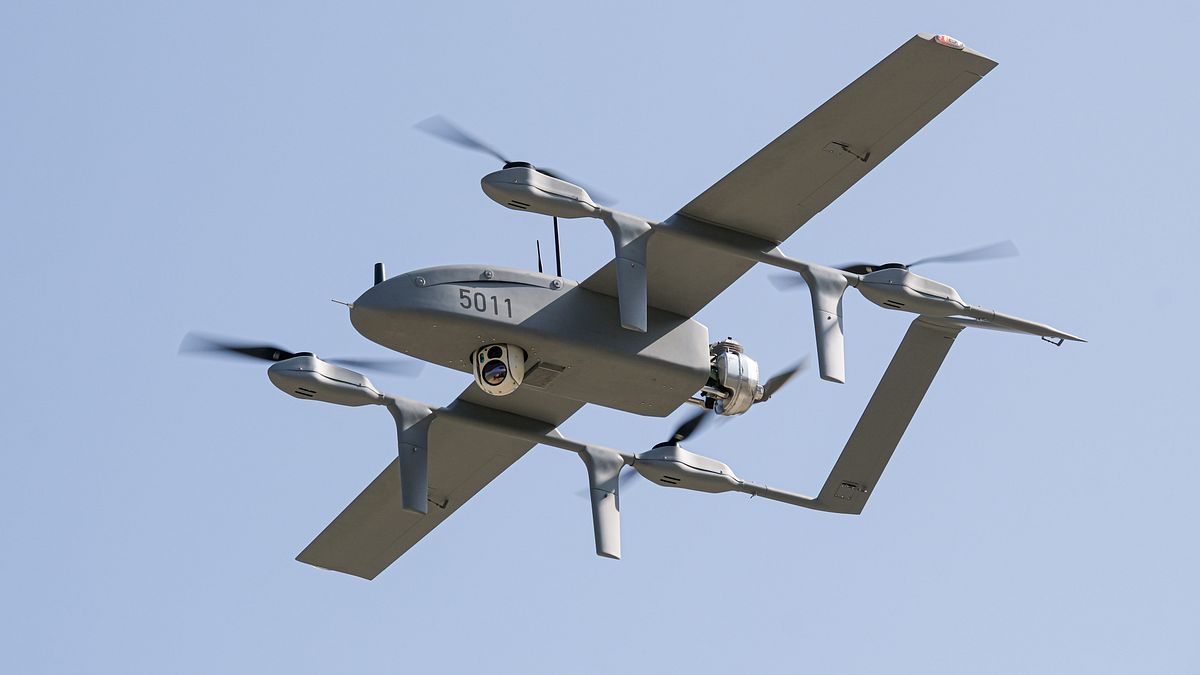
The Executive Yuan recently proposed a special drone procurement bill with a budget cap of 210 billion NTD, aiming to gradually acquire coastal surveillance drones, coastal attack drones, and small suicide unmanned boats. In response, Lu Te-yun, former inspector of Taiwan's Ministry of National Defense, questioned the plan on his personal YouTube channel on the 22nd, arguing that the Executive Yuan's drone budget focuses entirely on defensive systems, which might remain unused even if war breaks out. He emphasized that long-range drones capable of striking the mainland could deliver greater deterrence, forcing Beijing to reconsider military action, and enable immediate effective strikes in the event of conflict—better aligning with asymmetric defense strategies.
Lu pointed out that the special budget allocates 210 billion NTD for military use and 44.2 billion NTD for industrial applications. The plan aims to procure over 200,000 coastal surveillance drones, coastal attack drones, and 1,320 unmanned surface vehicles within five years, relying on non-red supply chains that exclude Chinese-made components to ensure Taiwan's independent production and maintenance capabilities.
Lu stressed that while drones are important, not all drones are useful for Taiwan. Given the rapid pace of technological advancement, drones could become obsolete by the time they are delivered. Taiwan must continuously adjust its drone requirements, tactics, and personnel training based on global trends and technological progress—each a challenging task.
He criticized the Executive Yuan's plan for concentrating solely on defensive drones limited to use within Taiwan. Long-range drones capable of striking the mainland offer far greater deterrence, compelling China to hesitate before launching an invasion. Once conflict erupts, such drones could deliver immediate and effective blows—precisely what asymmetric warfare demands. Allocating the entire budget to defensive drones is a fundamentally flawed strategy and may result in systems that never see combat.
Lu referenced the ongoing U.S.-Iran conflict since February, noting that despite Iran's naval and aerial blockade, it has sustained resistance through long-range drone attacks, earning international respect. Taiwan could similarly build a global image of effective self-defense through long-range drone strikes, gaining international sympathy and concrete military support, and even threatening the stability of the Chinese regime.
The key requirement for long-range drones, Lu explained, is low cost. Taiwan should immediately shift strategy and emulate Iran's low-cost 'Shahed' drone model, building a sustained counterattack capability capable of launching hundreds of saturation attacks to overwhelm and exhaust enemy air defense systems. This, he argued, is where resources should be invested.
FACT BOX
- Source: PR Times
- Category: News