The poisoned oil scandal has been unfolding for nearly a month now. What remains most puzzling is that the source and cause of the contaminated oil have yet to be clearly identified or explained to the public. Instead, the Lai administration has been busy shifting blame onto local governments. Without clarifying the origin and distribution chain of the tainted oil, how can responsibility be properly assigned? How can we prevent such toxic oil from re-entering the market or ending up in consumers’ stomachs?
Puzzle One: The Food and Drug Administration (FDA) is the primary regulatory body. Why, after such an extended investigation, has it failed to release a comprehensive report on the poisoned oil incident? This level of administrative inefficiency is either absurd or negligent. How can the Executive Yuan and the Ministry of Health and Welfare (MOHW) remain passive without demanding action? Likewise, given the magnitude of this food safety crisis and evident administrative failure, why have the Control Yuan members remained silent?
Puzzle Two: Scientific testing for benzopyrene is a critical quality control measure for edible oils. Manufacturers must, by FDA regulations, provide test results before shipment. When the midstream manufacturer Nanqiao detected abnormal benzopyrene levels and reported them to upstream supplier Zhonglian Oils, requesting a return, it revealed a serious quality control failure at Zhonglian. Zhonglian should have immediately initiated a full batch recall. Instead, it convened a quality assurance meeting with related manufacturers to discuss alternative handling methods, thereby missing the critical window to prevent the contaminated oil from spreading. This was undoubtedly the 'first cover-up.' Why did Zhonglian and other upstream suppliers act so brazenly, so boldly violating the fundamental principle of self-inspection and self-regulation among manufacturers? (Minister Shih Chong-liang stated that Zhonglian privately relaxed the thermal damage ratio standards for imported soybeans. Did Zhonglian report this to the FDA in advance? Is Minister Shih’s delayed explanation an attempt to shift blame—or something else?)
Puzzle Three: The draft resolution from the expert panel states that oil products with benzopyrene levels below 20% do not require removal from shelves. But if oil is poisoned, shouldn’t all batches be recalled and thoroughly inspected? Isn’t this the basic principle of zero tolerance for food safety? The experts’ decision only deepens public suspicion. Can consumers truly be assured that ingesting oil with up to 20% benzopyrene is safe? Can the experts themselves guarantee this? Rather than leaving consumers anxious, why not recall and destroy all affected products to genuinely uphold zero tolerance? Wouldn’t that be a more responsible approach for the government?
Puzzle Four: The tainted oil was produced, distributed, and sold from April to June. The Executive Yuan claims the issue surfaced at the end of June and was addressed on July 1. On July 3, Premier Cho directed that the matter be handled scientifically by an expert panel. After the panel met on July 4, the FDA conditionally released the names of downstream businesses, citing them as 'victims'—this was the 'second cover-up.' Had it not been for Taipei Mayor Chiang Wan-an and Taichung Mayor Lu Hsiu-yen demanding a full recall and opposing the cover-up, sparking greater public backlash, the Lai administration might never have realized the severity of the situation. It only then rushed to deny all allegations of cover-up. While expert opinions were used to justify policy decisions, why do consumers still feel uneasy?
Puzzle Five: Beyond the cover-up, why is the ruling party’s crisis management focused on shifting blame to local governments—especially those led by the opposition Kuomintang? The central government refuses to disclose the full truth, delays releasing a comprehensive report, and only selectively reveals partial product distribution data. Meanwhile, ruling party officials, spokespersons, and legislators make irresponsible statements, ignoring both the facts and public concerns, speaking as if solely for electoral gain. Do these candidates truly fail to understand the nationwide harm caused by poisoned oil? This is a national security crisis. Instead of initiating emergency response measures immediately, the ruling party allowed the crisis to escalate. Even more troubling, party leaders are pouring oil on the fire—what else could this be but exposing their own incompetence?
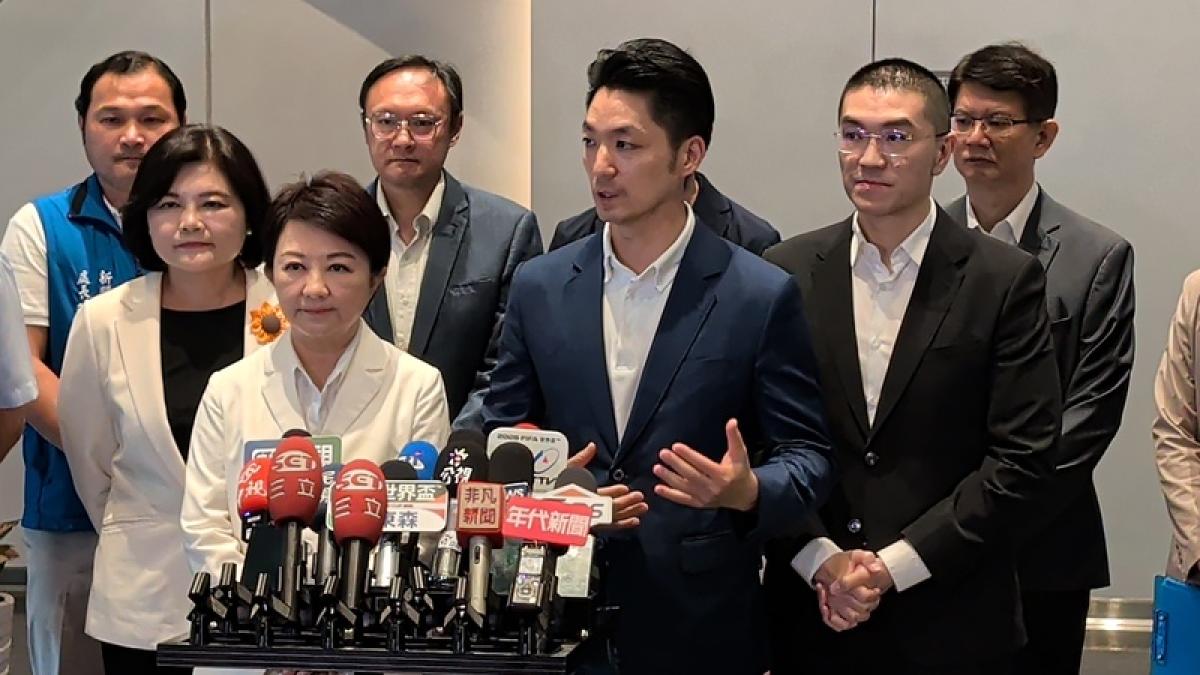
In contrast, local governments—especially Taipei and Taichung—saw mayors Chiang Wan-an and Lu Hsiu-yen immediately declare their commitment to 'protecting the people' upon the scandal’s outbreak. They firmly demanded that the Lai administration cease cover-ups and initiate a full recall of all contaminated oil products. Chiang Wan-an further called on citizens to join a protest on Ketagalan Boulevard on July 25 to protest the Lai administration’s unwillingness and inability to take responsibility. He urged the government to swiftly resolve the poisoned oil threat, restore the people’s right to food safety and quality of life, and pursue legal accountability—ensuring that responsible manufacturers face criminal charges and that officials bearing political responsibility resign.
The July 25 march on Ketagalan Boulevard is not about politics or elections. What the people want is a nation where they can eat safely. From cooking oil to apples, to pork and beef in markets, under DPP rule, food safety has been nothing but empty rhetoric—sacrificed to appease the United States. Appeasing the U.S. (Is the imported soybean Brazilian or American? The Lai administration still refuses to clarify—what is the hidden reason?) in exchange for U.S. support to join international organizations and expand diplomatic space. From Tsai Ing-wen to Lai Qing-de, it has all been empty promises. After adopting all U.S. standards, our diplomatic activities have not expanded but instead grown more strained, proving that the DPP’s foreign and cross-strait policies are trapped in a dead end. Tragically, this flawed foreign policy has compromised our food safety and jeopardized public health. There is no justification for the DPP’s arrogance and self-righteousness to be paid for by the people. The July 25 march is a protest against a ruling party obsessed with ideology and incapable of governance.
Finally, a government that refuses to face the truth of the poisoned oil crisis, that fails to rigorously manage the emergency, that refuses to trace the source or identify flaws in the production process, and instead only shifts blame to local authorities—is a government that has lost the people’s trust. A government that ignores public anxiety and cares only about elections is drifting further from the people. The July 25 march is a solemn protest and warning to such an out-of-touch Lai administration. The massive recall and electoral defeat have already sent a stern warning. Yet, in handling this poisoned oil crisis, the Lai administration remains unchanged—unwilling to relieve the people’s suffering, still deflecting blame and evading responsibility. Of course, the people must once again raise their voices on Ketagalan Boulevard on July 25 and protest.
*The author is a university professor.
FACT BOX
- Source: PR Times
- Category: News