Papua New Guinea, a Pacific island nation adjacent to Indonesia, saw its Foreign Minister Justin Tkatchenko abruptly announce the immediate suspension of the operations of Taiwan’s representative office. Taiwan’s Ministry of Foreign Affairs promptly rejected the unilateral declaration, affirming that the office would continue normal operations and that diplomatic engagement with the Papua New Guinean government would persist.
On the 22nd, Taiwan’s Foreign Minister Lin Chia-lung elaborated that Tkatchenko’s statement was a surprise move based on personal interests, with almost no internal support. He emphasized that Taiwan continues to negotiate with the Papua New Guinean government, buying time in hopes of a reversal.
Papua New Guinea, which briefly recognized Taiwan for 17 days, will mark 50 years of diplomatic relations with the People’s Republic of China this year. Taiwan’s representative office in Papua New Guinea was forced in 2018 to change its name from the 'Republic of China (Taiwan) Business Representative Office' to the 'Taipei Economic Office.' On the afternoon of the 16th, Tkatchenko, in the name of the Foreign Minister’s Office, issued a statement declaring that the Papua New Guinean government formally decided to immediately cease the operations of Taiwan’s office, claiming the decision reflects the government’s 'unwavering commitment' to respecting, adhering to, and upholding the 'One China Policy' it has followed for 50 years.
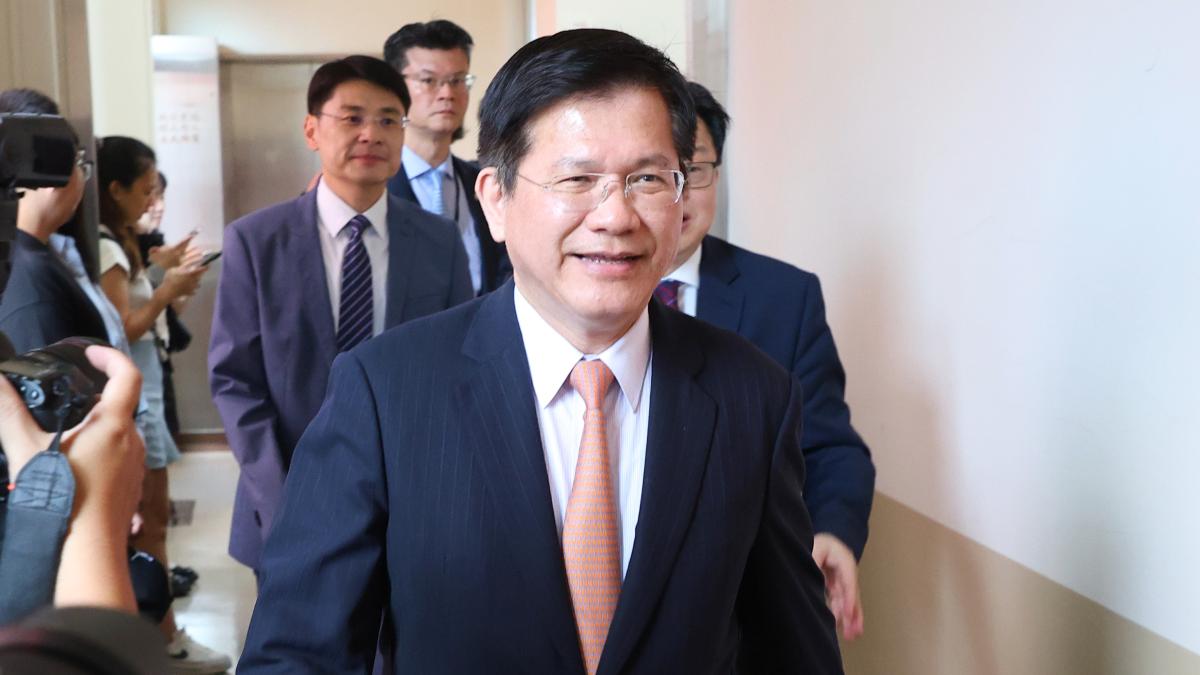
Today, the Foreign and National Defense Committee of Taiwan’s Legislative Yuan invited Lin Chia-lung to deliver a special report on South China Sea sovereignty issues and respond to questioning. Legislators from across the political spectrum—including Democratic Progressive Party’s Chen Junyu, Kuomintang’s Ma Wenjun and Hsu Chiao-hsin, and Taiwan People’s Party’s Wang An-hsiang—questioned Lin on Papua New Guinea–Taiwan relations.
Prior to the session, in a joint media interview, Lin explained that Taiwan continues to negotiate with the Papua New Guinean government and coordinate with like-minded countries. The government will continue reviewing its economic and cooperative relations with Papua New Guinea, including natural gas procurement, and urged the Papua New Guinean government to acknowledge Taiwan’s long-term contributions.
During questioning, Lin revealed that Taiwan had previously learned of Papua New Guinea’s intention to close the representative office, but sustained negotiations had led the PNG cabinet to decide on a two-year review of bilateral relations. However, Tkatchenko’s office issued the statement unilaterally. According to diplomatic sources, Tkatchenko acted independently based on personal interests. Lin stated, 'Our understanding is that their cabinet and even their professional diplomats hold differing opinions,' adding, 'The minister posted it on Facebook himself while their Asia-Pacific Division Director was away.'
Lin said Taiwan only became aware of the announcement after Tkatchenko posted it on social media. Within Papua New Guinea, there is reportedly almost no support for Tkatchenko’s surprise declaration. In fact, Tkatchenko has received direct benefits from China, 'because his electoral district is located at the airport entrance,' Lin emphasized. He stressed that bilateral relations should not be altered by a single social media post, and Taiwan continues negotiations, seeking time and hoping for a turnaround. Papua New Guinea also maintains ties with Indonesian Chinese communities and Taiwanese businesses, all of which Taiwan is closely monitoring.
In response to Tkatchenko’s claim that Australia had been informed in advance and that the closure would not affect CPC Corporation’s LNG contracts with PNG exporters—'That office doesn’t affect business or contracts; it does nothing'—Lin retorted, 'I don’t know what kind of bear’s gall or leopard’s heart he’s eaten.' He pointed out the contradiction: Tkatchenko previously claimed no economic ties existed between PNG and Taiwan, yet now references the natural gas contracts, calling it 'inconsistent and increasingly weak.'
Regarding Taiwan’s response, Lin noted that the government has convened an emergency meeting. Given the complex diplomatic and geopolitical dimensions, the National Security Council has consolidated input from relevant agencies, with the Ministry of Foreign Affairs handling implementation, involving the Ministry of Economic Affairs’ energy procurement.
Taiwan imports 1.2 million tons of LNG annually from Papua New Guinea, accounting for one-third of PNG’s production. Due to long-term and short-term contracts and other stakeholder nations, the government has not yet reached a formal conclusion. However, Taiwan is sending signals, as some spot purchases can be immediately redirected.
When opposition legislators asked about progress, Lin confirmed Taiwan has tools at its disposal but declined to disclose specifics. Asked whether PNG has responded positively to Taiwan’s signals, Lin remained noncommittal, stating only, 'We are still negotiating.' Ma Wenjun cautioned that Papua New Guinea’s geographic position is vital for Taiwan’s energy security and supply diversification, noting that 50% of Taiwan’s power generation relies on natural gas, urging careful assessment of risks like supply chokepoints or inflated energy costs.
FACT BOX
- Source: PR Times
- Category: News