The sovereignty dispute over the South China Sea has dragged on for years. Recently, on the 10th anniversary of the South China Sea arbitration, 14 countries including the United States, Japan, and the Philippines issued a joint statement directed at China, emphasizing the legitimacy of the ruling and demanding that China comply. China responded defiantly, calling the arbitration decision 'waste paper' and urging European nations to 'speak cautiously.' The South China Sea issue is closely related to Taiwan, prompting the Ministry of Foreign Affairs to issue a statement on July 12 explaining the government’s position. However, the statement was hollow and weak, clearly reflecting the government’s adoption of strategic ambiguity.
When the 2016 South China Sea arbitration ruling was announced, the Taiwan government issued a statement asserting that the South China Sea islands belong to the territory of the Republic of China and that the government would take firm action to defend national sovereignty and maritime rights. It also pointed out that the ROC is not a party to the United Nations Convention on the Law of the Sea (UNCLOS), and since Taiwan was not invited to participate in the arbitration, the ruling has no legal binding force on Taiwan, and the government does not accept it. A decade later, the Taiwan government’s stance has significantly shifted, likely influenced by cross-strait relations and Taiwan-U.S. dynamics.
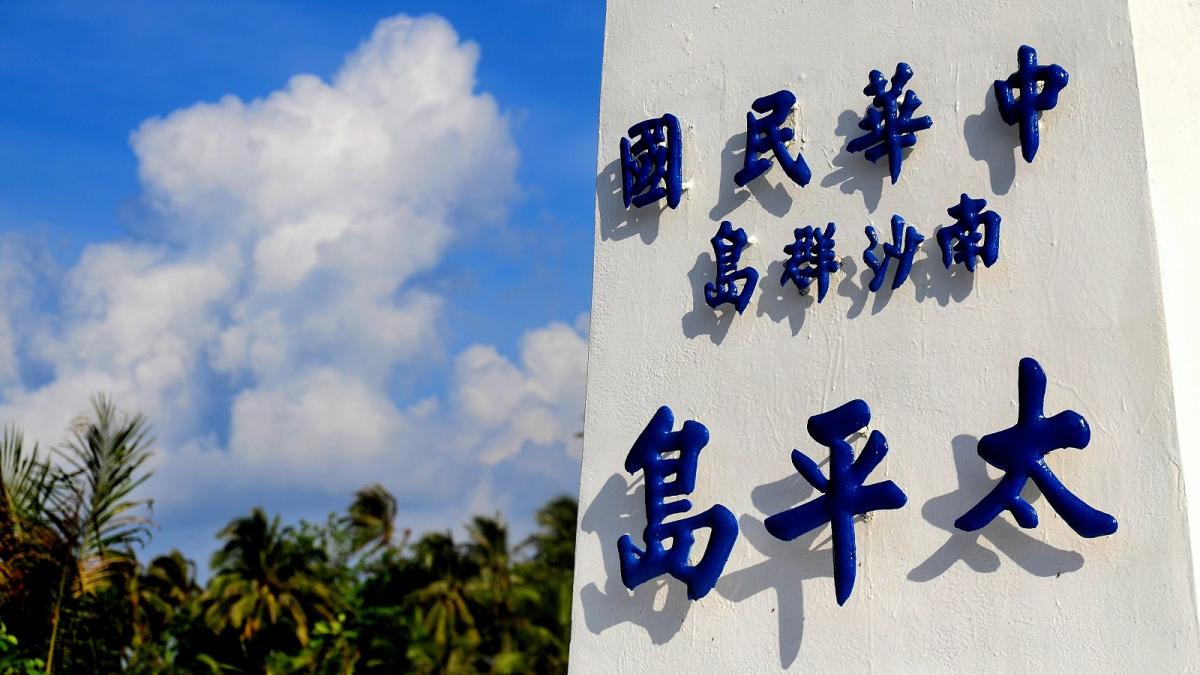
The South China Sea islands are indeed inherent territory of the Republic of China, and the arbitration ruling denied Taiping Island full island status. This has led to strong calls from Kuomintang legislators for the government to defend sovereignty, gaining broad public support. Under public pressure, the Ministry of Foreign Affairs was compelled to issue a statement. However, the DPP-led government has other concerns and is unwilling to adopt a hardline posture.
First is the China factor. During President Ma Ying-jeou’s administration, cross-strait relations were harmonious, and both sides were willing to jointly safeguard China’s traditional national interests. To assert sovereignty, President Ma personally visited Taiping Island, demonstrating to the world that it is not an uninhabitable reef. When the arbitration ruling was announced on July 12, 2016, President Tsai Ing-wen had been in office for less than two months and naturally inherited the Ma administration’s position under the circumstances. However, times have changed—the cross-strait relationship has now hit rock bottom.
Although Taiwan and China share similar fundamental positions on the South China Sea issue, the DPP government under President Lai Qing-de harbors deep hostility toward China and adopts a 'resist-China-at-all-costs' stance, refusing to align with China on any issue to avoid being seen as a 'co-conspirator.' Especially on the South China Sea, which touches on traditional Chinese interests, the DPP government’s 'de-sinicization' policy prohibits linking 'China’s interests' with 'Taiwan’s interests.' Thus, it must differentiate itself from China’s position. Yet, under domestic public pressure, it cannot openly oppose the arbitration ruling, resulting in evasive and ambiguous language.
Second is the U.S. factor. The DPP government waves the anti-China flag but cannot confront China alone, forcing it into total dependence on the United States and making it不敢 to defy American demands. However, since the DPP governs under the name of the Republic of China, it must still adhere to the ROC’s established positions. Unfortunately, Taiwan’s long-standing stance on the South China Sea contradicts that of the United States, placing the DPP government in a difficult dilemma. It wants to respond to domestic public opinion with a clear and firm stance but fears upsetting the U.S. This is especially true as President Lai’s planned transit through the U.S. during a trip to diplomatic allies has not yet been arranged—now is not the time to provoke Washington.
The South China Sea dispute is an international conflict where national strength is paramount. Taiwan is not a UN member and has only 12 diplomatic allies, leaving it isolated internationally. Some have suggested that Taiwan and China should cooperate, but everyone knows this is highly unlikely. For the DPP government, China is the primary enemy—Taiwan can say anything, but it must never align with China. It can cooperate with anyone, but not with China.
Kuomintang legislators have proposed that President Lai personally visit Taiping Island to assert sovereignty. However, given that President Tsai never visited the island during her eight-year tenure, and considering the aforementioned factors involving China and the U.S., it seems extremely difficult for President Lai to make such a visit, despite public calls.
*Author is a retired ambassador
FACT BOX
- Source: PR Times
- Category: News